
If we specifically discuss watch enthusiasts, they usually fall into two categories. One who prefers the design, beauty, brand, and price of a watch (external factors). Second, who prefers the operational mechanism, watch movement type, and other components (internal factors). Although both are surely titled as watch enthusiasts, still, you know what? Understanding the technical terms and operations, specifically watch movement, is pretty important.
Keeping in mind the importance of watch movements, we have decided to write a detailed guide on the best watch movements. It will make it easier for users to understand and make decisions accordingly.
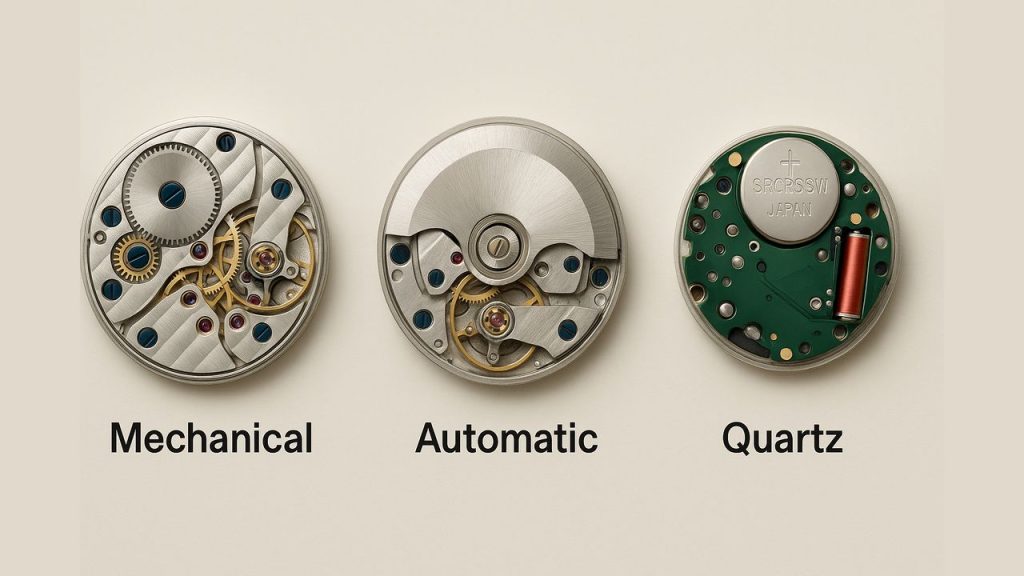
The term “watch movement” refers to the internal mechanisms of a watch that enable it to function and display the time, as well as other features. The other known titles for a watch movement are “calibre”, “heart of a watch”, and “engine of a watch”.
Similarly, in technical terms, a watch movement is the procedure that powers the hands, dial, and other watch components in parallel to ensure the time/date accuracy. It involves the combination of springs, gears, and others, depending on the type of movement.
A mechanical watch movement operates following manual winding. The main component in this type of movement is the mainspring, which is linked to the other components to generate energy and power the watch. There is no inclusion of batteries or other Storage units. The mechanical watch movement is the oldest of its type, boasting a notable history of innovation and development.
Ideal For: Those who prefer a luxurious class and want a personal connection with their watch, such as manual winding.
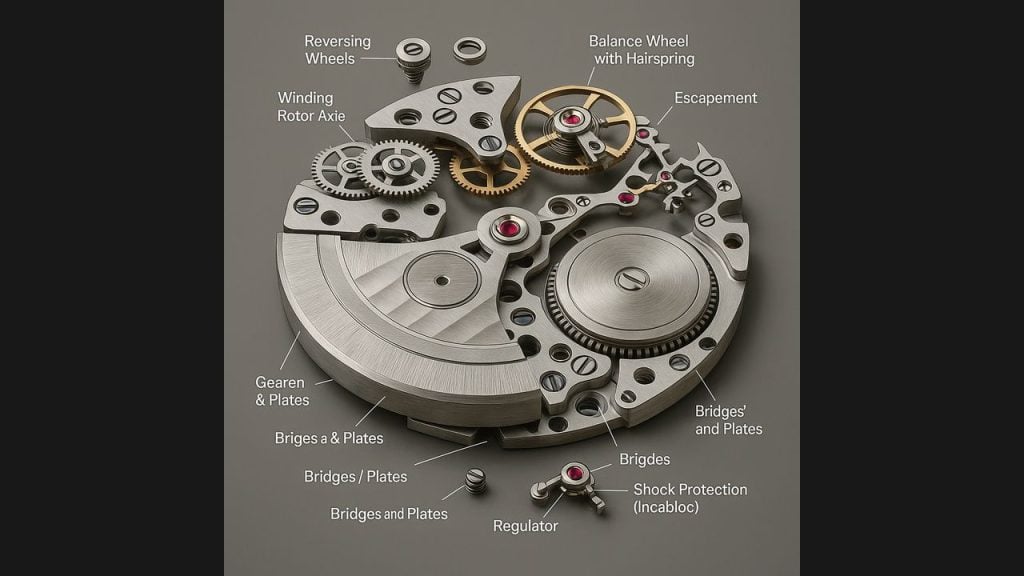
The automatic watch movement is a known watch movement that operates based on self-winding. In simple words, it powers the operations in parallel to the wearer’s wrist movement or motion. Its operations are almost identical to those of a mechanical watch movement, except for the manual and self-winding differences. The main component in this type of movement is the rotor, which links the other components jointly to show tha time/date.
Ideal for: Those who prefer luxury watches with automatic winding mechanisms.
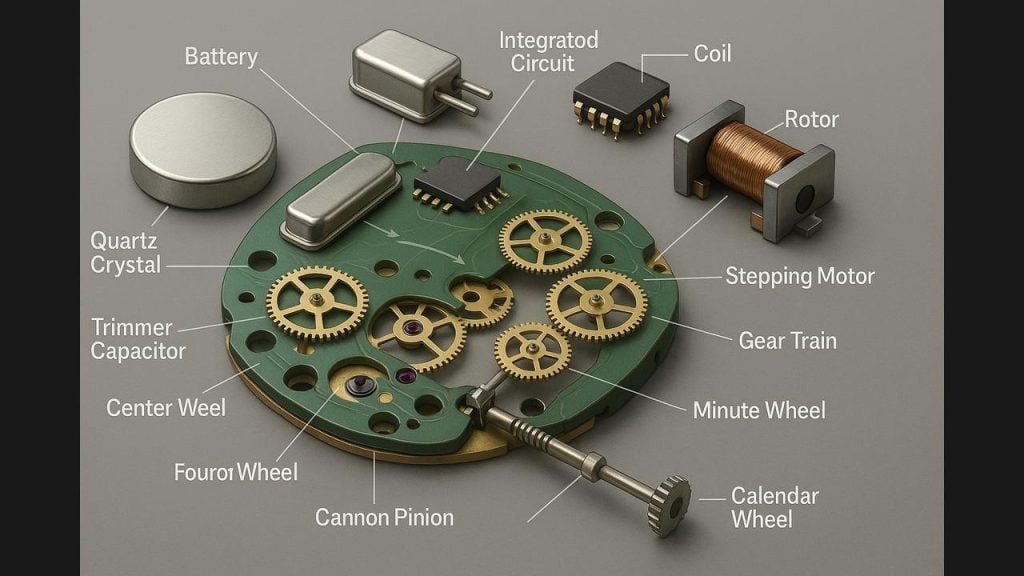
The quartz watch functionality is linked to battery power. The batteries and a watch crystal provide the main operational assistance. When energy is transferred through the crystal, it creates a vibration at an adjusted frequency, resulting in the watch being powered and displaying the time/date accurately. This watch movement has fewer small and sensitive components compared to other movements.
Ideal For: Those who want an affordable watch with features of accuracy and reliability.
Features | Quartz | Mechanical | Automatic |
Accuracy | Very High | High | High |
Maintenance | Less | High | High |
Power | Battery | Manual Winding | Auto-Winding |
Lifespan | 5-10 Years | More than Decades | More than Decades |
Aestheticness | Normal | High | Very High |
Price | Budget-Friendly | Expensive | Expensive |

Accuracy is the core element of any watch, as it is crucial for displaying time, date, and other features accurately. When we talk specifically about these three watch movements. The quartz watch movement stands more accurately than the mechanical and automatic ones.
In terms of budget, quartz watches again take the lead over mechanical and automatic watches. First, there is the use of less sensitive and complex components in quartz watch movements. Second, they don’t carry traditional values.
Maintenance is the reason behind the longer lifespan of any watch. So, in terms of maintenance and other services, the quartz watches require less periodic service (only battery replacement) compared to mechanical and automatic watches.
Mechanical and Automatic watches have no companion when it comes to design and appearance. Their transparent watch movement, linked to other components, just makes them look tremendous. The quartz ones focus more on slimness and weight.
Apart from all the features, preferring your own requirements has an edge over everything. It’s up to the wearer’s choice whether they prefer luxury class, affordability, or the convenience of wear. Their decision, based on needs and requirements, creates mental satisfaction.
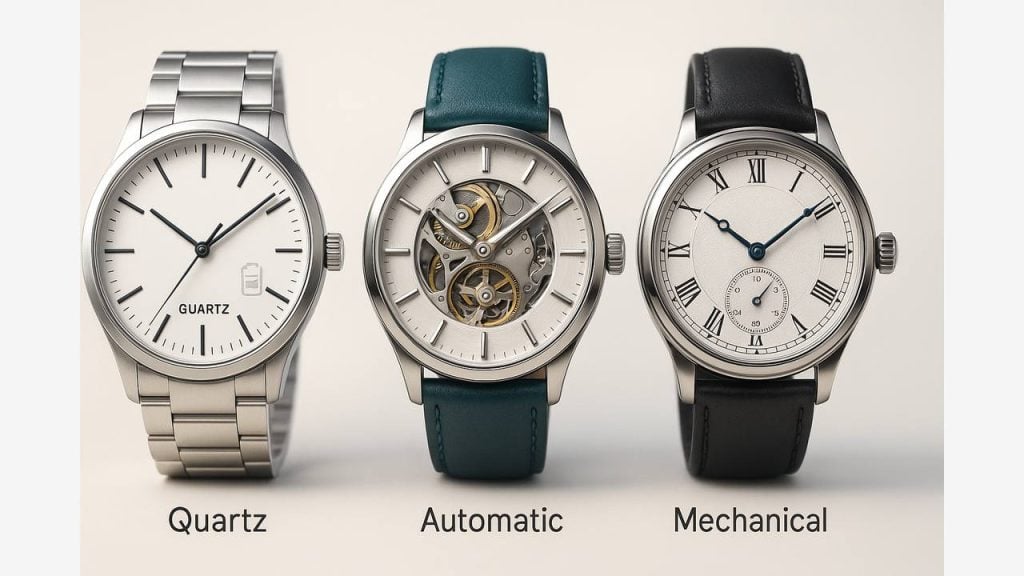
Based on features, operational mechanism, market value, and budget. Each of the above-mentioned offers the best watch movement. However, they certainly have certain differences that distinguish them as unique from one another. In simple terms, one can prefer a quartz watch movement for its accuracy, affordability, and low maintenance. Mechanical watch movement can be an option to highlight traditional trends, class standards, and enthusiasm. Similarly, for aesthetic appeal, the luxury class, and a mix of both mechanical and quartz movements, one can prefer an automatic watch movement.
Watch Enthusiasts and Collectors can prefer Soflypart for providing the best watch movement parts. Visit the platform for more information on all types of products related to watch movement and other accessories.
A: For class and luxury, Swiss movements are considered better, while for reliability and affordability, Japanese movements are better.
A: Mechanical watches last longer than quartz ones, depending on maintenance and care.
A: Smartwatches are best for fitness tracking and workouts, but can’t be considered in the category of traditional watch movements.