Guide to Chronograph Watches - Known Types and Functionalities

Introduction

Future-loaded watches have become a trend in the market, as modern watches are no longer limited to just telling the time. The chronograph watches in this regard have their own importance, filling the slot of a feature-rich watch. Not just a feature-rich watch, but it also makes the watch look more appealing. Yes, a chronograph watch offers stopwatch features along with many other functionalities. It suits a range of users, from everyday individuals to professionals, including those in sports, aviation, diving, medical fields, and other everyday tasks.

Today’s guide focuses on Chronograph watches, including their functionality, history, types, and maintenance. Ultimately, one will be able to understand every aspect of these watches. Let’s start the discussion.
Latest Chronograph Watch

Understanding a Chronograph watch

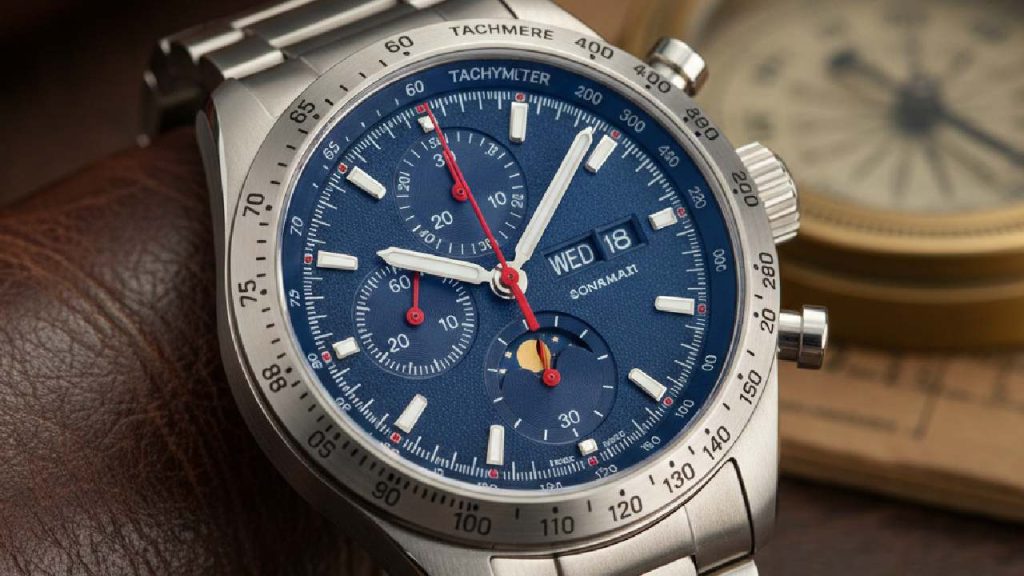
In simple terms, a chronograph watch can be defined as a watch that displays standard time, as well as stopwatch features and functionalities. Both of these features operate independently, where the stopwatch features are linked to three sub-dials that follow the parameters to measure and record seconds, minutes, and hours.

Moreover, when it comes to structural integration, a chronograph watch typically includes pushers or buttons to start, stop, and reset the stopwatch. Similarly, chronograph watches also feature additional functionalities, such as a tachymeter, a pulsometer, split timing, and others. These watches are available in mechanical, automatic, and quartz watch variants.
Core Features

  • It features stopwatch functionality, keeping the standard time functioning separately.
  • A chronograph features sub-dials for tracking seconds, minutes, and hours accurately.
  • It features protection from environmental impacts, making the watch durable, long-lasting, and reliable.
  • A chronograph features a tachymeter, a pulsometer, a flyback chronograph, and split timing to further enhance the stopwatch functionalities.
  • A chronograph watch also boasts a unique and stylish appearance compared to a standard watch.
History of Chronographs

History of Chronograph Watches

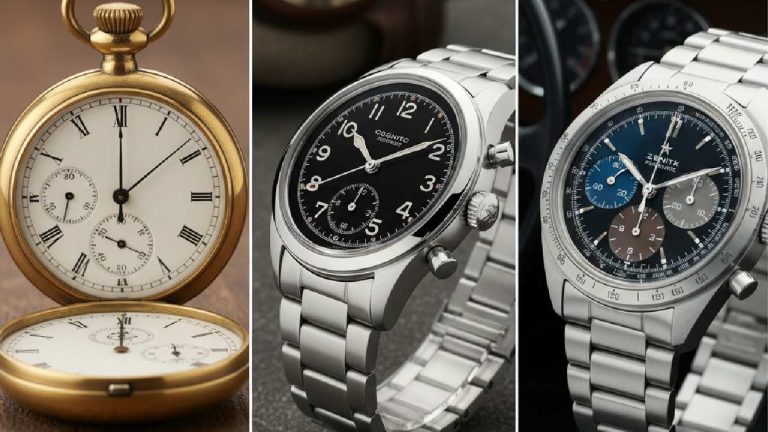
If we delve into the history of chronograph watches, the word “chronograph” is derived from a Greek word. Where “Chrono” refers to time & “Graph” refers to writing, while on merging, it appears to be a complete word “Chronograph”.

Similarly, a chronograph watch was first designed and invented by Louis Moinet in 1816. Later, Nicolas Mathieu Rieussec further developed this unique invention and introduced the first commercial chronograph watch in 1821.

In the 20th Century, the chronograph watches held a strong position and were titled as a must-have item for sportsmen, divers, and racers. Various other variants of chronographs emerged, including automatic and digital chronographs.

In the current times, a chronograph watch, apart from its functionalities and advancements, has become a symbol of a unique personality. Many high-end watch models, including those in the mechanical, automatic, and quartz series, are equipped with chronographs.

How Do Chronograph Watches Work?

The operations of a chronograph watch are based on 3 sub-dials and buttons/pushers. The sub-dials are linked to the internal components of the watch, such as springs, gears, and escapements, depending on the watch type and model. Moreover, the 3 sub-dials are inserted to track seconds, minutes, and hours. All of these features work without conflicting with the reference or standard time on a watch. Let’s have a look at it,

  • A chronograph watch is activated by a start pusher or button, which starts the stopwatch and measures the time.
  • According to the sub-dials functionality, the seconds, minutes, and hours are calculated based on the task requirements.
  • Once done, a pusher or button is pressed again to stop the stopwatch. It deactivates the chronograph’s functionality.
  • The recorded data is analyzed as per the requirements, and the pusher or button is pressed again to step into reset or default mode.

As we discussed earlier, chronograph watches are equipped with additional functionalities, such as tachymeters, pulsometers, and flyback chronographs. These features also worked in parallel with three sub-dials, respectively.
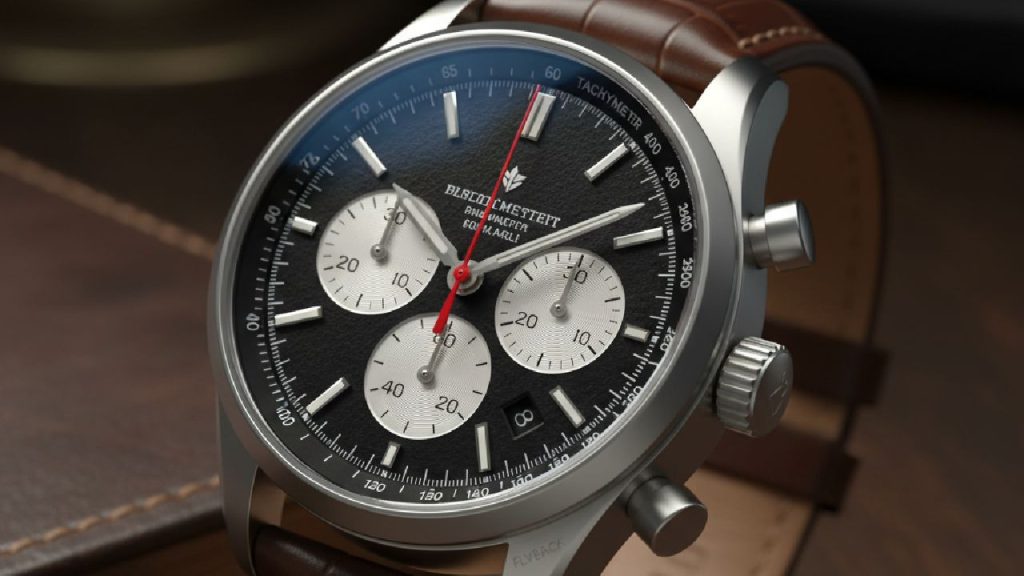
Standard Chronograph

4 Known Types of Chronographs

1: Standard Chronograph

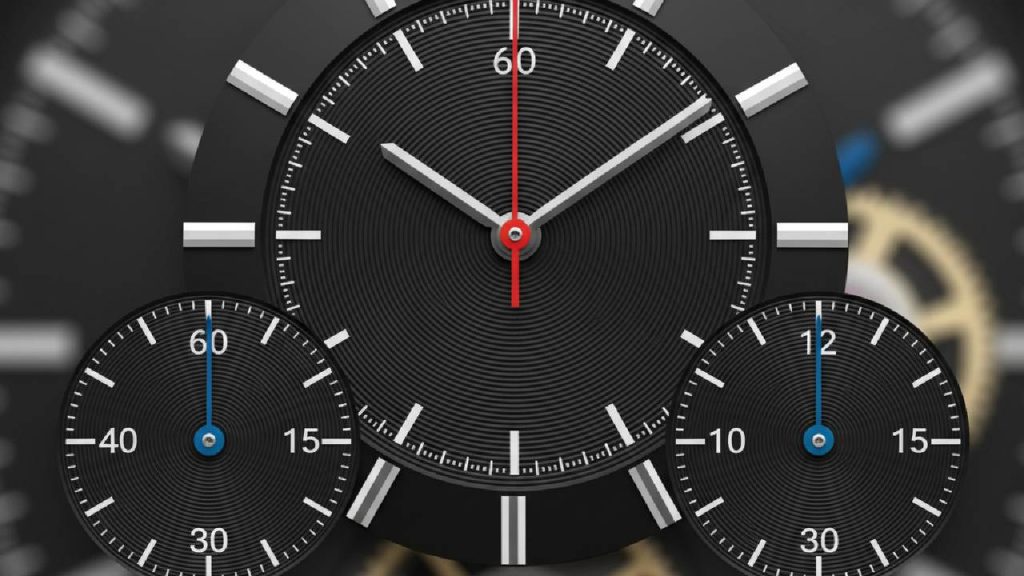
  • As the name suggests, the standard chronograph is a common and traditional type of chronograph. It only features stopwatch functionality based on start, stop, and reset systems. Some of these chronographs also feature a tachymeter, in addition to a stopwatch. Regarding the sub-dials, they feature 2 or 3 sub-dials, offering tracking for seconds, minutes, and hours. The standard chronograph is ideal for small events and other day-to-day tasks.
  • Example: Omega Speedmaster Pilot and Tissot PRX Chronograph

2: Monopusher Chronograph

  • For users who prefer a neat and clean look for their watch case, the monopusher chronograph is one of the best options, as it features only a single button for stopwatch functionalities. The start, stop, and reset function is controlled through this single button. Although some users find it difficult to manage or operate, for instance, shifts in measurement. But it still holds value for those who just want a neat and classy look for their watch case.
  • Example: De Bethune DB25 Monopusher Chronograph and Ming 57.04 Iris Monopusher Chronograph

3: Flyback Chronograph

Flyback Chronograph Watch
  • The highly rated, most efficient, and most advanced chronograph of its series. Yes, the flyback chronograph is the ultimate choice for professionals because it offers an instant option to stop and reset the chronograph with a single tap on the pusher. Normally, one needs to stop, reset, and restart the chronograph. However, here, just press the lower pusher and it’s done. The flyback chronograph meets the needs of those who prefer precise timing.
  • Example: Longines Spirit Pilot Flyback and Frederique Constant Flyback Chronograph

4: Rattrapante or Split-Second Chronograph

  • The other known names of split-second chronograph are doppel-chronograph and double-split. This chronograph is the most expensive, feature-rich, and complex type in its series. It allows for measuring and tracking multiple participants on a single watch. You heard it right; the Rattarpante chronograph offers two stopwatch hands, one of which can be stopped, and the other continues to measure the time.
  • Example: Patek Philippe Ref. 5370R Split-Seconds Chronograph and Czapek Antarctique Rattrapante R.U.R Edition

5: Other Chronographs

  • The other highlighted names in the list of chronograph types are tachymeter chronograph, Regatta chronograph, digital chronograph, GMT chronograph, and diving chronograph. Each type has unique attributes that match or enhance the functionality of stopwatch features. Similarly, each belongs to a category of users, including those from sports, diving, racing, adventure, travel, medical, professional, and other day-to-day usage.
Chronograph and Chronometer

Difference Between Chronograph & Chronometer

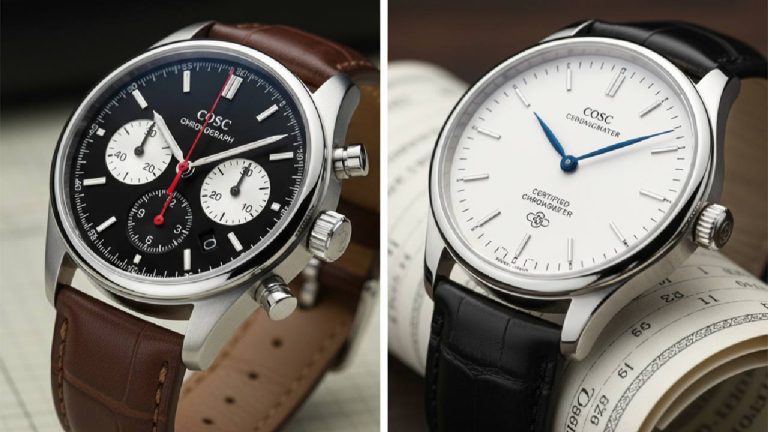
It is essential to understand the distinction between the chronograph and the chronometer to comprehend the underlying mechanism. As we know, a chronograph is a feature added to watches to offer stopwatch functionality, along with other advanced functions such as a tachymeter, flyback chronograph, and split timing.

Similarly, the chronometer on the other end indicates the utmost time accuracy and reliability. These watches have undergone various phases of accuracy testing and are certified by official organizations, such as COSC. Luxury and high-end watches on the market are equipped with both the features of a chronograph and a chronometer.
  • Chronograph: Refers to Smartwatch Features.
  • Chronometer: Refers to Certified Time Accuracy.

Choosing the Right Chronograph

  • Be clear about your needs, such as day-to-day use, professional use, sports activities, or other purposes.
  • Be clear about the type of watch movement you want, such as mechanical, automatic, or quartz.
  • Be clear about the watch design, as chronograph watches are available in classic, modern, and sports styles.
  • Be clear about the durability features, such as water resistance, scratch resistance, and other relevant properties.
  • Be clear about your budget range, and don’t ignore the resale value in the watch market.
Chronograph Watch Maintenance

Maintenance Tips

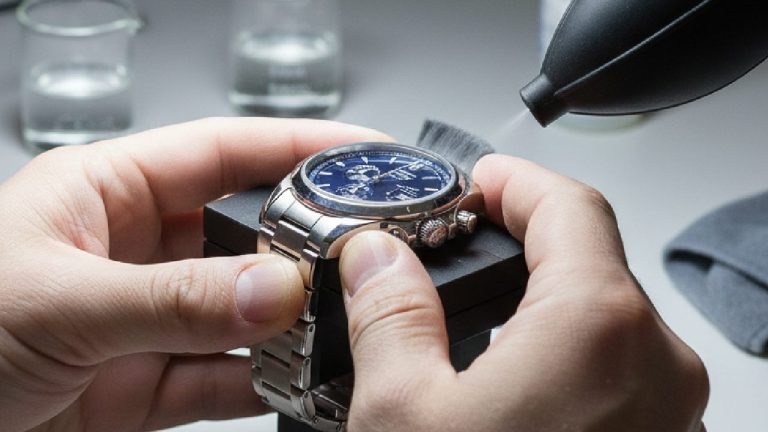
  • Regularly clean your watch using compatible tools and liquid.
  • When not in use, keep your chronograph watch in a safe box.
  • Avoid using chronograph functions unnecessarily, as overuse can cause fluctuations in performance.
  • Avoid interaction with sources that have a magnetic field, as it may disturb the performance accuracy.
  • Keep the watch protected from sudden shocks, vibrations, and drops.

Final Remarks

Chronograph watches have revolutionized the watch market, ushering in a new era of innovation. As the ultimate choice for professional users, it has also become a symbol of personality, style, and fashion for others. Similarly, each type of chronograph has specific features that meet the requirements of users in terms of appearance, the ability to measure multiple events, and instant use. The chronograph watch falls into a category that combines both practical functionality and aesthetic appeal. Whether you are a watch enthusiast, collector, or a professional user, the chronograph watch somehow meets your watch journey needs.

Whether it’s a matter of watch parts or relevant tools, Soflypart has brought together everything on a single platform. We offer watch movement parts, watch repairing tools, watch polishing kits, watch crystals, and watch dials at discounted prices.