Easy Tricks to Identify Your Watch Crystal Material at Home

Intorduction

Many watch owners—especially casual wearers—don’t know the details of their watch specifications. Even luxury watches are sometimes worn without much knowledge of what goes into them. Among all the components, the watch crystal is both the most visible and the most overlooked.

A watch crystal protects the watch dial from dust, scratches, and water, while giving the watch a clean, transparent appearance. Knowing what type of crystal your watch has helps you better care for it, evaluate its value, and spot potential issues.

In this guide, we’ll walk through simple methods to identify your watch crystal at home, explain why it matters, and highlight common mistakes to avoid.

Best Watch Crystal

What is a Watch Crystal?

A transparent component covering the watch face or watch dial is said to be the Watch Crystal. It is designed to protect against dust, rust, water, and other forms of damage. Ultimately, one can clearly see the time on their watch.

Crystals are manufactured, offering various types and features, belonging to both entry-level and high-end watch categories. Each crystal type has different features like clarity, durability, and aesthetic value. Let’s take a look at the core features of the watch crystal.

Core Features

  • It provides solid protection to watch components against dust, water, and pressure impact.
  • The watch’s crystal provides an appealing look to both the watch case and the wearer’s wrist.
  • It improves the durability, reliability, and longevity of the watch, dial, and other components.
  • Watch Crystal can be polished easily to restore the genuine condition of the crystal.
  • Premium Crystals also features a coating layer to reduce the impact of reflection.
Watch Crystal Types

Types of a Watch Crystal

Acrylic Watch Crystal

  • The acrylic watch crystal is a commonly used and affordable material for watch crystals. It is manufactured using a polymethyl methacrylate material. It is lightweight and mostly used in entry-level watches, like retro and vintage. One can easily polish this type of crystal, and it withstands impact pressure efficiently.

Mineral Watch Crystal:

  • The mineral watch crystal is also a famous choice when it comes to watch crystals. It is manufactured using silica-based glass and used in both entry and mid-level categories of watches. A mineral watch crystal is a good example of the price-to-performance ratio. It resists minor scratches and can also bear moderate pressure impact.

Sapphire Watch Crystal

  • The most premium and high-end watch crystal titles are towards sapphire ones. This watch crystal is made of synthetic sapphire, which is a pretty hard material. It is used in the luxury category of watches and is renowned for providing strong protection against scratches, dust, and water, but is susceptible to high-pressure impacts.

Why Identify Your Watch Crystal?

  • It helps to evaluate the working capability of the crystal against scratches, dust, and pressure impact.
  • It helps to evaluate the market or resale value of a watch if you are planning to sell it.
  • It helps to evaluate the maintenance schedule and maintenance mechanism of the watch crystal.
  • It helps to evaluate the level and care one needs while regularly wearing the watch (rough and tough usage care).
  • It helps to evaluate the originality of the watch crystal, as sometimes the owner may get scammed.

Tricks to Identify Watch Crystal Material

Watch Crystal Tap Test

1: Taping Sound Test

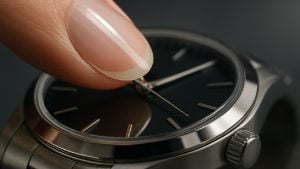
To perform the taping sound test, simply tap (gently) the watch crystal using your fingernail. The producing sound will help to identify the material of the crystal.

  • Acrylic Crystal: It will produce a dull, soft, and plastic-like sound.
  • Mineral Crystal: It will produce a solid sound like tapping glass.
  • Sapphire Crystal: It will also produce sound like tapping the glass, but will be highly-pitched and clearer. 

2: Scratch Test

Be cautious while performing the scratch test, as it may result in the loss of the crystal. A small key, coin, or similar object can be used for this test.

  • Acrylic Crystal: It will get scratches very easily, even with gentle scratching.
  • Mineral Crystal: It will also get scratched, but will resist more compared to acrylic.
  • Sapphire Crystal: It will be almost impossible to scratch the sapphire crystal due to its high scratch resistance.

3: Fog Test

The fog or breath test can assist in evaluating the type of watch crystal at home. It is based on observing the duration of fog on the watch crystal.
  • Acrylic Crystal: Once one breathes, the fog will remain on the crystal for a longer time.
  • Mineral Crystal: Fog will remain on the watch crystal, but for less time than the acrylic one.
  • Sapphire Crystal: Fog will instantly clear from the sapphire watch crystal in 1 to 2 seconds.
Watch Crystal Temperature Test

4: Temperature Test

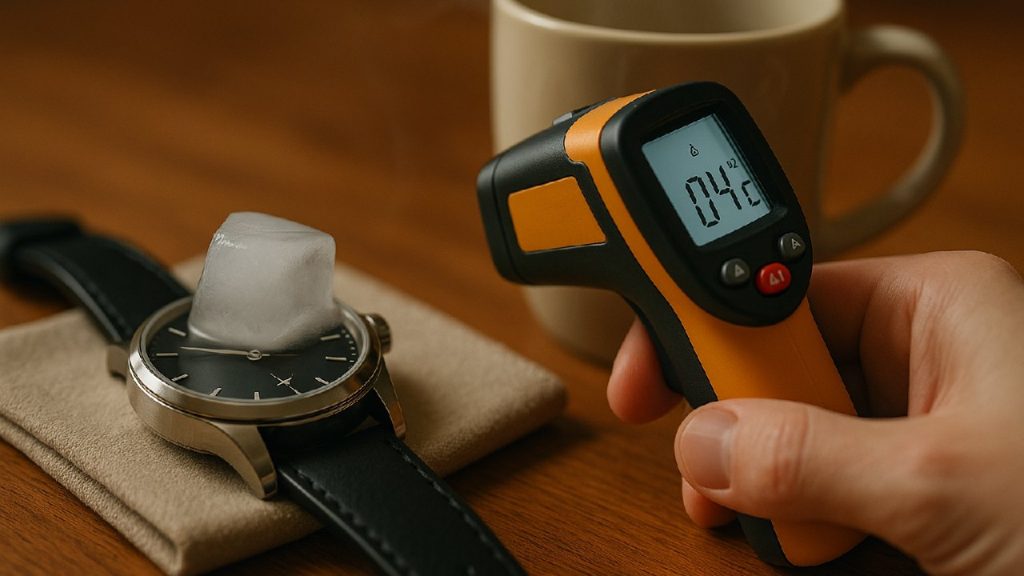
Performing the temperature test at home is pretty simple. Just put your fingers or hand over the watch crystal and observe how the temperature feels.

  • Acrylic Crystal: It will feel warmer than usual because of the plastic material.
  • Mineral Crystal: It will feel like a normal temperature compared to the acrylic one.
  • Sapphire Crystal: It will feel cold when you touch it in any type of environment.

5: Water Drop Test

The water drop test is also a reliable method to determine the type and material of the watch crystal. Simply put a drop of water over the watch crystal and check for the result.

  • Acrylic Crystal: Water will spread or disperse over the surface of this watch crystal.
  • Mineral Crystal: Same as acrylic, the water will disperse over the surface of this crystal.
  • Sapphire Crystal: The drop of water will remain in the same position and stick to the surface because of the hydrophobic feature in the sapphire crystal.

6: Reflection/Shine Test

The level of reflection and shine over the watch crystal also tells a lot about its type and material. Let’s check how?

  • Acrylic Crystal: It will show minimal or hazy reflection in a bright environment.
  • Mineral Crystal: It will show an improved reflection compared to acrylic crystal.
  • Sapphire Crystal: It will show a clear and crystal reflection with a little blueish tint.

7: Weight

Weight is another indication that helps to identify the material or type of your watch crystal. The premium material is likely to feel heavier than the normal one. Let’s check,

Acrylic: As mentioned earlier, this crystal feels quite lightweight.

Mineral: It feels a bit heavier than acrylic and lighter than sapphire crystal.

Sapphire: It feels heavier and more premium than the other two types of watch crystal.

Watch Crystals Weight Test

Caring Tips Once Crystal is Identified

Acrylic

  • Polish the acrylic crystal with recommended polishes only.
  • Avoid using harmful chemicals on the crystal.
  • Avoid exposing the acrylic crystal to high temperatures.

Mineral

  • Make sure to have a separate layer of coating to avoid scratches.
  • While cleaning, always use a microfiber or other soft cloth.
  • Don’t put extra pressure on the mineral watch crystal.

Sapphire

  • Avoid high pressure, as it can damage the sapphire crystal.
  • Clean the glass with recommended products for extra shine.
  • Avoid strong chemicals if the sapphire crystal has an extra coating.

Concluding Remarks

Identifying your watch crystal at home is simple if you use these easy tests. Acrylic is light and polishable but scratch-prone. Mineral offers a balanced option with better durability. Sapphire is the premium choice—nearly scratch-proof with a luxurious look.

No matter which crystal your watch has, proper care will help maintain its appearance and value.

And here’s the good news: Soflypart offers quality watch repair kits, polishing kits, movement parts, and accessories at discounted prices. Explore our collection today and keep your timepiece in top condition.