
Learning how to clean a watch movement means learning part of a complete movement service. For most mechanical watches, proper cleaning requires full disassembly, separate treatment for delicate components, thorough rinsing and drying, and fresh lubrication during reassembly.
Soaking an assembled movement in a household solvent is not an equal substitute. It may move old oil and dirt into jewel holes, leave residue behind, or affect finishes and shellacked parts. Some professional cleaners and machines are approved for assembled movements, but you must use them exactly as their manufacturers direct.
This guide explains the tools, cleaners, and workflow used to clean a mechanical watch movement. It also shows you which parts need a separate method and when a damaged part should be replaced instead of cleaned again.

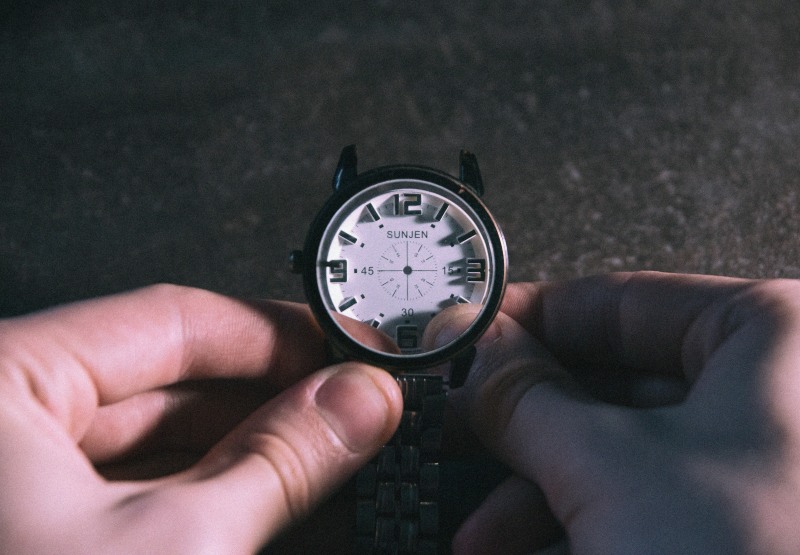
You clean a watch movement safely by releasing the mainspring tension, disassembling the movement, sorting its components, and washing compatible parts in a purpose-made watch movement cleaner. The parts then pass through the correct rinse, dry completely, and receive a close inspection before lubrication and reassembly.
This work demands more than a jar and a brush. A mechanical movement contains tiny pivots, jewels, springs, plated surfaces, and fitted parts that can bend, corrode, or disappear with one careless move. You should already know how to disassemble and reassemble the caliber before attempting a full service. Practice movements are far better teachers than a valuable family watch.
Start with the movement’s technical sheet whenever one is available. It identifies the movement layout, lubrication points, approved products, and caliber-specific handling instructions. Keep the dial, hands, case, and strap outside the movement-cleaning process because each needs its own method.
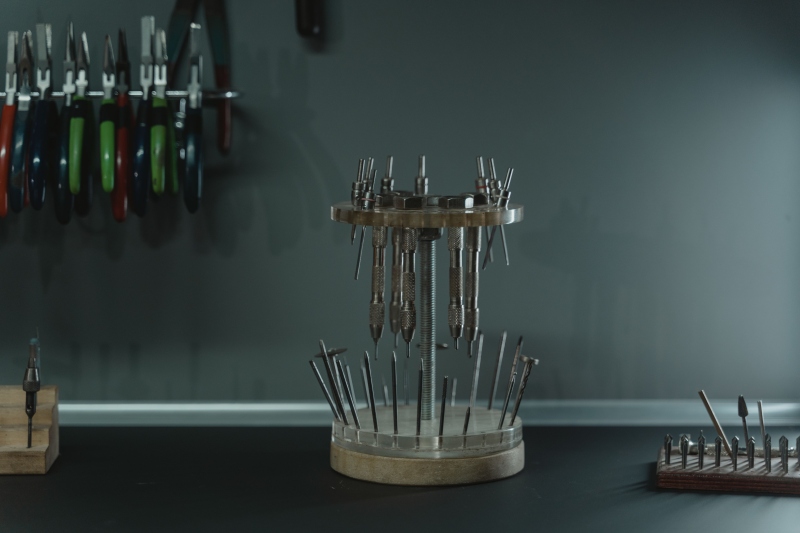
Watch movement cleaning requires tools for controlled disassembly, safe parts handling, washing, drying, and inspection. You do not need the most expensive machine for every job, but you do need equipment that matches the size and condition of the movement.
The basic setup includes:
An ultrasonic unit can improve cleaning speed, but the tank, basket, fluid, temperature, and cycle must all be suitable for watch components. Solvent-based fluids also require equipment designed to control fire and vapor hazards. A household jewelry cleaner is not automatically suitable for movement work.
Soflypart’s watch repair tools category includes movement holders, screwdrivers, tweezers, loupes, blowers, oilers, and parts boxes used at different stages of servicing.
Choose a watch movement cleaning solution by checking the cleaner’s intended materials, cleaning method, rinse system, and safety instructions. A purpose-made product gives you defined dilution ratios and handling limits, while household mixtures leave too much uncertainty around residue and material compatibility.
The following categories cover the main choices:
Cleaner Type | Typical Use | What the Process Requires |
Water-based watch parts cleaning solution | Compatible metallic movement parts in an approved manual or machine process | Exact dilution, a deionized-water rinse, immediate water displacement, and complete drying |
Waterless watch movement cleaner | Oils, grease, and resin on compatible precision parts | A compatible rinse, good ventilation, sealed storage, and equipment rated for the solvent |
Dedicated hairspring or escapement cleaner | Balance springs, pallets, or other parts named on the product label | Short, controlled treatment and confirmed compatibility with shellac and finishes |
General-purpose alcohol or household solvent | Only when a caliber procedure or cleaner manufacturer allows it for the named part | A part-by-part compatibility check and proper fire, vapor, and disposal controls |
Water-based cleaning can work well when it forms part of a complete system. For example, the Elma RED 1:9 instructions specify one part concentrate to nine parts water, followed by a deionized-water rinse and a water-displacing treatment before air drying. That process is very different from rinsing movement parts in plain tap water.
Waterless systems also pair the cleaner with a compatible rinse. Elma, for example, lists WF PRO as a waterless cleaner and SUPROL PRO as its residue-free rinse. The product instructions, rather than a universal soaking time, should control the cycle.
Do not treat dishwashing liquid, lighter fluid, or isopropyl alcohol as a universal watch movement cleaning solution. Lighter-fluid formulas can vary, and all three options may present residue, material, or fire concerns. Alcohols can also affect shellac and some coatings. Use a dedicated product that explicitly covers the part and process in front of you.
To learn how to clean watch parts, follow the movement from controlled disassembly through inspection, washing, rinsing, and drying. Keep the caliber sheet nearby and record the position of springs, screws, washers, and setting parts as you work.
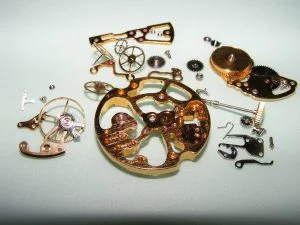
Release the mainspring tension before removing the train or escapement. Uncontrolled power can drive the wheels as bridges lift, which may damage fine pivots or send parts across the bench.
Remove the movement from the case, then take off the hands and dial with their proper protectors and tools. Disassemble the movement by functional group, including the automatic works, winding and setting works, gear train, escapement, barrel, and calendar. Place each group in a covered tray so similar screws do not get mixed.
A full service normally includes opening the barrel and removing the mainspring for inspection and cleaning. Shock settings and removable cap jewels may also need disassembly. Follow the caliber documentation because construction varies.

Inspect the parts before the main wash so cleaning does not hide the source of a fault. Look for corrosion, cracked jewels, scored pivots, bent teeth, worn bearing surfaces, damaged screw heads, and metal debris.
Remove heavy grease and hardened deposits with sharpened pegwood or pith wood. Peg jewel holes carefully and clean pivots without polishing away material. Pre-cleaning prevents one heavily soiled barrel or keyless-work part from contaminating the main solution too quickly.
Keep damaged parts separate. Cleaning can remove dirt, but it cannot restore a bent pivot, cracked jewel, worn tooth, or badly rusted spring.

Place compatible parts in fine baskets without overcrowding them. Large plates and bridges need enough room for fluid to reach recessed areas, while screws and springs belong in covered fine-mesh compartments. Separate delicate pieces so heavier components cannot strike them during agitation.
Run the cleaning cycle according to the fluid and machine instructions. For hand cleaning, move the basket or use a soft brush with controlled pressure. Avoid scrubbing polished, plated, lacquered, or fragile surfaces unless the technical procedure permits it.
Move the cleaned parts through the required rinse stages without letting the cleaner dry on them. Fresh rinse fluid prevents dissolved oil from returning to the parts. Replace dirty or cloudy liquid instead of extending the cycle and hoping it will recover.
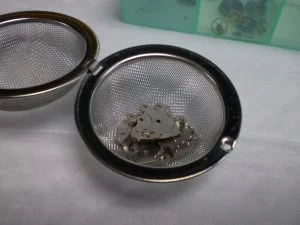
Dry the parts as soon as the final rinse ends. Use a hand blower, filtered moving air, or the drying stage built into an approved watch-cleaning machine. Paper towels and ordinary cloth can leave fibers on pivots and inside jewel holes.
Inspect every part under magnification after it dries. Jewel holes should show clean, sharp edges without an oily film. Pivots and wheel teeth should be free of lint and residue. Re-clean only the affected parts if you still see deposits; longer soaking is not always the answer.
Store clean components in covered trays until assembly. A clean bridge left on a dusty bench can undo twenty minutes of careful work in seconds.
The balance assembly, pallet fork, mainspring, barrel, and electronic or decorated components need separate cleaning decisions. Their materials and construction make a single all-purpose bath unreliable.
Balance springs bend easily, and pallet stones are commonly secured with shellac. Use a cleaner whose instructions explicitly cover hairsprings, pallet forks, or complete balance assemblies. The Bergeon B-DIP instructions, for example, cover balance springs and state that the cleaner does not dissolve shellac.
Handle the balance by an approved support point and keep tools away from the hairspring coils. Do not brush the spring or leave the assembly in an unverified alcohol solution. Inspect the hairspring for flatness, concentric breathing, contamination, and contact between coils after cleaning.
Treat the pallet fork just as carefully. Check that both stones remain secure and correctly positioned, and inspect the pallet faces for residue. A loose stone requires escapement repair, not another wash.
The mainspring and barrel collect old grease along the wall, arbor, and cover. Open the barrel, remove the spring with the proper tool, and clean each component using the method specified for that caliber and spring type.
Inspect the spring for rust, cracks, distortion, or a permanent set. Examine the barrel wall, arbor shoulders, hook, and cover before reassembly. Replace an unserviceable spring instead of relying on cleaning to correct poor power delivery.
Quartz coils, circuits, insulators, and plastic parts follow caliber-specific instructions rather than the standard mechanical-parts bath. Some components require dry cleaning with a soft brush, while others can tolerate only named solvents and short exposure times.
Dials, hands, date rings, and lacquered or printed parts also need individual treatment. Their finishes can lift, stain, or lose lettering even when the underlying metal survives. The safest process starts with the manufacturer’s service instructions for the exact movement.
When cleaning reveals a damaged coil, mainspring, hand, stem, or related component, compare compatible watch parts by caliber, reference number, dimensions, and part type before ordering.
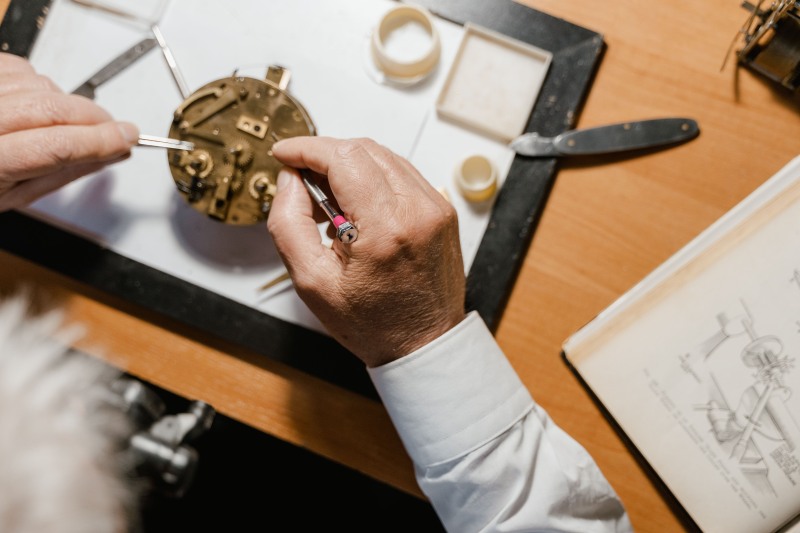
After watch movement cleaning, inspect the dry parts again, replace damaged components, lubricate the specified points, reassemble the caliber, and test its operation. Clean metal surfaces should stay free from fingerprints during this stage.
Lubricate according to the caliber’s technical sheet. Different contact points may require different oils or greases, and too much lubricant can spread back onto freshly cleaned surfaces. A large drop is not extra protection; it can reach the gear train, escapement, or dial side and create a new service problem.
Check the freedom and endshake of the train as you rebuild. Confirm that the winding, setting, calendar, automatic, and escapement systems move correctly before casing the watch. Once the movement runs, use a timegrapher to assess rate, amplitude, and beat error in the positions specified for the caliber. Power reserve and functional checks complete the service.
A watch movement should be cleaned as part of a full service at the interval recommended by its manufacturer or when inspection shows contaminated or dried lubricant. Water entry, corrosion, unstable timekeeping, low amplitude, or winding trouble may justify earlier attention, but diagnosis should come before cleaning.
Cleaning can improve poor timekeeping when dried lubricant, dirt, or excessive friction is the cause. It will not correct every rate problem. Magnetism, a damaged hairspring, worn pivots, incorrect regulation, shock damage, or an escapement fault needs its own repair.
Keep used cleaner and rinse in closed, labeled containers, away from heat, sparks, and open flames. Follow the product’s safety data sheet and local waste rules because disposal depends on the fluid and the contamination it contains. Never assume a solvent or used aqueous cleaner can go down the drain.
Cleaning a watch movement takes patience. At some point, you may be holding a spring, screw, or jewel that seems almost too small to see, let alone service. Still, a careful cleaning job gives you more than a brighter-looking movement. It helps you spot old oil, worn parts, and small faults before they become a much larger repair.
Take your time, keep your parts organized, and let the caliber’s technical sheet guide the final lubrication and testing. If you find a worn wheel, tired mainspring, or damaged setting component along the way, match the caliber and reference before choosing replacement watch movement parts.
Have a cleaning tip or a hard-earned lesson from the bench? Share it in the comments.