
You know what? A watch is not just a time-telling gadget, but it also reflects the personality of its wearer. A clean watch on the wrist highlights the positive factors of one’s personality. Similarly, a smudged or dull watch highlights a poor impression of one’s personality. In general, daily wear can cause a watch to lose its original condition and shine over time. Scratches, smudges, and dullness on the watch become clearly visible.
So, to maintain its genuine condition, one needs to polish the watch periodically. It does not improve the physical condition of a watch, but also enhances its lifespan. One can attempt to polish the watch at home using specific tools and accessories.
In today’s guide, we will go through the whole process of polishing the watch. Which material is compatible with which polishing method? What are the known benefits of polishing the watch?
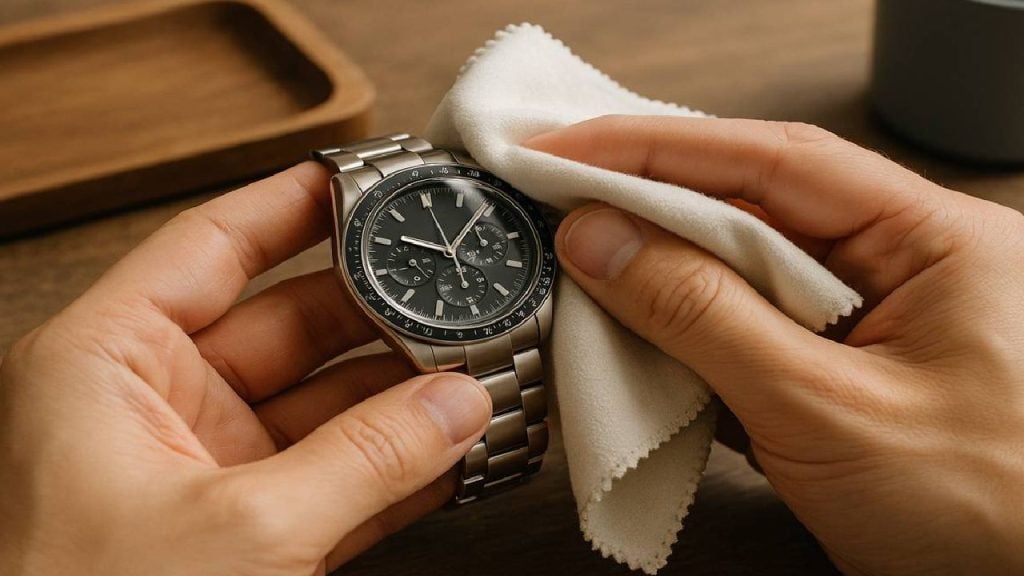
Polishing a watch is important because,
Before attempting to polish a watch, one must have a deep understanding of the watch material to evaluate its compatibility with the polishing method. The following are the known watch materials,
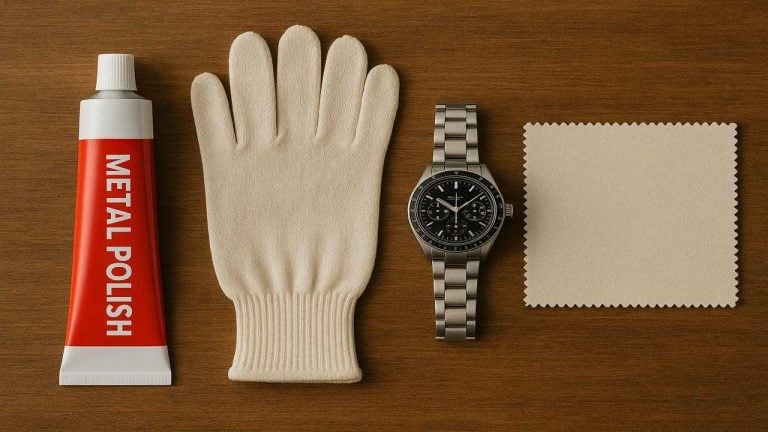
Here are the recommended polishing tools and accessories one may require to start the procedure. You can also check out Sofly for the relevant tools and accessories.
Once you have a complete understanding of the watch material and own the required tools and accessories, you are ready to proceed. The following are the major steps to polish the watch at home.
Well, the very first step is to prepare the watch for polishing. First, remove the watch straps to avoid any kind of damage to them. Then, use mild soapy water along with a soft brush to clean the watch and its case. If the watch is not water resistant, then use the cloth piece that has been half-dipped in water. Now, completely dry the watch with a piece of microfiber cloth.
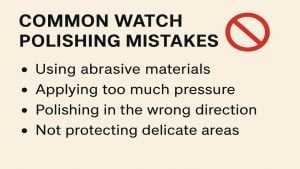
When polishing the watch at home, it is necessary to protect or cover the sensitive areas to avoid any possible damage. It includes covering the crystal glass, bezel engravings, serial number, painted brand logo, and other information using masking tape. Always use high-quality masking tape that is easy to use and remove.
Choose a branded polishing compound as per the watch material. Polishing the watch case is usually performed to remove the small scratches. Apply a small amount of polish over a microfiber cloth. Start rubbing it on a watch case in a circular motion. Keep the pressure gentle while rubbing, then clean the case with a cloth and see the improvements.
First, try to remove the bracelet (if possible) while polishing the watch bracelet. It will make the procedure easier. Put the bracelet on a clean surface and start cleaning it using a soft brush. After that, apply the compatible polish and continue buffing step by step. Once the buffing process is completed, clean the bracelet with a smooth piece of cloth and check for the desired results.
As we know, there are multiple types of watch crystals compatible with various polishing materials. Types of crystals include acrylic, mineral, and sapphire crystal. Similarly, types of polishes include PolyWatch for acrylic, diamond paste for mineral, and a professional service is required for sapphire crystal. Polishing the crystals eliminates spots and scratches effectively.
Finally, the polishing process is completed here, and it’s time to reassemble or reattach the watch parts or components (Bracelet & Straps). Take a clean piece of compatible cloth and gently clean the watch to remove the remaining polish and its spots. Check it out in detail under the full light for a clearer outcome. If everything is alright, then wear the watch and enjoy.
Sometimes it is better to consult a watch specialist instead of attempting to polish on one’s own. Especially when you don’t have relevant tools, or the watch contains deep scratches, or there are broken parts in the watch requiring professional service.
Polishing a watch brings back its new condition and life and efficiently removes scratches and smudges and restores shine. One should periodically repeat this process to improve the lifespan of the watch. But don’t forget to study the material of your watch before polishing. Although it seems to be an easy task to polish the watch at home, it still requires a deep understanding and a watch polishing kit. If you have green checked over both, then you can perform the polishing task at home. Otherwise, professional assistance should be chosen instead of taking any risk.
Are you searching for watch repair tools and accessories? Soflypart has a variety of watch polishing tools and accessories, along with other related parts and equipment. Please check the platform for high-quality watch parts and products.
A: A toothpaste is not a suitable option to use on a watch, as it may damage the watch’s appearance.
A: Home polishing will only deal with light scratches, while for deep scratches, professional service should be preferred.
A: Daylight or Direct Sunlight is recommended to polish a watch at home.