
You can remove watch links at home without a watch repair kit if your watch uses a simple push-pin bracelet. The safe part is identifying the bracelet type before you start. In this guide, we’ll show you what to check first, which household items can help, how to remove links step by step, and when it makes more sense to stop and let a watchmaker handle it.

Yes, you can remove watch links without tools on many basic metal bracelets, but only when the bracelet uses removable push pins. Watches with screws, pin-and-sleeve systems, hidden spring bars, or sliding mesh clasps need a different method, and some of them are a poor fit for DIY work.
That is why bracelet identification comes first. Get that part right, and the job is usually manageable. Get it wrong, and you can scratch the case, bend a pin, or damage the clasp in a matter of minutes.
Check the clasp before you remove any links. Many watches have micro-adjustment holes or a diver extension, and those small fit changes are faster, safer, and easier to reverse than taking the bracelet apart.
Before you begin, check these 3 things:
A good bracelet fit usually lets you slide one finger under the band. You want it secure, but not tight enough to leave marks.
If you like keeping spare hardware around, this is also a good time to check a parts supplier like Soflypart in case you end up needing backup pins or spring bars after the resize.

You need to identify the bracelet type before you push anything out. The right method depends on how the links lock together.
Push-pin bracelets are the easiest type to resize at home. Most removable links have small arrows on the back that show the direction the pin should come out.
Look for these signs:
Screw-link bracelets use tiny screws instead of push pins. You will usually see a small slot on one side of the link.
These bracelets are less forgiving because:
Pin-and-sleeve bracelets can look like normal pin bracelets, but they use a tiny collar or sleeve to hold the pin in place.
You may be dealing with this style if:
Some bracelets hide the release inside the link instead of showing a side hole. These are not always a good fit for no-tool resizing.
Watch for:
Mesh bracelets usually do not have removable links in the normal sense. Most of them adjust by sliding the clasp along the mesh.
Check for these clues:
If you have a mesh band, stop looking for pins and inspect the clasp first. You may only need to unlock it, slide it, and close it again.
For a simple push-pin bracelet, a few household items can do the job if you use them carefully.
These household items can help remove watch links without tools:
The point is not to force the bracelet apart. You want steady pressure, a stable work surface, and enough control to stop the second something looks wrong.
If a pin bends or a spring bar goes missing, replace it before you wear the watch again. Soflypart fits naturally into that step if you need spare bracelet hardware after the resize.
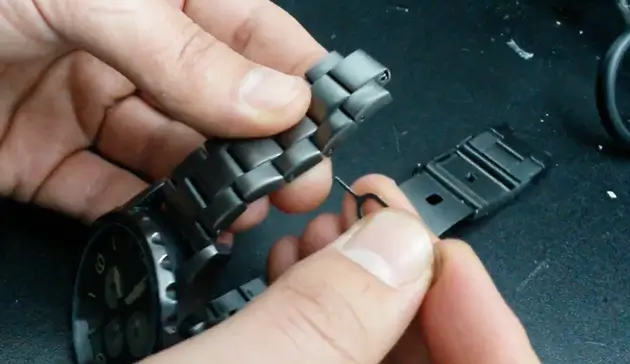
For a basic push-pin bracelet, remove watch links one step at a time and keep the bracelet supported while you work.
Put the watch on and decide how many links need to come out. In many cases, removing one link from each side is better than removing two from one side. That keeps the clasp centered.
Lay a soft towel or cloth on a sturdy table. Place the watch flat and make sure the bracelet will not slide while you work.
Turn the bracelet over and look for arrows on the back. Those arrows show the direction the pin should be pushed out. Only work on links that are clearly marked.
Place the paperclip, SIM ejector tool, or thumbtack on the pin opening. Keep the tool straight. If it slips sideways, it can scrape the bracelet instead of moving the pin.
Push the pin in the same direction as the arrow using slow, even pressure. Once the tip appears on the other side, pull it out gently with your fingers or needle-nose pliers.
Don’t twist the pin out or force it at an angle, because that is where scratches and bent hardware usually start.
Separate the link and place the removed parts in one spot. If a tiny sleeve or collar falls out, stop and note where it came from before you continue.
Remove the matching link from the other side of the clasp if you still need a shorter fit. That keeps the watch balanced on your wrist.
Line up the remaining links and insert the pin back in the reverse direction. Press it in until it sits flush with the bracelet.
Check every pin with your fingertip. Nothing should stick out. Then hold the watch over the towel and give the bracelet a few light tugs. If anything feels loose, stop and fix it before you wear the watch outside.

No arrows do not mean you should push harder. They usually mean the bracelet uses a different system.
A bracelet with no arrows may use:
If there are no visible side holes, inspect the underside of the bracelet. Some release points are hidden on the back, and mesh bracelets often adjust through the clasp rather than through removable links.
Once you notice that the bracelet does not follow a basic push-pin layout, pause and identify it before you do anything else.
Screw links and mesh clasps change the process completely. You should not treat them like a normal push-pin bracelet.
A screw-link bracelet usually needs a watch screwdriver that fits the slot exactly. A mesh clasp usually needs to be unlocked and slid to a new position, not taken apart link by link.
Here is the quick rule:
That quick check can save you a lot of frustration and a few ugly scratches.
Most stuck pins come down to direction, support, or bracelet type.
If the pin will not move, check these causes first:
If the pin starts moving but feels much tighter than expected, slow down and reassess the bracelet. If the pin goes back in loosely, do not wear the watch until you replace it.
The most common DIY mistakes are avoidable. Most of them happen because people move too fast once the first pin starts coming out.
Avoid these mistakes when you remove watch links at home:
A watch bracelet is full of tiny parts. Treat it like one.
Stop and go to a watchmaker when the bracelet is expensive, unusual, polished, ceramic, vintage, or hard to identify.
You should also stop if:
A quick resize bill is usually cheaper than replacing a damaged bracelet, clasp, or screw set.

Yes, you can remove watch links without tools at home on many simple metal bracelets. The safe order is easy to remember: check the clasp first, identify the bracelet type, follow the arrow direction, and remove links evenly from both sides.
If your watch has a basic push-pin bracelet, a paperclip, a soft towel, and careful handling may be enough. If the band looks polished, expensive, unusual, or hard to read, stop before you damage it. And if you need replacement pins, spring bars, or spare bracelet hardware after the job, make sure you have the right parts ready before you wear the watch again.
Yes, a straightened paperclip can work on some simple push-pin bracelets. It is best for basic metal link bracelets, not screw-link or specialty systems.
No arrows usually mean the bracelet uses a different system. Check for screw heads, hidden release points, pin-and-sleeve construction, or a sliding mesh clasp before you try anything else.
Some bracelets hide their release points on the underside, and mesh bands often adjust at the clasp instead of the links. Inspect the back of the bracelet before assuming it cannot be resized.
Remove links from both sides whenever possible. That keeps the clasp centered and usually makes the watch sit better on your wrist.
Yes, for small fit changes. Clasp micro-adjustment is easier, safer, and easier to reverse, so it should always be your first check.
Yes. Acrylic crystals on vintage watches often respond very well to polishing.