
How to Replace and Adjust Watch Straps: A Complete Guide

Introduction

One may not feel the need to change the whole watch in a short interval of time, but may feel the need to change or replace the watch straps for sure. Changing the watch straps or watch bands offers a refreshing look to the watch. The reason behind this replacement may be wear and tear or a change of taste. Both metal and leather-made straps/bands are replaceable on almost every type of wearable watch. Most people attempt to change the straps at home using watch repair tools, while others seek professional assistance due to a lack of relevant knowledge or a high-end watch.

In today’s guide, we’ll walk you through the process of replacing and adjusting your watch straps, including the necessary tools and common mistakes to avoid.

Watch Strap

What is a Watch Strap/Watch Band?

A watch strap is a material or component used on wearable watches to hold the watch on the wearer’s wrist. It is linked to the watch case from one end to another. Apart from just holding, the watch straps also offer an eye-catching look to both the watch and the wrist.

The watch straps/bands are usually manufactured from leather, rubber, fabric, metal, and other related materials. Similarly, these straps feature different fastening techniques, such as a folding/butterfly clasp, tang buckle, or magnetic fastener.

Core Features

  • Provide safety and security while wearing

  • Offer a stylish look for both the watch and wrist

  • Adjustable to fit wrist size and comfort

  • Available in various types, materials, and designs

  • Durable and long-lasting

Types of Watch Straps

  • Leather Straps: Classic Style, Comfortable, and Suitable for Most Dress Styles.
  • Metal Bracelets: Durable, Reliable, and Suitable for Luxury and Regular Wearing.
  • Rubber & Silicone Straps: Lightweight, durable, and Suitable for Sports and Fitness Watches.
  • Nylon Straps (NATO): Budget-Friendly, Easily Available, and Easily Swappable.
  • Fabric Straps: Comfortable, Breathable, and Available in a Variety of Colors.

Why One Needs to Replace Watch Straps/Watch Bands?

  • Wear and Tear can lead to watch band replacement.
  • If the watch straps are affecting the wrist comfort, one may need to replace them.
  • If a wearer needs to change the style or wants to switch the straps to another type.
  • Some people even keep the original straps aside and use aftermarket straps to maintain their vehicle’s resale value.
  • Allergies to skin can be the reason one feels a need to change or replace the watch straps.
  • One may need to replace the watch straps for resizing or adjustment as per the wrist.

Tools Required to Change Watch Straps

For all your watch repair parts and watchmaking needs, Soflypart offers a wide range of watch parts with wholesale discounts.
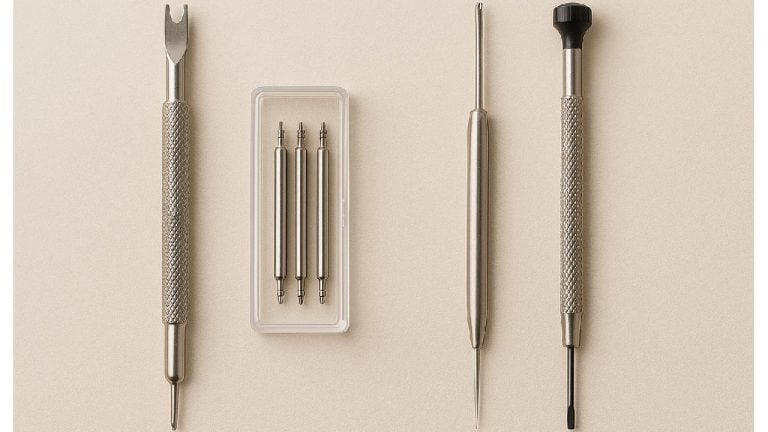
Watch Repairing Tools

How to Change Watch Straps

1: Prepare Work Area

  • Select a clean and organized area as your workspace.
  • Use a soft cloth on the surface (neat and clean).
  • Place the watch on that cloth in a face-down position.

2: Identify Strap Type

  • Confirm the attachment type, such as quick-release, spring bar, or screwed-bar straps.
  • Arrange the tools as per the strap type to ensure compatibility.
  • One can take help from a magnifying glass for deep analysis.

3: Remove the Old Strap

  • For a quick-release type attachment, simply slide the lever toward the center and pull the strap away from the lug.
  • For a spring-bar type attachment, simply use the spring bar tool to press one end of the spring bar, do the same at the other end, and the attachments will leave their position.
  • For a screwed-bar type attachment, simply use a compatible screwdriver. Remove small screws and keep them in a safe space to avoid missing any screw.
Watch Strap Removal

4: Cleaning & Wiping

  • Once the straps are removed successfully, inspect the relevant area carefully.
  • Perform a cleaning activity with a soft cloth to ensure everything is alright.
  • Use a magnifying glass for deep inspection and evaluating any wear and tear.

5: Install New Watch Strap/Band

  • For spring-bar attachment, insert one corner of the spring bar into the lug hole. At the same time, press the second corner of the spring bar into the other lug hole and press it gently.
  • Similarly, for a quick-release attachment, set the pin into the matching position. First, insert one side, retract the lever, then insert the second side. Gently release the lever for proper locking.
  • For screwed bars, place the screws over the bar, position them accordingly to hand, and half-tighten them. After that, start tightening the screws gently, gain the required strength, and avoid over-torque.

6: Final Checks

  • Confirm that the bars are well settled into their respective positions.
  • Confirm that the other parts or components of the watch are not damaged.
  • Open and Close buckles twice to confirm locking is working well.
  • Wear the watch and check the size, comfort, and looks as you expect.

Strap Adjustments

1: Adjusting Metal Straps

  • Locate the small link located under or inside the bracelet, which can be used to open the pins.
  • Once found, use the link remover tool to pin out the link accordingly.
  • Measure the exact size and remove that many links.
  • After that, reposition the pins and insert them into the bracelet.
Watch Band Adjustment

2: Adjusting Leather Straps

  • Leather Straps usually come with pre-made holes up to a certain limit.
  • If one needs any adjustment or resizing, extra holes can be made accordingly.
  • One can use a leather whole punch tool to make a hole as per their requirement.

3: Adjusting Rubber/Silicone Straps

  • The silicone straps also come with pre-made holes.
  • If required further, one can make another hole with a punch tool.
  • Be careful while trimming or punching, as it may damage the strap alignment.

4: Adjusting Nylon Straps

  • Wrap the strap around the wrist, and mark the required size and position.
  • Pass the strap through the buckle and hold the extra one back into the metal keeper.
  • If there is a need to make a hole, one can make an extra hole.
Damaged Watch Strap

Common Mistakes to Avoid

  • Make sure to avoid using the wrong tools, as they can damage the watch.
  • Don’t put extra pressure on pins and links to maintain safe alignment.
  • Only remove those links that are required; extra removal can make the strap loose.
  • Make sure to avoid unnecessary corrections with the watch crystal and the watch case.
  • Avoid over-tightening the screws as they can slip in the hole.

Final Remarks

Watch owners at some stage require replacing the old watch straps. Causes may include a change in taste, a change in type, or wear and tear. In reality, replacing or adjusting the watch straps/band is an easy task to perform. One just needs to have a required set of tools and some basic knowledge. It helps in saving the extra cost of visiting a watch mechanic.

Otherwise, professional watch experts also offer this service, which is mostly suited to luxury category watches, because it is not recommended to take any type of risk for your expensive watches.

FAQs

Q1: Does every strap match any watch?

No, one needs to confirm the lug compatibility before installing any strap.

Q2: Which one is the best watch strap for sports and water activities?

As per the user opinion, Rubber or NATO straps are the best ones to use for sports and water activities.

Q3: When should I replace my watch band or straps?

The clear answer is that when you need it, apart from this, straps can serve you for more than 2 years, depending on the type and quality.