
Beyond the watch case, watch straps, watch dial, watch hands, and watch movement, one feature can make or break real-world usability: low-light legibility. From night-time commuting to diving or military operations, luminous materials (lume) let you read the time in the dark. The technology has evolved from early radium paints to tritium and today’s Super-LumiNova, reshaping how watches glow.
This guide explains how watch lume works, traces its history, and compares Tritium vs. Super-LumiNova—covering technology, brightness, longevity, safety, maintenance, aesthetics, and cost—so you can choose confidently.
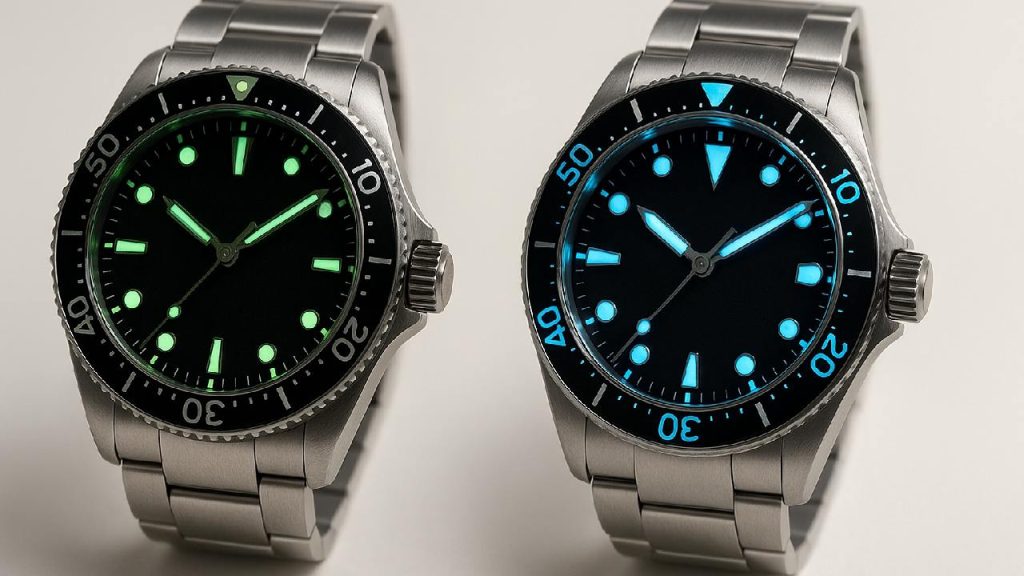
Luminous material, in general, is a substance applied to watch parts, such as dials, hands, or bezels, to make them glow in low-light or dark environments. As a result, it becomes easy for the wearer to read or check the time without interruption.
Currently, there are two trending luminous materials in watches: one that glows continuously (Radioluminescent Materials) without any external assistance, and the second that stores the light (Photoluminescent Materials) and releases it accordingly.
These luminous features are suitable for users of any category and especially for those in the field, like soldiers, divers, pilots, outdoor adventurers, and others. So, a practical use of luminous material in watches is more prominent for professionals.

Extremely bright but radioactive and hazardous; ultimately phased out and banned.
Safer than radium and self-glowing; widely used for professional tools (diving, military). Still used today.
Non-radioactive, high-performance photoluminescent pigments (strontium aluminate) became the standard for modern watches.
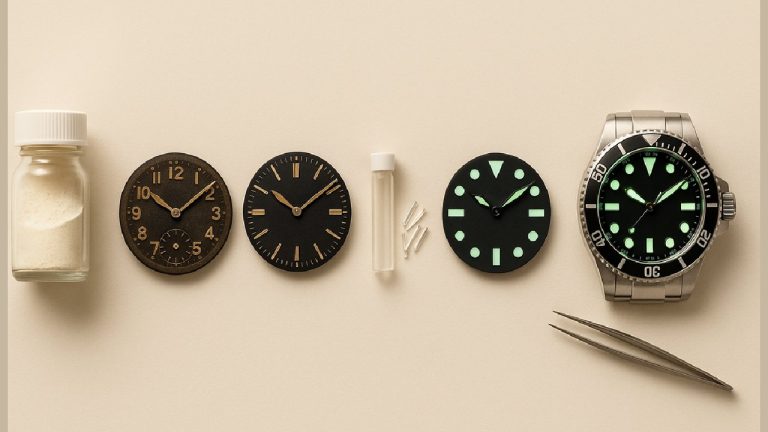
Radium
Tritium (Radioluminescent)
Super-LumiNova (Photoluminescent)

Tritium is a luminous material type that is based on an isotope of hydrogen. It glows following a process called Radioluminescence. If we specifically discuss its presence in watches, it is equipped with tiny gas tubes covered by a layer of phosphorescent coating.
It features a 24/7 glow without any need for charge and serves for years without any compromise in performance. Tritium is the first choice of professional and practical users from different categories, like military, divers, pilots, and adventure survivors.
Key Features
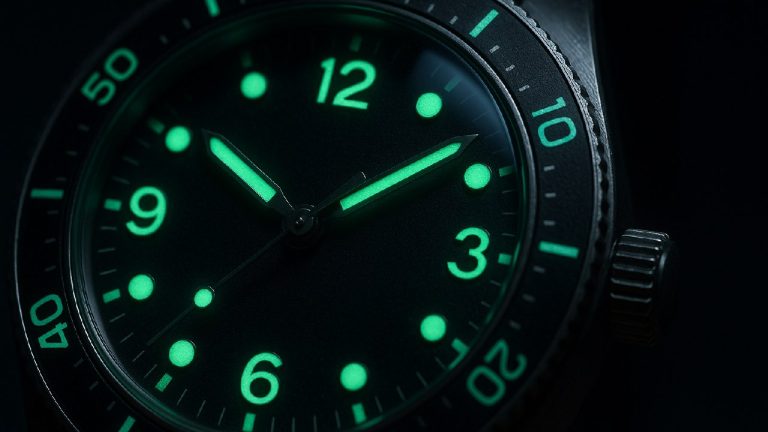
Super-LumiNova is a modern non-radioactive material used in the latest watches, ranging from budget to luxury. It operates based on following the photoluminescent process. It absorbs the light (natural/artificial) around the sources and stores the light.
The stored light features glow-in-the-dark, which is bright and more visible, providing ease of use while reading the watch in low-light conditions. It meets all the required standards of the watch industry and is therefore the choice of high-end luxury watch categories.
Key Features

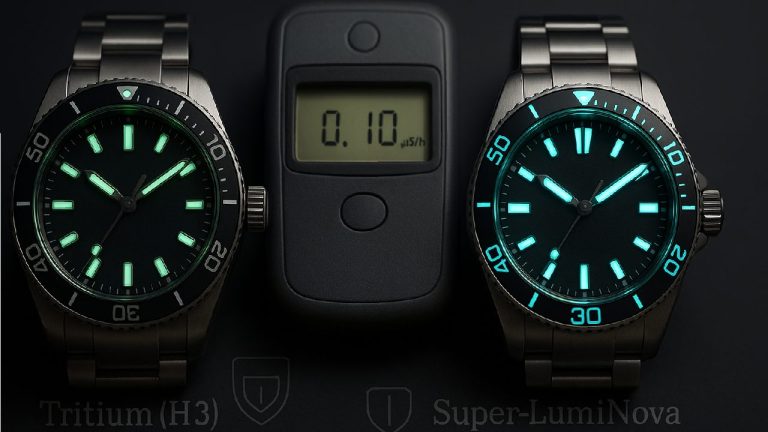
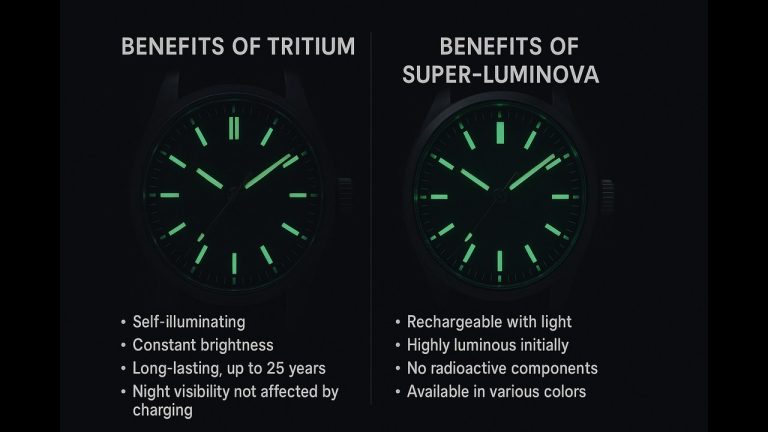
Both Tritium and Super-LumiNova serve the watch community well—but in different ways. Tritium excels where constant, maintenance-free visibility matters most. Super-LumiNova dominates when you want brilliant glow, safety, style, and versatility—provided you can recharge it with light.
If your priorities lean toward rugged reliability, tritium is compelling. If you want eye-catching brightness and refined design, Super-LumiNova is likely your pick.
For parts, tools, and upgrades—Soflypart offers a curated range of watch components, repair kits, polishing tools, watch movement parts, and complete movements. Explore the collection to match your build or service needs—without compromising price or quality.