
You can buy Omega watch parts through authorized service centers, NOS parts dealers, or specialized online suppliers. The hard part is not finding a listing. It is making sure the part matches your caliber, carries the right reference number, and is sold as genuine when the repair requires genuine Omega parts.
This guide shows you how to compare part types, check authenticity, read price ranges, and choose a supplier before you place an order.
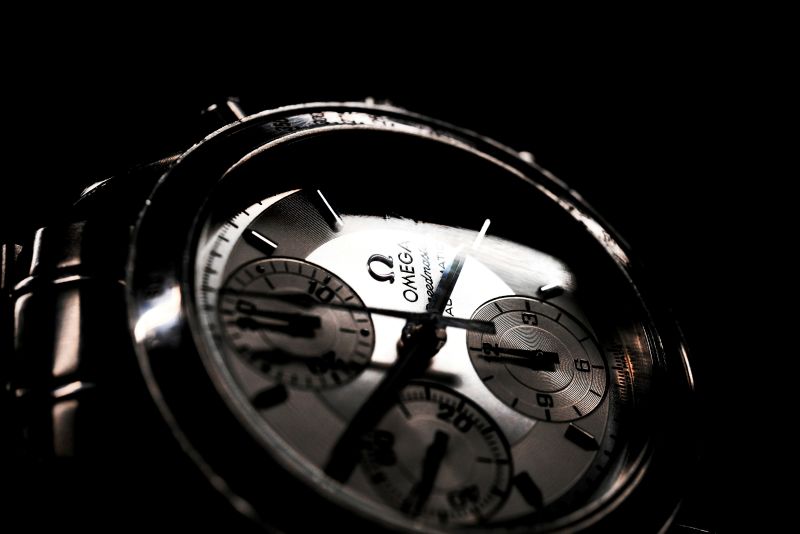
Omega watch parts are factory-made replacement components built specifically for Omega timepieces. They include everything from movement internals like mainsprings and balance wheels to external parts like crystals, crowns, and bracelet links. These parts are engineered to exact tolerances so they fit and function correctly inside your watch.

Since 2015, Swatch Group has restricted genuine parts distribution to authorized service centers only. Independent watchmakers and repair shops lost direct ordering access, which shifted the entire market toward NOS inventory, the stock that dealers accumulated before the cutoff.
This restriction means two things for buyers. First, popular parts for common calibers sell out and may not come back. Second, prices have climbed because supply is fixed while demand from watchmakers and collectors remains steady. If you are planning a repair, you need to verify availability early and have a backup source ready.
For example, a reversing wheel for the Caliber 9300 or a date indicator for the 8500 series used to be a simple phone call to Omega. Now you need to source it from a dealer who still has units in stock. When that dealer runs out, you wait for another one to surface.
Swatch Group stopped supplying genuine Omega parts to independent distributors worldwide around 2015. Before that, a certified watchmaker could order a reversing wheel or a date indicator directly from Omega using a parts account. Now those accounts are limited to authorized service centers and individual watchmakers who have completed Omega’s caliber-specific accreditation.
You can buy Omega watch parts in four main categories: movement components, case and crystal parts, bracelet hardware, and dial and hand sets. These watch parts serve different repair goals, so the safest search starts with the part category, caliber number, and reference number.

Movement components are the internal parts that keep the watch running. They include mainsprings, stems, balance wheels, reversing wheels, date wheels, setting levers, screws, plates, and other caliber-specific parts.
Fit is the main risk here. A reversing wheel for Caliber 9300 will not automatically fit Caliber 8500, even though both are Omega movements. Before ordering any movement part, cross-check the caliber number against the part reference. Some parts, especially co-axial components, should be installed by a trained watchmaker.
Case and crystal parts protect the movement and help maintain water resistance. This group includes crystals, crowns, pushers, caseback gaskets, bezel inserts, and related seals.
When replacing watch crystals, confirm the case reference, crystal material, and gasket fit before ordering. Omega models may use sapphire, mineral glass, or Hesalite depending on the watch version. A Speedmaster Professional with Hesalite is not the same crystal job as a Sapphire Sandwich model.
Bracelet hardware includes links, pins, tubes, end pieces, spring bars, and clasps. These parts wear down over time, especially on watches that see daily wrist time.
A bracelet that rattles or sags may only need new pins, tubes, or end pieces. It does not always need a full bracelet replacement. For collectors, the end piece and clasp reference also matter because the wrong hardware can hurt fit, comfort, and resale value.
Dials and hand sets are the most visible Omega watch parts. They are usually replaced during restoration, heavy damage repair, or value-sensitive cosmetic work.
This is where authenticity matters most. A mismatched handset, refinished dial, or incorrect lume style can affect the value of a vintage Seamaster, Speedmaster, or Constellation. Before buying, match the dial reference, case reference, and movement version.
The best way to check an Omega part is to verify the reference number, inspect the packaging or markings, and confirm caliber compatibility. No single check is enough. Use all three before you buy.
Start with the part reference number. This number links the component to a specific function, movement, or case reference.
You may find the reference number in technical documentation, parts catalogs, supplier listings, or product photos. For example, some Omega movement parts are listed by long reference numbers tied to a specific caliber and function. Before using any number, confirm it against the product listing and your movement documentation.
Do not rely on model name alone. “Omega Seamaster part” or “Omega Speedmaster wheel” is too broad for a safe order. The reference number gives you a much better chance of buying the right component the first time.
Genuine Omega parts may arrive in branded packaging, sealed service packaging, or with markings that match the part type. Some crystals may also include a small Omega mark, depending on the crystal and model.
Be careful with loose parts in plain bags, unclear photos, or vague “genuine” claims. Ask for clear images of the packaging, reference number, and part surface before buying. If the part is expensive or hard to replace, ask a watchmaker to inspect it before installation.
A genuine Omega part is still wrong if it belongs to a different caliber. A stem, wheel, or date component must match the movement version, not just the brand.
Check your movement’s technical sheet before ordering whenever possible. If the fit is not clear, contact the supplier with your caliber number and part reference. A good supplier should be able to confirm compatibility or tell you when more information is needed.
You can buy genuine Omega watch parts through authorized service centers, NOS inventory sellers, or specialized online watch parts suppliers. The right source depends on whether you need warranty-backed service, a single replacement part, or fast access to a specific caliber reference.

Authorized Omega service centers are the safest choice when you want factory-backed service and do not need to buy the part separately. They receive parts through Omega’s official service network and install them as part of a service job.
The trade-off is flexibility. You usually cannot buy one loose reversing wheel, stem, or date indicator from an authorized center. You send in the watch, approve the service, and wait for the repair to be completed. This route works best for high-value watches, warranty-sensitive repairs, or collectors who want the service record.
NOS sellers can be useful when you need an older Omega part that is no longer easy to source. NOS means “new old stock,” so the part was produced earlier but never installed.
Availability is the challenge. Once a specific NOS part sells out, there may be no clear restock date. That matters if you are repairing an older Seamaster, Speedmaster, Constellation, or vintage bumper automatic. Always confirm the part reference, condition, and packaging before you buy.
Specialized online suppliers are often the best fit when you already know the caliber and part reference you need. Instead of paying for a full service, you can search by movement number, part category, or reference number.
This is where Soflypart fits well for repair shops and collectors. Our genuine omega parts category helps you check movement components by part type and compatibility, including reversing wheels, date indicator parts, screws, plates, and other movement components.
This matters because a genuine part can still be the wrong part. A Caliber 9300 component will not automatically fit a Caliber 8500, even if both are Omega movements. Before ordering, match the caliber, reference number, and product photos. If you are not sure, contact the supplier with your movement number before you buy.
Most Soflypart orders ship within 3 business days, and worldwide shipping is available.
Avoid sellers who cannot provide clear photos, part reference numbers, or return policies. A genuine Omega part should have a reference number you can check against technical documentation or a trusted parts catalog.
Marketplace listings can include real finds, but they also carry more risk. Be careful with loose parts in plain bags, missing reference numbers, vague “fits Omega” claims, or prices far below the normal market range. A few minutes of checking can save you from installing a part that damages the movement or fails during testing.
Omega watch parts can range from under $50 for basic gaskets to several hundred dollars for rare dials or movement components. Prices depend on caliber, condition, part rarity, and NOS availability. The ranges below are general market estimates as of 2026, so check the current listing before ordering.
Part Category | Typical Price Range (USD) | Notes |
Gaskets and seals | $15 to $40 | Caseback, crown, and crystal gaskets |
Small movement parts | $50 to $200 | Wheels, stems, levers, and reversing wheels |
Crystals | $75 to $250+ | Hesalite usually costs less than sapphire |
Crowns and pushers | $50 to $200 | Model-specific parts vary by case reference |
Dials and hand sets | $250 to $950+ | Factory-sealed service dials cost more |
Prices can move quickly when NOS supply gets thin. A part that costs $80 today may cost much more later if the last available stock sells out. If you are doing a full restoration, buy hard-to-source movement parts before cosmetic pieces like straps or bezels.
Genuine Omega parts are made to Omega specifications and built for a specific movement, case, or bracelet reference. Aftermarket alternatives may look similar, but even a small dimensional difference can cause wear, poor fit, or repeat repair work.
Generic options can make sense for some exterior items, especially straps or non-original cosmetic replacements. For movement internals, genuine parts are usually the safer choice. A failed reversing wheel or incorrect stem can force you to reopen the movement, and that labor often costs more than the part itself.
Before you buy Omega watch parts, confirm the caliber number, verify the part reference, and check the supplier’s return and compatibility policy. These three checks prevent most ordering mistakes.
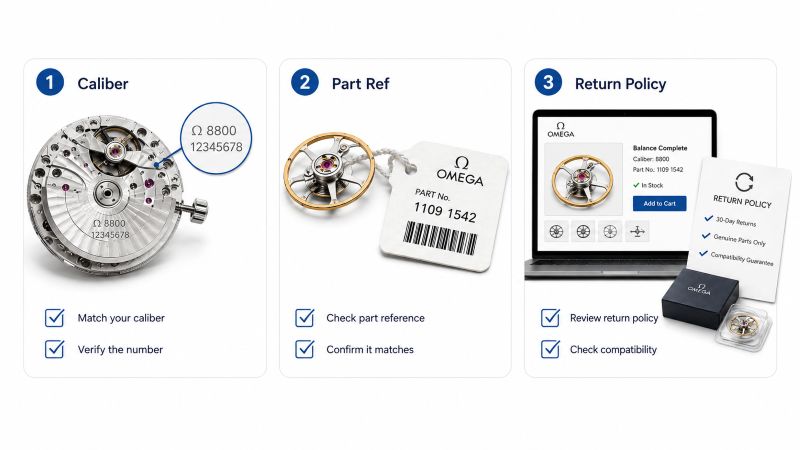
Start with the caliber number on the movement. It may appear near the balance wheel, on the main plate, or in the watch’s service documents.
Write the number down exactly as shown. Caliber 8500, 8500A, and another co-axial variant may use different parts. That small suffix can change the stem, wheel, date component, or mainspring you need.
Open the caseback only if you have the right tools and experience. If you cannot do it safely, check the original papers, search by model reference, or ask a watchmaker to identify the movement.
Cross-check the part reference against your caliber’s parts list or a trusted supplier listing. A photo alone is not enough.
Ask for the reference number if the listing does not show one. Good suppliers usually list the part number, compatible caliber, and clear product photos. If the seller cannot provide that information, treat the listing with caution.
Choose a supplier who can verify fitment when you provide the caliber number and part reference. This matters most for movement parts, crowns, stems, crystals, and bracelet hardware.
Check the return policy before buying. Many suppliers only accept unused parts, and installed movement components may not be returnable. A quick fitment check before ordering is much easier than solving a return after the watch is already open.




You can replace some exterior Omega watch parts yourself, but movement repairs should go to a trained watchmaker. The line is simple: bracelet and strap work may be safe for careful enthusiasts, while internal movement work carries much higher risk.
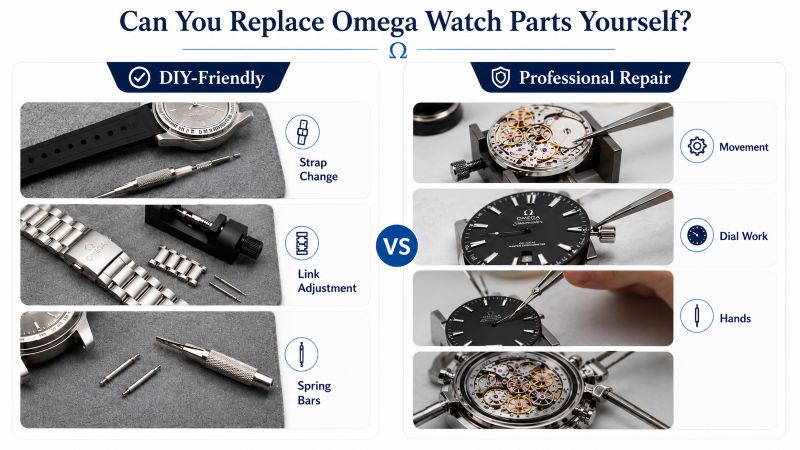
Strap changes and bracelet link adjustments are usually the safest DIY jobs. Some collectors also replace spring bars or simple exterior hardware if they have the right tools and a steady hand.
Simple exterior jobs still require proper watch repair tools, including a spring bar tool, bracelet pin tool, case cushion, and soft work surface. Use the correct size tool and stop if the part resists. Force is how lugs get scratched and bracelet screws get damaged.
Be careful with gaskets and water resistance. A caseback gasket may look simple, but the watch still needs pressure testing if you expect it to stay water-resistant.
Send the watch to a professional for movement internals, co-axial escapement work, chronograph modules, mainspring barrels, dial work, and hand installation. These jobs require clean handling, proper alignment, and tools most hobbyists do not own.
A small slip can scratch a bridge, bend a hand, snap a pivot, or leave dust inside the movement. For parts like reversing wheels, date indicators, stems, and mainspring-related components, professional labor is usually cheaper than replacing a damaged caliber.
Genuine Omega watch parts are easier to buy when you start with the right checks. Confirm your caliber number, match the part reference, and choose a supplier who understands movement compatibility.
For movement internals like reversing wheels, stems, and date components, genuine parts are usually the safer choice. For exterior parts, you may have more flexibility, but case reference and fit still matter.
If you already know what you need, browse the genuine omega parts selection by caliber. Confirm the reference number before ordering, and contact the supplier if fitment is not clear.
Many newer Omega watches can still be serviced with genuine parts, but availability depends on the caliber and part type. Vintage models may rely on NOS inventory, so check the reference number early.
Some independent watchmakers use genuine Omega parts through supplier networks or approved access. Ask your repairer whether they will use genuine, NOS, or aftermarket parts before the service begins.
Gaskets and seals should be replaced during proper water-resistance service. This usually includes the caseback, crown, and crystal gaskets. Never reuse old gaskets on a watch that needs pressure testing.
Shipping time depends on stock, destination, and customs clearance. Soflypart ships most orders within 3 business days, but delivery time varies by location. Contact the supplier first if your repair has a deadline.
Genuine Omega parts are made to Omega specifications. Generic parts are aftermarket replacements designed to fit certain models. Use genuine parts for movement internals whenever fit and reliability matter most.