Introduction
A Rolex bracelet is more than a functional component—it is a hallmark of precision engineering and timeless design. Whether it’s the fluid elegance of the Jubilee or the rugged reliability of the Oyster, a snug-fitting bracelet ensures comfort, security, and aesthetic harmony. Over decades of wear, even the finest stainless steel or precious metal links can develop stretch, leading to a loose, rattling fit that compromises both performance and elegance. This guide explores the science behind bracelet stretch, outlines professional restoration techniques, and provides actionable insights for preserving your timepiece’s integrity.
(At SoflyPart, we understand the value of precise bracelet restoration and provide compatible components and professional tools to support this work.)
Why Rolex Bracelets Stretch Over Time
Rolex bracelets are masterclasses in micro-engineering. The Oyster’s three-piece link system and the Jubilee’s five-piece assembly rely on cylindrical pins and collars (or “bushes”) to maintain structural cohesion. Over time, three key factors contribute to wear:
- Mechanical Fatigue: Each wrist movement exerts lateral forces on link shoulders, gradually enlarging pin holes by 0.01–0.03mm annually.
- Material Degradation: Even 904L steel pins develop microfractures under repeated stress, while gold alloys suffer accelerated deformation due to their softer composition.
- Environmental Factors: Dust particles act as abrasives, accelerating wear at friction points.
Key Indicators of Stretch:
- Vertical “play” exceeding 1.5mm between links
- Audible rattling when shaking the bracelet
- Uneven gaps near end-links or clasp
Benefits of Professional Tightening & Restoration
Precision Fit Restoration:
- Replicates factory tolerances (0.05–0.1mm link gap) for seamless articulation
- Stabilizes the clasp to prevent accidental openings
Aesthetic Rejuvenation:
- Aligns twisted links and eliminates “stair-step” gaps
- Restores satin brushing to a 600-grit finish or mirror polishing to 0.5μm Ra roughness
Long-Term Preservation:
- Prevents case lug damage caused by excessive lateral movement
- Extends bracelet lifespan by 8–12 years with proper maintenance
Step-by-Step Restoration Process
Step 1: Initial Evaluation
Technicians use Rolex Caliber 5230 stretch gauges to quantify wear:
- Mild Stretch (<15%): Tightening existing pins suffices
- Moderate Stretch (15–30%): Requires pin replacement and bush resizing
- Severe Stretch (>30%): Often necessitates partial link replacement
Step 2: Full Disassembly
- End-links are removed using professional tools such as the Bergeon 6767-F to avoid scratching lug surfaces
- Links are disassembled in a nitrogen-rich environment to prevent oxidation of exposed metal
Step 3: Pin Replacement & Link Re-compression
- Worn 1.5mm pins are replaced with OEM-grade equivalents hardened to 58 HRC
- Hydraulic presses apply 12–15 PSI to compress link shoulders, restoring original 0.8mm interlink spacing
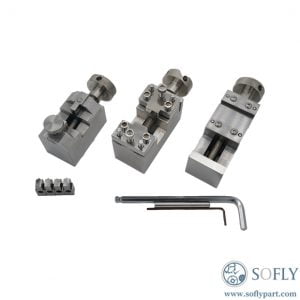
(SoflyPart supplies high-precision replacement pins and link tools compatible with Rolex specifications to ensure accuracy and safety during this stage.)
Step 4: Link Alignment & Bush Replacement (Jubilee Specific)
- Deformed nickel-silver bushes are extracted via ultrasonic vibration
- New collars are installed with Rolex-spec 0.2Nm torque to prevent mushrooming
Step 5: Polishing & Brushing
- Satin finishes are recreated using zirconium oxide belts at 30° angles
- High-polish center links undergo diamond paste treatment (3μm grit)
Step 6: Reassembly & Final Fit Test
- Bracelets are reassembled on a Rolex 7040 sizing block to verify curvature
- Clasp tension is calibrated to 2.5N opening force
When Full Restoration Isn’t Feasible
For Pre-1980s Bracelets Lacking Compatible Parts:
- Certified Pre-Owned Replacements: Matched by serial numbers where possible
- Custom Solutions: Laser-welded platinum reinforcement for stretched gold links
(The SoflyPart technical team can also assist in evaluating alternative restoration paths for rare or discontinued models.)
DIY vs. Professional Service
Limited DIY Adjustments:
- Link removal using Bergeon 7825 pin punches (for modern Solid End Links)
- Micro-adjustment of Glidelock clasps via calibrated detents
Risks of Unqualified Repairs:
- Over-polishing thins links by >0.3mm, voiding authenticity certifications
- Improper pin installation may scratch case flanks, reducing resale value by 20–30%
(For experienced collectors and watchmakers, SoflyPart offers professional-grade tools and OEM-compatible components for careful, targeted maintenance.)
Maintenance Tips to Prevent Future Stretch
- Bi-Annual Ultrasonic Cleaning: Removes abrasive particles from pin channels
- Lubrication Protocol: Apply Moebius D5 grease to pins every 3 years (0.3mg per joint)
- Usage Guidelines: Avoid supporting more than 2kg while wearing the watch
Frequently Asked Questions
Q: Can polishing restore a bracelet’s original thickness?
A: No—polishing removes 0.02–0.05mm per service. Severe wear requires link replacement.
Q: Are aftermarket pins safe for vintage models?
A: Only if ISO 764-compliant. Non-magnetic 316L steel pins are acceptable for 1950s Oysters.
Q: How long does full restoration take?
A: 5–7 days for standard models; 3 weeks for rare references requiring custom parts.
Conclusion
A meticulously restored Rolex bracelet not only honors the watch’s heritage but also safeguards its functional excellence. For owners of models like the Submariner 126610 or Day-Date 228238, professional tightening ensures the bracelet remains worthy of the movement it houses.
At SoflyPart, we’re committed to supporting high-level watch servicing by offering precision-matched components and watchmaking tools trusted by professionals around the world.