
Apart from the watch brand, its design, and other specifications, time accuracy is the most notable element in building trust between the watch and the wearer. However, in modern times, watches are susceptible to magnetic interference from everyday devices, which can cause time fluctuations. Notably, mechanical and steel-made watches are sensitive to magnetism due to their numerous tiny metal components. Here, the role of anti-magnetic materials comes into play, providing protection against magnetism.
In today’s guide, we will explain how anti-magnetic materials in watches mitigate the effects of magnetic fields. What are the known anti-magnetic materials, how they actually work, and the benefits of anti-magnetic materials? Let’s start!

Magnetism, in general, is defined as a neutral force that has the ability to attract and repel materials, especially metals (iron, nickel, and cobalt). The known cause of magnetism is the motion of electric charges, which is caused by the movement of electrons within atoms.
Magnetic fields are invisible in reality, but they can be felt when interacting with materials. In most materials, atomic magnets move in random directions, without exhibiting magnetic properties. In metals, the atomic magnets align in the same direction, resulting in a magnetic field.

As we discussed earlier, mechanical watches are more prone to magnetic fields compared to others. Here, we will examine how magnetism affects the accuracy of mechanical watches.
The anti-magnetic materials refer to those materials that resist magnetism. Below is detailed information on how these materials function in watches.
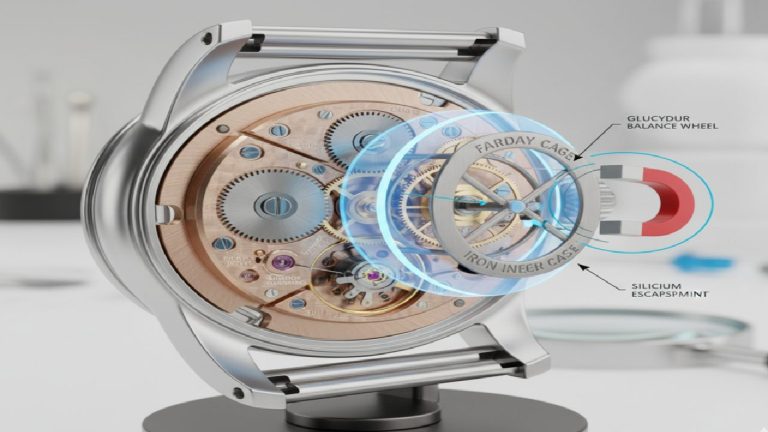
Magnetic shielding points towards early-stage solutions for mitigating the effects of magnetic fields. This method was introduced by Faraday and is also known as the “Faraday Cage Principle”. Following this principle, a layer of soft iron is wrapped around the watch movement to reduce the impact of the magnetic field. It includes,
The Faraday Cage Principle was highly effective in eliminating the impact of magnetism, but it had certain limitations, including heavy weight and design conflict. It tends to focus manufacturers towards another solution called anti-magnetic materials instead of shielding.
Anti-magnetic materials are used in modern watches to minimize the risk of magnetic interference. It is highly effective, long-lasting, and has zero limitations. There is no issue of heavyweight or design conflict. It includes Silicone, Nivachoron Alloy, Glucydur/Navarox, Titanium, and Beryllium. Below are the anti-magnetic materials used in watches.
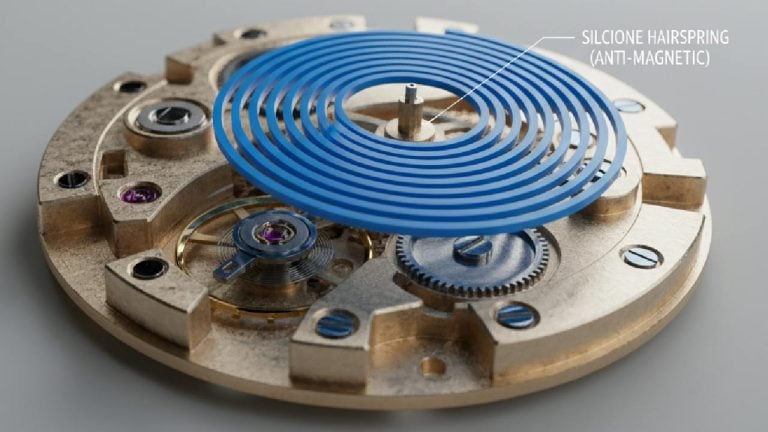

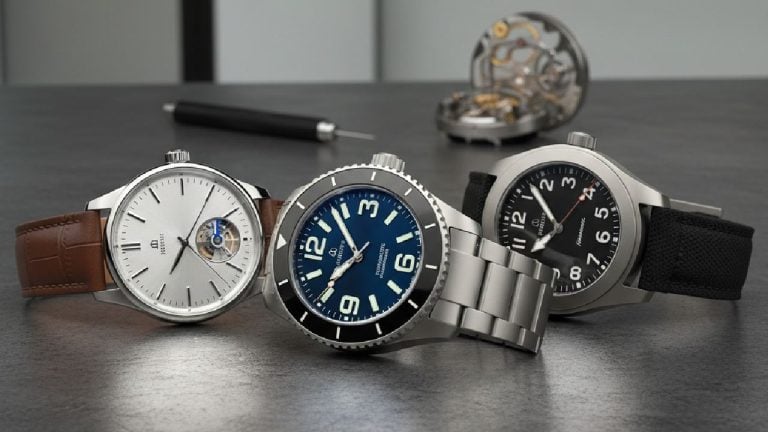
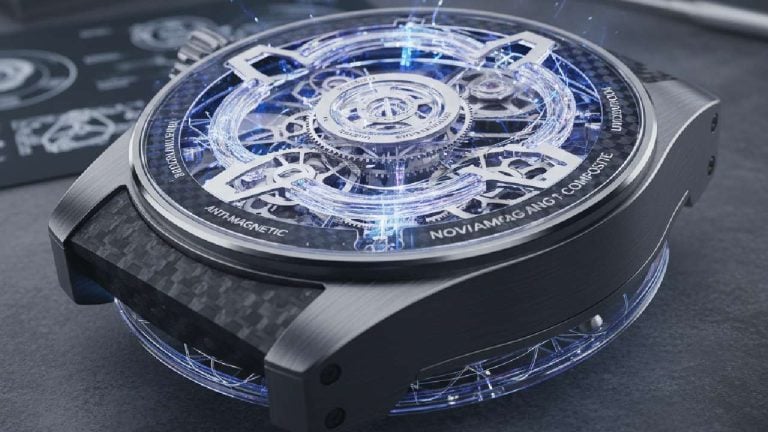
Protecting your watch health is compulsory, as exposure to magnetic fields has become increasingly common. It can negatively impact the durability, lifespan, and behavior of the watch movement. Thanks to the inclusion of anti-magnetic materials (Silicon, Nivachron Alloy, and Glucydur) in modern watches, which is undoubtedly a marvelous application of engineering. It helps to maintain time accuracy and eliminates the risk of magnetic interference. If you are planning to buy a watch featuring anti-magnetic attributes, don’t forget to check out the brand reputation and certification level (like ISO 764, METAS)
Contact Soflypart today, as we are a reputable provider of high-quality watch repair tools, and a variety of other watch parts and accessories. Go and grab the product of your choice.