Types of Watch Clasps: How to Choose the Right Clasp (Complete Guide)

Introduction:

A watch clasp affects comfort, security, strap lifespan, and daily usability more than most people expect. A poorly chosen clasp can pinch skin, snag sleeves, feel too tight by afternoon, or even open accidentally. Over time, it can also shorten the life of your strap or bracelet.

In short: tang buckles suit dress watches, deployant clasps balance comfort and daily wear, and diver clasps prioritize security and adjustment.
This guide explains how clasp mechanics, ergonomics, and adjustability play out in real life, so you can choose with confidence instead of guessing.

Watch Clasps

What are the basic parts of a watch clasp?

Before comparing clasp types, it helps to clear up the parts and terms that cause the most confusion.

Watch clasp anatomy (what each part actually does)

  • Blade(s): Folding arms that carry load and control how the clasp opens and closes
  • Hinge / Pivot: Affects smoothness and long-term durability
  • Clasp Cover: Protects the mechanism and determines how bulky the clasp feels
  • Fold-Over Arm: A secondary locking arm, common on sport and dive watches
  • Push-Buttons: Prevent accidental opening from side pressure
  • Safety Lock: A backup latch if the main lock fails
  • Spring Bars / Screws / Links: Attachment and sizing points
  • Micro-Adjust Track / Extension: Allows small length changes without resizing

A simple classification map

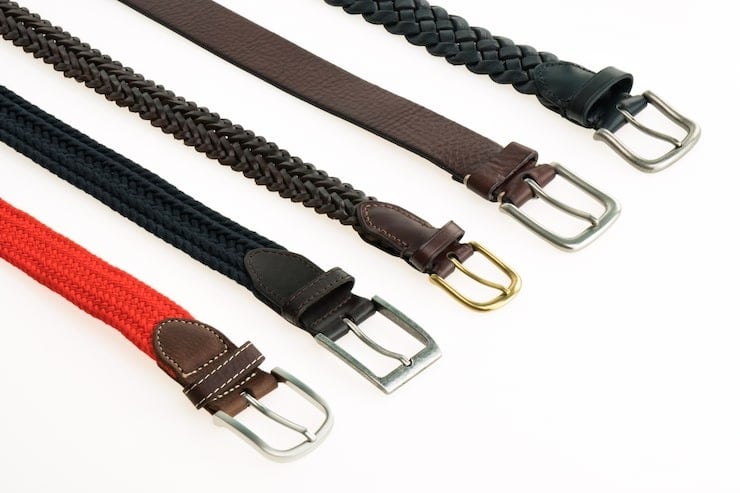
  • Buckle family: Tang or pin buckles, most common on leather watch straps
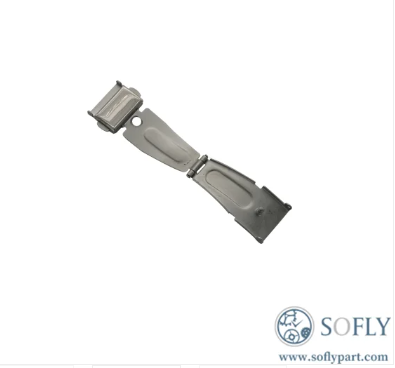
  • Deployant family: Folding clasps, including single-fold and double-fold designs (butterfly clasps are a common double-fold style)
  • Diver clasp systems: Fold-over arm + safety lock + extension + (often) micro-adjust

Terminology clarifier

  • Deployant / deployment / folding clasp: Often used interchangeably
  • Butterfly vs concealed clasp: Similar look, different internal structures
  • Bracelet clasp vs strap buckle: Bracelets use clasps; straps use buckles
Tang Pin Buckle

What are the main types of watch clasps?

Each clasp below is evaluated using the same criteria so you can compare them fairly.

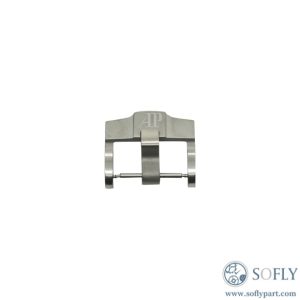
Tang / Pin Buckle (Classic Strap Buckle)

Best for: Dress watches and vintage styles
Not ideal for: Wrists that change size during the day

A pin passes through holes in the strap to secure the watch.

  • Security: Reliable when sized correctly
  • Comfort: Limited by hole spacing
  • Adjustability: Fixed increments only
  • Wear impact: Creases leather watch bands over time

Best scenarios

  • Thin leather watch straps
  • Occasional or formal wear

Common issues

  • Leather stretching around holes
  • Fit that feels close, but never perfect

Single-Fold Deployant Clasp

Best for: Daily leather-strap wear
Not ideal for: Very thick or padded straps

A single folding blade opens wide and closes flat against the wrist.

  • Security: Better than a tang buckle
  • Comfort: Even pressure distribution
  • Adjustability: Limited, but stable
  • Wear impact: Reduces strap creasing

Single-fold deployants are often preferred on leather watch bands because they extend strap life and feel more consistent day to day.

Butterfly Clasp
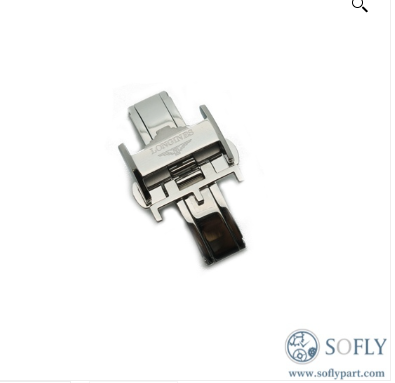
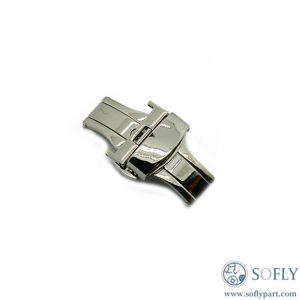
Generic Longines Butterfly Deployant Clasp 16/18mm

Butterfly Clasp / Double-Fold Deployant

Best for: Slim dress watches
Not ideal for: Active use or gloves

Two folding blades meet in the center for a clean, symmetrical look.

  • Comfort: Excellent when edges are well finished
  • Adjustability: Minimal
  • Usability: Requires alignment when closing

In real use, most complaints about hair pinching come from poorly finished butterfly clasps rather than the design itself.

Fold-Over Clasp with Safety (Diver Style)

Best for: Sports and dive watches
Not ideal for: Slim wrists or dress wear

A primary clasp closes first, then a fold-over safety locks on top.

  • Security: Excellent
  • Comfort: Bulkier
  • Adjustability: Often includes extensions

This system is built for water, movement, and impact rather than elegance.

Push-Button Deployant Clasp
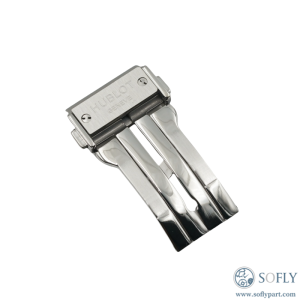
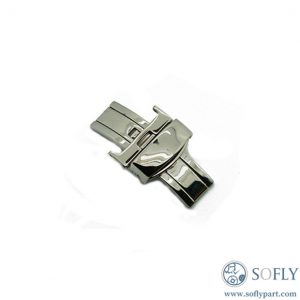
Stainless Steel Push Button Watch Band Clasp 9-22mm

Push-Button Deployant Clasp

Best for: Active daily wear
Not ideal for: Ultra-minimal designs

Side buttons release the clasp evenly, reducing accidental opening.

  • Security: High
  • Usability: Easy, even with gloves
  • Adjustability: Varies by design

Push-button deployants are one of the safest everyday options for commuters and frequent travelers.

Jewelry Clasps & Hidden / Concealed Clasps

Best for: Aesthetic-focused designs
Trade-off: Appearance over practicality

Comfort and security depend heavily on execution.

Specialty & Vintage Clasps

Best for: Period-correct restorations

Trade-off: Charm over convenience

These are niche designs with limited daily practicality.

Quick comparison summary

Priority

Best Choices

Why

Comfort

Butterfly, Single-Fold Deployant

Even pressure distribution and slim wrist profile

Security

Fold-Over + Safety, Push-Button

Secondary locks reduce accidental opening

Daily Ease

Push-Button Deployant

One-hand operation with clear tactile feedback

Dress Style

Tang Buckle, Butterfly

Minimal bulk and clean visual lines

Sport Use

Diver Clasp Systems

Extensions and locking systems handle movement and water

How do you choose the right watch clasp for your watch and lifestyle?

Step 0: Compatibility check (do not skip)

Always check this first:

  • Strap width vs clasp width (for example, 20mm tapering to 18mm)
  • Strap thickness (many deployants fail here)
  • Bracelet attachment type and end links

We’ve seen many clasp complaints traced back to strap thickness being ignored, even when everything else looked compatible on paper.

Step 1: Match the clasp to the watch’s purpose

  • Dress watches: Tang buckles, butterfly clasps
  • Sport or dive watches: Fold-over safety or push-button with micro-adjust
  • Daily wear: Single-fold or push-button deployants

Step 2: Decide what matters most

  • Comfort-first: Butterfly or well-finished single-fold deployant
  • Security-first: Fold-over safety or push-button
  • Ease of use: Push-button deployant

Step 3: Consider materials and skin sensitivity

Most irritation comes from sweat and salt buildup, not metal choice. Cleaning matters more than material alone.

Step 4: Why micro-adjustment changes everyday comfort

Micro-adjustment lets you fine-tune fit without tools. Many daily wearers switch clasps purely for this feature, especially during hot weather or long desk days.

What advanced clasp details do enthusiasts care about?

Does upgrading a clasp affect value?

Upgrades are usually safe if reversible. If you source replacement clasps or components from suppliers like SoflyPart, it’s smart to keep original parts so resale value stays intact.

Common clasp failure modes

  • Loose feel after resizing
  • Squeaking from dirt or salt
  • Weak push-buttons
  • Safety lock not snapping fully

Clean debris at home. Bent or worn metal needs a watchmaker.

Modern clasp innovations

On-the-fly adjustment systems improve comfort. The real benefit is usability, not branding.

Long-term maintenance tips

  • Rinse after sweat or salt exposure
  • Brush gently and dry
  • Inspect for sharp edges or looseness

During cleaning, it’s also worth checking nearby components like watch crystals, since damage there can affect how comfortably the clasp sits on the wrist.

Top-Selling Watch Clasps from SoflyPart

FAQ

What’s the difference between a butterfly clasp and a deployant clasp?

A butterfly clasp is a type of deployant with two folding blades for a seamless look.

What’s the most secure clasp for sports or diving?

Fold-over safety clasps and push-button deployants rank highest.

Can I replace a watch clasp myself?

Yes, with basic tools, if compatibility is correct.

Why does my clasp feel loose after resizing?

Resizing changes link tolerances and may require adjustment.

Are non-magnetic or MRI-safe clasps real?

Most modern clasps resist magnetism, but none are truly MRI-safe.

What should you remember before you pick (or upgrade) your clasp?

Learn the terms, confirm compatibility, then choose based on how you actually wear your watch. Comfort and security matter more than looks alone. If your wrist size changes during the day, micro-adjustment is the single most noticeable upgrade you can make.

Next steps:
Check sizing guides, explore replacement clasps or watch straps, or leave a comment with your wrist size, watch type, strap width, clasp width, and daily use for tailored advice.