
A timegrapher for watches listens to a mechanical movement and measures its rate, amplitude, beat error, and beat rate. Together, the readings and timing trace help you compare positions, check a movement after assembly or service, and identify results that need further investigation. This guide shows you how to set up a watch timegrapher, interpret its readings, and choose the right machine for your bench.
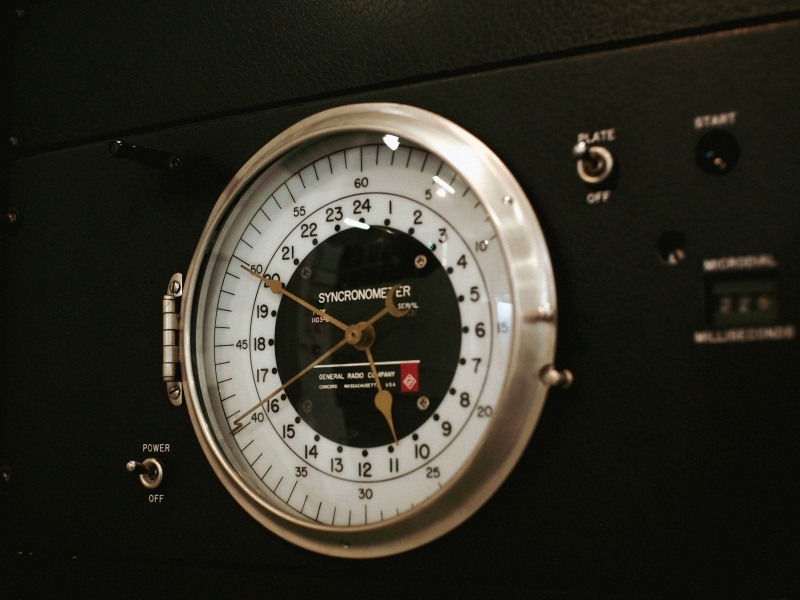
A timegrapher is an electronic instrument that analyzes the beat noises of a mechanical watch. It converts those acoustic signals into numerical readings and a timing trace, giving you a quick view of how steadily the movement runs under controlled test conditions.The machine measures rate, amplitude, and beat error and allows the operator to select or confirm the beat number and lift angle.
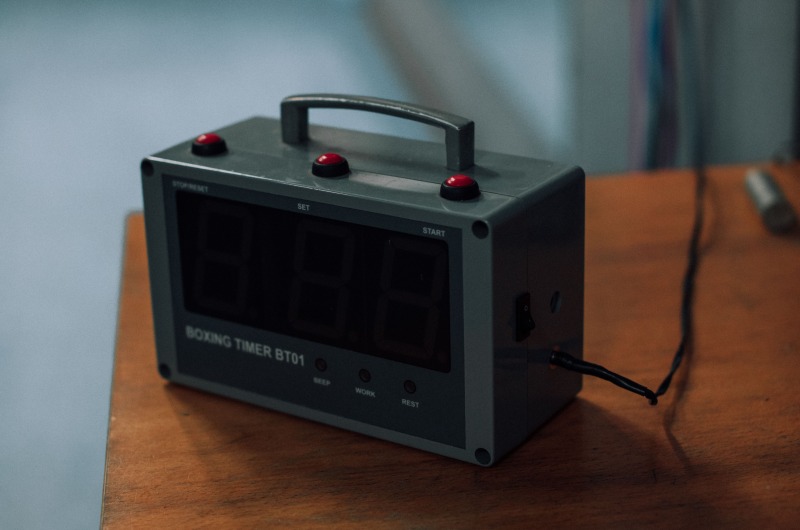
A microphone holder keeps the watch case or movement in contact with the sensor. The machine compares the detected beat noises with its internal time base, calculates the main readings, and plots the signal as dots or lines.
The numerical display shows rate, amplitude, beat error, and the selected or detected beat rate. The trace shows whether the signal remains stable during the test. Even a promising rate reading needs another run when the trace is scattered or repeatedly interrupted.
A watch timegrapher reports timing behavior at the bench. Movement inspection is still needed to determine whether an unusual result comes from the mainspring, pivots, jewels, lubrication, hairspring, or another component.
Watchmakers use timegraphers to establish a baseline before regulation and verify a movement after service. Watch builders can test a newly cased movement in several positions, while collectors can record changes after buying or servicing a mechanical watch.
Start with a basic set of watch repair tools if your work mainly involves strap changes and battery replacement. A timegrapher becomes more useful when you regularly inspect, assemble, regulate, or monitor mechanical movements.
Standard acoustic timegraphers are designed for mechanical watches. Quartz movements require test equipment that detects electronic signals such as motor pulses, current consumption, coil resistance, or quartz rate.
Use a timegrapher under repeatable conditions and record the movement settings, state of wind, watch position, and test duration. Keeping these conditions consistent allows you to compare one result with another instead of guessing what caused the change.
Bring the watch to a known, repeatable state of wind before testing. Follow the movement maker’s winding instructions for both hand-wound and automatic calibers. A test near full wind can produce different amplitude and rate readings from one taken near the end of the power reserve, so use the same starting condition whenever you compare results.
Place the timegrapher on a stable bench away from vibration and loud equipment. Secure the watch in the microphone holder and keep the sensor contact unchanged throughout the test. Allow the signal and trace to settle before recording the result.
Use the same measurement period for each comparison. Extend the test when the rate or trace continues to drift, rather than relying on a fixed 30- or 60-second rule for every movement.
A simple test log makes later comparisons much easier. Record the caliber, state of wind, position, beat rate, lift angle, test duration, and final readings.
Set the correct beat rate and lift angle before interpreting the display. Beat rate tells the machine how many beats the movement makes per hour, while lift angle is used to calculate amplitude from the timing of the escapement sounds.
Use the movement maker’s technical information for both settings. For example, Miyota’s official Caliber 8215 and 8205 specification lists a vibration frequency of 21,600 per hour and a lift angle of 49 degrees. Those settings apply to the calibers covered by that document; another movement may require different values.
An incorrect beat-rate setting prevents reliable interpretation of the test. An incorrect lift angle mainly changes the calculated amplitude, even when the rate and beat-error readings look believable. Automatic beat-rate detection can speed up setup, but the detected frequency should still match the caliber specification.
Test each watch in the same sequence of positions. Dial up provides an easy starting point, followed by dial down and the vertical positions that represent how the watch may rest or sit on the wrist.
A common six-position record includes dial up, dial down, crown up, crown down, 12 o’clock up, and 6 o’clock up. Keep the measurement period consistent, allow the signal to settle after moving the holder, and record the result before changing position again.
Read timegrapher results by combining the numerical readings, timing trace, and changes between positions. One number can flag a possible issue, but the complete test gives you the context needed to decide what to check next.
The four main timegrapher readings describe different parts of mechanical movement performance:
Reading | Unit | What It Measures | Main Influences | Next Check |
Rate | Seconds per day | How fast or slow the movement runs during the test | Regulation, state of wind, position, magnetism, and movement condition | Repeat the same position, then compare other positions |
Amplitude | Degrees | How far the balance swings | State of wind, friction, lubrication, position, mainspring torque, and lift-angle setting | Confirm the lift angle and state of wind, then compare horizontal and vertical results |
Beat Error | Milliseconds | The timing difference between the two halves of the balance cycle | Beat setting, balance assembly, hairspring position, and escapement condition | Check whether the value remains stable during repeated tests |
Beat Rate | Beats per hour | The movement’s operating frequency used by the timegrapher | Caliber design and the machine’s selected or detected setting | Match it with the caliber specification |
A positive rate means the watch is gaining time, while a negative rate means it is losing time. For example, a reading of +8 seconds per day represents a measured pace that would gain about eight seconds over 24 hours if the same conditions continued. Daily wear changes the watch’s position and state of wind, so use this as a controlled bench result rather than a prediction of exact wrist performance.
Amplitude shows how far the balance swings. A movement may produce different amplitude readings as the mainspring unwinds or when the watch moves from a horizontal to a vertical position. The useful range depends on the caliber, lift angle, service condition, and test setup, so compare the result with the movement maker’s specifications or a reliable service baseline.
Beat error measures the timing difference between the two halves of the balance cycle. A low, stable reading supports an even beat. A higher or unstable value deserves closer inspection when the trace also separates or scatters. Beat adjustment can involve the balance and hairspring system, so it requires appropriate movement-handling skills.
Beat rate is the movement’s operating frequency. Common frequencies include 21,600 and 28,800 beats per hour. Match this value with the caliber specification before interpreting the rest of the test.
A timegrapher trace shows how consistently the machine receives and plots the movement’s beat noises. Allow the signal to settle, then read the trace alongside the numerical result.
Use the trace as a quality check for the numerical readings. A stable-looking rate beside a broken or scattered trace needs a cleaner, repeatable test before you interpret it.
Position testing shows how gravity and changes in pivot loading affect the movement. Horizontal readings often differ from vertical readings, and two vertical positions can also produce different rates. The spread between positions helps you judge how consistently the movement performs.
Look for a pattern across the complete position log. One watch may show a reasonable average rate while losing considerably more time in a single vertical position. Another may run close to zero seconds per day but show low amplitude in every position. The first pattern points toward a positional difference; the second calls for closer attention to power delivery and movement condition.
Seiko’s official 4R35/36/37/38/39 instructions explain that mechanical-watch accuracy changes with wrist time, temperature, arm movement, and the winding state of the mainspring. Seiko also evaluates practical accuracy using daily rates over about a week. Pairing your timegrapher log with several days of actual timekeeping gives you a more complete view of the watch’s performance.
Timegrapher results can support a regulation or service decision once you reproduce the reading and rule out setup problems. A stable pattern across repeated tests carries more weight than one short measurement.
Repeat the original test with the same state of wind, position, beat rate, lift angle, and measurement period. A similar result gives you a repeatable baseline. A major change between tests points toward sensor contact, background noise, mainspring power, an incorrect setting, or an unstable movement condition.
Next, compare the position log. Regulation may be appropriate when the movement shows a consistent rate offset, stable amplitude relative to its expected baseline, and a clean trace. Persistently low amplitude, unstable readings, or large unexplained changes between positions call for a closer service assessment. Improve the sensor contact and repeat the test before treating a scattered trace as a movement problem.
A sudden rate change after exposure to a magnetic clasp, speaker, tool, or electronic device also calls for a magnetism check before mechanical adjustment.
Regulation corrects the rate of a movement that otherwise shows stable performance. Service addresses conditions such as deteriorated lubricant, contamination, friction, wear, or inconsistent power delivery. Monitoring is reasonable when the bench readings remain stable and the watch also performs consistently during normal wear.
Give the watchmaker the complete position log rather than one favorable screenshot. Rate, amplitude, beat error, trace quality, state of wind, and daily timekeeping together provide a stronger basis for the next inspection. Beat adjustment and hairspring work should be left to someone with the tools and movement-handling experience to perform them safely.
Choose the best timegrapher by matching its sensor, supported movements, settings, position holder, and reporting functions to the work on your bench. Additional features provide value when they improve the tests you perform regularly.
The main types of timegrapher for watches support different testing routines:
Timegrapher Type | Best For | Main Strength | Features to Confirm |
Phone or Computer Software | Occasional checks and learning | Portable testing with a compatible microphone | Microphone requirements, calibration, supported readings, and saved results |
Entry-Level Bench Timegrapher | Collectors, students, and regular home use | Dedicated contact sensor and repeatable positioning | Supported beat rates, adjustable lift angle, holder positions, and display clarity |
Advanced Bench Timegrapher | Repairers and frequent regulation work | Longer tests, multiple positions, and reporting options | Measurement periods, signal control, printer or export support, and movement compatibility |
App-Based Watch Analyzer | Connected workshops and users who prefer a mobile interface | Dedicated sensor combined with a phone or tablet display | Supported operating system, measured parameters, calibration, position support, and report functions |
Microphone-only software can help you observe basic rate trends, but placement and background noise affect the signal. Dedicated watch testers use a fixed sensor or holder to make repeated position tests easier to reproduce.
The right timegrapher depends on how often you test mechanical watches, which readings you need, and whether you want an independent display or a connected phone or tablet.
An entry-level bench machine suits collectors and beginners who want to check rate, amplitude, beat error, and changes between common positions. Prioritize a stable contact microphone, adjustable lift angle, supported beat rates, and a holder that keeps the watch in repeatable positions.
A simple machine is usually enough when you test one or two watches occasionally and record the readings by hand. Choose by documented functions rather than an unverified model label, since similar-looking timing machines may be sold under different names.
The Weishi 6000 mechanical testing machine suits repairers and experienced hobbyists who perform repeated mechanical-watch tests. It measures daily rate, amplitude, and beat error and includes automatic signal-gain control, a color LCD, seven selectable test periods from 2 to 60 seconds, and six testing orientations.
These functions support regulation checks, post-service verification, and structured position testing. An optional external thermal printer can produce physical records when a repair shop wants to retain or share test results. The Weishi 6000 is designed for automatic and hand-wound mechanical watches rather than quartz movements.
App-based watch analyzers suit users who want a dedicated sensor while using a phone or tablet as the display and control interface. Soflypart’s Bergeon 7804 range includes the 7804 Watch Analyzer, 7804-SCOPE, and 7804-PRO, which pair mechanical-watch measuring hardware with Android or iOS devices.
This format can suit a connected bench where a mobile display and digital records are more useful than a standalone screen. The available readings and reporting functions vary within the range, so match the exact model to the measurements and records your work requires. Bergeon 7804 official user guide identifies rate variation, frequency, beat error, and amplitude among the available mechanical-watch measurements.
Start with the movements on your bench. Confirm the supported escapement types and beat rates, then check the available lift-angle range. The holder should reproduce every position you intend to include in your test log without changing the sensor contact.
Testing volume determines the value of the remaining features. An occasional user may only need a clear display and manual position changes. Regular repair work gives selectable measurement periods, multiple orientations, automatic signal control, saved results, and printing or export functions more value.
Choose a product with a clear specification, operating instructions, and support path. The Soflypart guide to watch repair tools for beginners can help you prioritize the other tools needed before and after timing tests when you are still building your first bench.
A timegrapher turns the beat of a mechanical watch into readings you can compare, but the real goal is not to chase perfect numbers. It is to understand whether the movement is behaving consistently and whether the next sensible step is continued observation, careful regulation, or further inspection.
The right timegrapher is therefore the one that fits your testing routine. A simple tool used with correct settings and repeatable positions is more valuable than extra functions you will not use. Consistency in how you test matters as much as the device you choose.
Define how and how often you will test, then choose the setup that makes that routine easy to repeat. Let the results guide a measured decision for the watch in front of you.
A standard acoustic timegrapher is designed to detect the sounds produced by a mechanical movement. Testing a quartz watch requires equipment with functions for measuring electronic pulses, current consumption, coil resistance, or quartz rate. Because the term “watch tester” can describe several types of equipment, check the listed measurement functions rather than relying on the product category name alone.
A Weishi timegrapher can provide useful comparative readings for home checks when the correct movement settings are entered and each test is performed under consistent conditions. Use it to compare positions, identify changes, and evaluate the effect of an adjustment. Do not treat a single reading as proof of certified accuracy or complete movement condition.
Look for technical information from the movement manufacturer or an official service document for the exact caliber. If the lift angle cannot be confirmed, you can still observe rate, beat error, and the trace, but the displayed amplitude should be treated as provisional because its calculation depends on the entered lift angle. Avoid applying one assumed lift angle to every movement.
Not by itself. A magnetized movement may display an unusually fast rate or unstable results, but similar symptoms can have other mechanical causes. Use a magnetism detector or another suitable test before deciding that demagnetization is necessary, then compare the timegrapher readings before and after the check.