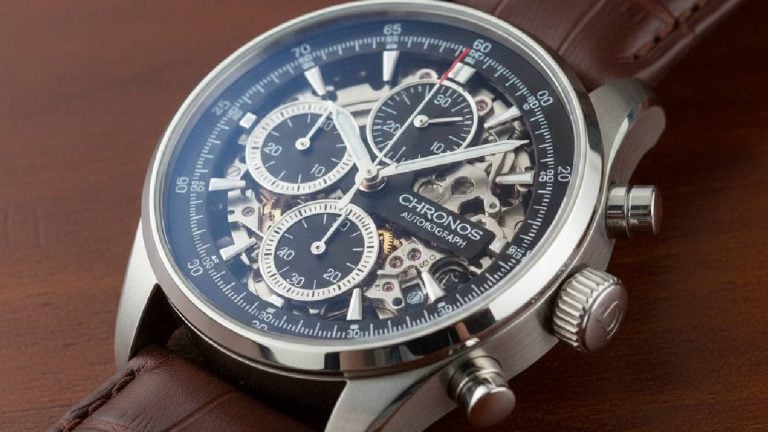
What are the 3 Dials or Sub-Dials on a Chronograph Watch

Introduction

Wristwatches in the current times are not just limited to timekeeping. They offer numerous additional features that cater to the diverse needs of various user segments. A chronograph watch is one among these inventions that features a stopwatch function in parallel to standard timekeeping. This stopwatch feature, on the other hand, is linked to 3 dials or sub-dials. These subdials are also known as sub-registers. What is the working formula behind 3 dials or subdials, and how can one understand and use them efficiently without confusion?

Today, we will discuss what a chronograph watch is and how it works. How do the 3 dials function on a chronograph watch? Similarly, how to read and understand sub-dials accurately. Let’s start!

Chronograph Watch

What is a Chronograph Watch

Chronograph is derived from a Greek word where “chrono” means time & “graph” means writing. Similarly, a chronograph watch can be defined as a multifunctional watch that displays both standard time and stopwatch features.

Chronograph watches belong to a vast category of users who require tracking and recording time. Examples may include sports, racing, diving, aviation, medical, science, and other everyday uses. Let’s take a look at how a chronograph watch works.

Key Components of a Chronograph Watch

Main Dial

  • The main dial is used for standard timekeeping, displaying hours, minutes, and seconds. Similarly, it operates independently of a chronograph’s features.

3 Dials or Sub-Dials

  • It features a seconds sub-dial, a minute sub-dial, and an hour sub-dial. They track and record seconds, minutes, and hours, specifically belonging to the stopwatch features.

Pushers or Buttons

  • The buttons are placed on the right side of the watch case, featuring start, stop, and reset functions. Moreover, these buttons are placed at 2 o’clock and 4 o’clock.

Watch Crown

  • A crown, in general, is used for time setting and winding purposes. But in chronograph watches, it is also linked to the adjustment of sub-dials.
Stopwatch Chronograph

Features and Functions of a Chronograph Watch

1: Stopwatch Function

The most notable and well-known feature of a chronograph watch is its stopwatch functionality. It displays the standard referral time and offers stopwatch features. The stopwatch functionality is controlled through the pushers or buttons to start, stop, and reset the chronograph. These buttons are then linked to 3 sub-dials on the watch, controlling seconds, minutes, and hours.

2: Tachymeter Scale

The tachymeter scale is also a known feature of a chronograph watch. It is mainly used to calculate time and distance based on speed. This function is also linked to pushers or buttons, such as pressing the start button at a specific point, traveling the predetermined distance, and then pressing the stop button. The results will be based on the chronograph’s second hand pointing towards the speed on the tachymeter scale.

3: Water Resistance

Almost all the chronograph watches are made waterproof, as they may be exposed to harsh and tough usage. Ensuring durability and longevity is the priority in these watches. Manufacturers utilize gaskets, screw-down crowns, and sealed casebacks to ensure their products are water-resistant. Users who enjoy diving, traveling, and adventurous activities can easily opt for these watches without any risk or compromise.
Flyback Chronograph

4: Flyback Chronograph

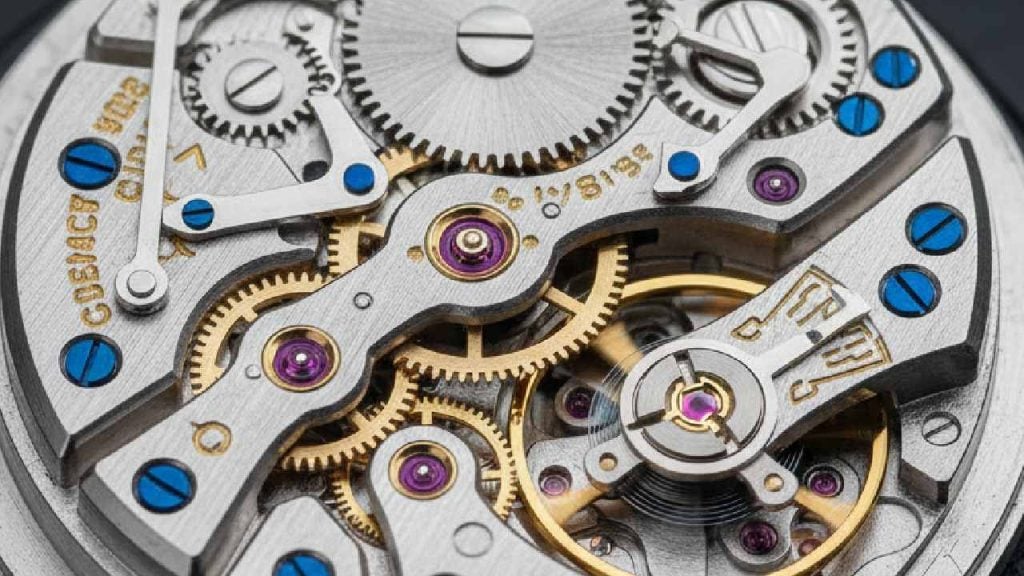
The flyback chronograph is a tremendous feature equipped in the latest chronograph watch models. It allows resetting and restarting the tracking and measurement with the help of a single button. In a normal chronograph watch, one needs to stop, reset, and then restart the chronograph, which consumes time. Similarly, in the flyback chronograph watch, all of this is controlled by a single button, allowing it to be stopped, reset, and restarted instantly.

5: Split-Timing

The split timing is also a remarkable feature of chronograph watches. It is also known by other names, such as rattrapante or double chronograph. The main notable feature of split timing is the measurement of dual intervals. It facilitates comparison between the two events, provides ease of measurement for multiple participants, and ensures accurate records. The split timing has two second hands that move together at the start and stop when the split button is pressed.

3 Dials on a Chronograph Watch

3 Dials are the main feature on which chronograph functionality is based. These dials are also known as sub-dials or sub-registers. It further includes a seconds sub-dial, a minutes sub-dial, and an hour sub-dial. Let’s deep dive into the details of each.

Sub-Dials on Chronograph Watch

Seconds Sub-Dial

  • Position: Generally, the seconds sub-dial is positioned at 6 o’clock or 9 o’clock, depending on the watch model and case design.
  • Purpose: The main purpose of the seconds sub-dials in a chronograph watch is to measure every single second. The seconds sub-dial shows a rotation every 60 seconds. It operates on a separate domain from the main second-hand. In some chronograph watches, the main dial displays the stopwatch function, while the sub-dial indicates seconds.
  • Example: Sports, Aviation, Diving, and other professional activities, as well as day-to-day tasks.

Minutes Sub-Dial

  • Position: The minutes sub-dial is located at 3 o’clock or 9 o’clock. Its position also varies parallel to the watch case and design.
  • Purpose: The main objective of the minutes sub-dial in a chronograph watch is to measure the minutes. Its measurement parameters are based on 30 or 60 minutes per rotation. Upon pressing the start button, the minutes sub-dial starts recording the minutes. Similarly, when the reset button is pressed, every figure goes to its default position, zero.
  • Example: Sports Activities, Test Flight, Short Racing, and others, where the tracking system is required for more than a minute and less than an hour.

Hours Sub-Dial

  • Position: The sub-dials for the hours are typically positioned at 6 o’clock or 12 o’clock on most watches.
  • Purpose: Here, the main purpose of the hours sub-dial in a chronograph watch is to measure the hours. The hours sub-dial is synchronized with the seconds and minutes sub-dials and works in parallel to measure and record the time up to 12 hours. NOTE: This sub-dial is not present in every chronograph watch; some only have seconds and minutes sub-dials.
  • Example: Long Aviation Flights, Meetings, and Car Racing are known examples where the time tracking is more than 1 hour and up to 12 hours.
Chronograph Sub-Dial

How to Effectively Read Chronograph Sub-Dials

1: Start Chronograph

  • Simply press the top pusher or button located at the 2 o’clock position.
  • The large second hand in the center will begin to move around the main dial.

2: Track Seconds

  • The seconds sub-dial measures each passing second
  • When a rotation of 60 seconds is completed, the minutes sub-dial starts to move.

3: Track Minutes

  • For example, you started a workout, and minutes sub-dial points towards 20, it indicates that 20 minutes have been passed since you started workout. have passed since timing began.
  • One can find the minute dial located at 3 o’clock or 9 o’clock. It is used to measure or track the time in minutes.
  • It features minute measurement with a limit of about 30 minutes or 60 minutes.

4: Track Hours

  • For example, if the hour sub-dial is at 6 and the minute sub-dial is at 30. It means 6 hours and 30 minutes after you started the chronograph.
  • The hour dial, located at 6 o’clock, tracks hours with a measurement limit of up to 12 hours.
  • The most modern and high-end chronograph watches offer more than 12 hours of measurement.

5: Stop and Reset

  • Press the top pusher or button located at 2 o’clock to stop the measurement.
  • Press the bottom pusher or button at 4 o’clock to reset all hands.
3 Dials on Watch

Why the 3 Dials Matter

  • To measure the exact time in seconds, minutes, or hours.
  • To keep the stopwatch functionally working, aside from the standard watch functionalities.
  • To make the watch look more appealing.
  • To maintain activities professionally and accurately, rather than relying on estimated time tracking.
  • To easily track and record the longer activities that are generally in hours (up to 12).

Uses of Chronograph Watches

  • Sports Department: Racing, Diving, and Playing.
  • Aviation Department: Flight Duration, Navigation, and Consumption.
  • Everyday Use: Cooking, Exercise, and Nap Record.
  • Scientific Experiments: Lab Activities and Field Work.
  • Industrial Sector: Manufacturing and Production Timing.
  • Travelling: Tracking Multiple Time Zones as per the Travel time.

Tips for Using Chronograph Sub-Dials Effectively

  • Ensure you understand the functionality of each sub-dial before use.
  • Avoid pressing the chronograph pushers or buttons randomly.
  • Don’t forget to press the reset button after tracking is finished.
  • Ensure that you track the longer events using minutes or hours sub-dials.
  • Follow the schedule of periodic maintenance to keep the watch functions accurate.

Conclusion

A chronograph watch is a marvelous invention, offering the best stopwatch features that benefit sports, medical, aviation, scientific, and industrial departments. Understanding the basic principles of 3 Dials is mandatory to utilize the chronograph features efficiently. Each sub-dial is used to measure the time of a specific activity in seconds, minutes, and hours. Moreover, chronograph watches have other notable features and functions, such as a tachymeter scale, water resistance, and a flyback chronograph, which offer an advanced level of tracking and measurement. 

If you are a true watch lover looking for a one-stop platform to buy watch-related tools and parts, look no further. Soflypart offers high-quality watch movement parts, watch repair tools, watch polishing kits, watch crystals, watch dials, and a range of other watch parts and accessories.