What Is a Quartz Clock Movement? How It Works & Types
Quartz clocks are everywhere—from the wall clock in your kitchen to the desk clock in your office and even the clocks used in schools, shops, and factories. We interact with them every day, yet many people have only a vague idea of what a “quartz clock movement” actually is.
In this guide, we’ll explain what is a quartz clock movement, how it works, how accurate it is, how long it lasts, the different types available, and when it makes more sense to replace one instead of repairing it.
Quick Answer
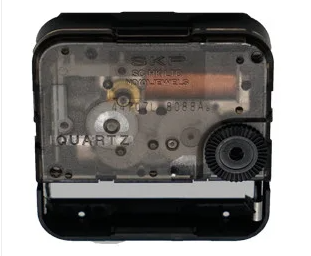
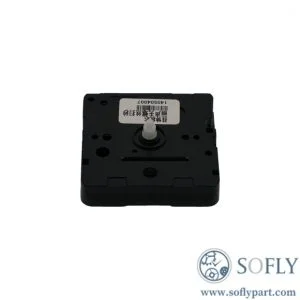
A quartz clock movementis a battery-powered mechanism that uses a vibrating quartz crystal to regulate time with high accuracy. Thanks to its precision, low cost, and minimal maintenance, it is the most widely used type of clock movement in modern wall clocks, desk clocks, and commercial timekeeping systems.
What Does “Quartz” Mean in a Clock?
Quartz is a natural crystal with a rare and useful physical property: when electrical current passes through it, the crystal vibrates at an extremely stable and predictable frequency. In most quartz clocks, that frequency is 32,768 vibrations per second.
Instead of relying on springs, gravity, or manual winding, the clock simply counts these vibrations and converts them into perfectly timed one-second electrical pulses. Each pulse represents one precise unit of time.
In simple terms, quartz defines time itself inside the clock. This is the fundamental reason quartz clocks are able to stay accurate for long periods without adjustment.
What Does “Clock Movement” Mean?
The clock movement refers to the complete mechanical and electrical system that physically carries out the passage of time inside a clock. While quartz defines how time is measured, the movement determines how that measured time is translated into visible motion on the clock face.
You can think of the movement as the engine that executes time. The case and dial shape the clock’s appearance, but the movement controls how smoothly the hands turn, how quietly the clock operates, and how reliably it performs year after year. This is why two clocks can look completely different yet perform almost identically if they use the same movement type inside.
How Does a Quartz Clock Movement Work?
Although the technology sounds complex, the actual working process is surprisingly simple:
A small battery supplies power to the movement.
That power causes the quartz crystal to vibrate at its fixed frequency.
An integrated electronic circuit (IC) counts those vibrations and converts them into one-second signals.
Each signal activates a tiny stepper motor.
The motor drives a set of gears that move the clock hands in precise steps.
Because this entire process is electronically regulated, quartz clock movements achieve excellent consistency and reliability with very few moving parts.
Quartz Clock Movement vs. Mechanical Clock
Quartz clocks and mechanical clocks represent two very different philosophies of timekeeping. Mechanical clocks rely on wound springs and complex gear systems that must be serviced regularly. Quartz clocks rely on electronics, a crystal oscillator, and battery power.
Here’s how that difference plays out in real-world use:
Feature
Quartz Clock Movement
Mechanical Clock
Power Source
Battery
Wound spring
Accuracy
Very high
Moderate
Maintenance
Minimal
Regular servicing
Cost
Low
Higher
Noise
Usually quiet
Audible ticking
Best For
Everyday use
Collectors & enthusiasts
For most people, quartz offers better accuracy, lower ownership cost, and far less maintenance. Mechanical clocks, while beautiful and collectible, are usually chosen for craftsmanship rather than convenience.
Why Are Most Modern Clocks Quartz?
Quartz clocks became the global standard because they solve the everyday problems of timekeeping better than any alternative:
They are extremely accurate
They are inexpensive to manufacture
They require almost no maintenance
They work reliably in almost any environment
They are easy for anyone to use
This balance of performance, affordability, and simplicity is why quartz clock movements dominate homes, offices, schools, and commercial buildings worldwide.
How Accurate Is a Quartz Clock Movement?
Most standard quartz clock movements are accurate to within about ±15 seconds per month, which translates into only a few minutes of drift per year under normal conditions.
Accuracy can be affected by:
Battery voltage
Temperature changes
Overall movement quality
Even so, quartz clocks consistently outperform most mechanical clocks in typical indoor environments.
How Long Does a Quartz Clock Movement Last?
A typical quartz clock movement lasts 5 to 10 years, while higher-quality movements can last 10 to 20 years or more.
Its lifespan mainly depends on:
Battery quality
Humidity and temperature conditions
Gear material and construction
The size and weight of the clock hands
In many cases, the clock’s case and face will outlast the movement itself. When the movement eventually wears out, replacement is usually faster and cheaper than repair.
Common Types of Quartz Clock Movements
Although all quartz clocks share the same basic working principle, they are available in several specialized movement types. Each is designed for different visual styles, noise preferences, and hand sizes.
Standard Ticking Quartz Movement
The most common type. The second hand moves forward once per second with a clear ticking motion. It is affordable, energy-efficient, and suitable for most everyday wall and desk clocks.
This type moves the second hand smoothly without the traditional ticking sound. It is ideal for bedrooms, offices, libraries, and hospitals where quiet operation is important.
High-Torque Quartz Movement
Designed to drive large or heavy clock hands, high-torque movements are often used in oversized decorative clocks and commercial installations.
Calendar Quartz Movement
These movements display both time and date. They are widely used in offices, factories, and multifunction wall clocks.
Specialty and Dual-Shaft Quartz Movements
Used in custom designs, these allow independent control of different hands or displays. They are common in designer clocks and specialty timekeeping systems.
In short, the best quartz clock movement depends on whether your priority is silence, hand size, added functions, or design flexibility.
Common Problems With Quartz Clock Movements
Even though quartz clock movements are very reliable, they can still develop issues over time, such as:
Clock running slow
Clock stopping completely
Second hand jittering
Hands not moving even when ticking sound is present
Intermittent or irregular operation
In many cases, these problems are linked to battery condition, dust buildup, or normal aging of the internal motor.
Can a Quartz Clock Movement Be Repaired or Replaced?
Some minor issues—especially those caused by dust, oxidation, or poor electrical contact—can sometimes be fixed with basic cleaning. However, because quartz clock movements are compact, mass-produced, and relatively affordable, replacement is often more practical and reliable than repair once the internal motor or circuit begins to fail.
For most users, replacing the movement while keeping the original clock case offers several clear advantages:
Lower overall cost
Higher success rate
Long-term reliability
With basic tools and careful handling, many clock owners can even replace a quartz clock movement themselves as a DIY project.
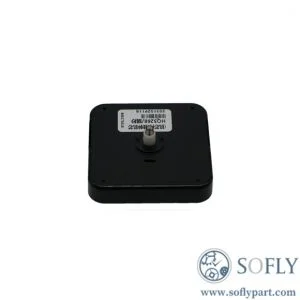
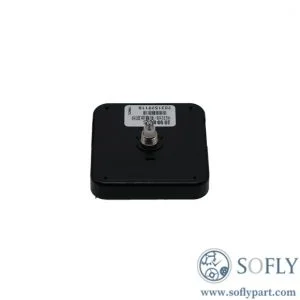
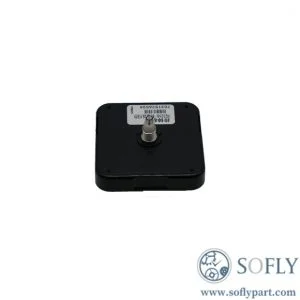
If you’re looking for a reliable source of replacement parts, Sofly Partoffers a wide range of quartz clock movement replacement solutions for different clock sizes, hand styles, and torque requirements.
In most real-world cases, replacing the movement is the fastest, safest, and most cost-effective way to restore a quartz clock to full working condition.
$7.50 You Saved Select options
This product has multiple variants. The options may be chosen on the product page
Who Should Choose a Quartz Clock Movement?
Quartz clock movements are ideal for:
Homes and apartments
Offices and classrooms
Retail and commercial spaces
Wholesale buyers and clock manufacturers
Clock repair technicians and DIY users
Their combination of accuracy, durability, and low maintenance makes them the most practical choice for modern timekeeping.
FAQ
1. Is a quartz clock movement better than a mechanical clock? For everyday use, quartz clocks are generally more accurate, require less maintenance, and cost less.
2. How long does a quartz clock movement last? Most last between 5 and 10 years, with premium movements lasting even longer.
3. Why did my quartz clock stop working? The most common reasons are dead batteries, dust buildup, or normal motor wear.
Conclusion
Understanding what is a quartz clock movement helps explain why quartz technology has become the global standard for modern timekeeping. By combining battery power, a vibrating quartz crystal, and a compact motor-driven gear system, quartz clocks deliver accurate, reliable time with very little effort from the user.
For most homes, offices, and commercial spaces, quartz clock movements offer the best balance of precision, durability, affordability, and convenience—which is exactly why they remain the most trusted and widely used solution today.