
Have you ever purchased a watch that stopped functioning too early? Or maybe it didn’t tell the correct time? That can be quite frustrating. You want something more. Something that performs effectively, has longevity, and is affordable.

That’s where quartz watches come in. They are simple, smart, and easy to use. In this blog, we will discuss how quartz movement works and why it’s a great choice for you.

A watch’s timing mechanism is made of quartz, which is known as a quartz movement. It differs from older traditional mechanical watches in that it utilizes a battery and a small piece of quartz crystal. The vibrations of the crystal start when it receives power from the battery.

These small movements occur at a remarkable rate of more than 32,000 times per second. Later on, a tiny microchip in the watch tracks the counting of vibrations. After processing, the chip sends signals to move the watch hands accordingly. In this manner, the watch indicates the accurate time.
The term “quartz movement” is derived from the quartz crystal used in its timing technology. Because of this creative system, quartz watches enjoy a reputation for accuracy. In addition, they are convenient and require little maintenance. It is for these reasons that a lot of people wear quartz watches daily.
People used mechanical movements with springs, gears, and wheels in clocks and watches before the use of quartz technology. These old mechanical movements had their own ways of working, but the need for regular maintenance, plus their inconsistent reliability, was quite inconvenient.
During the 1920s, researchers made remarkable discoveries about quartz crystals. They found out quartz crystals vibrate at a consistent frequency when electricity is passed through them. This phenomenon is known as the piezoelectric effect. The vibration could also be utilized to track time measurement accurately.
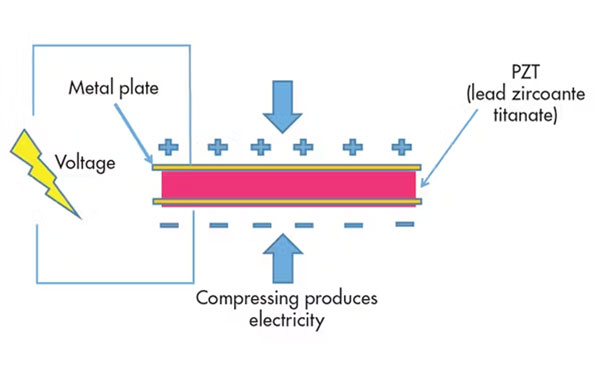
The first quartz clock was invented in 1927 at Bell Laboratories in the USA. It was large, primarily serving as a laboratory tool rather than a household device. However, it demonstrated that quartz methods proved far more accurate than older techniques.
Year after year, numerous scientists and engineers tried different methods to fit a quartz movement inside a wristwatch. This many years of dedication and novel creations. The 1960s saw the development of technology to the extent that small quartz movements could be manufactured. These could be installed in watches and sold to the general public.
The first wristwatch to feature quartz movement was the Seiko Astron, which was released in 1969. It utilized a small crystal system. Its main feature, the quartz movement, was truly remarkable for its treatment capabilities and its compact size. In addition, the movement was simpler to utilize than anything that had ever been manufactured prior.
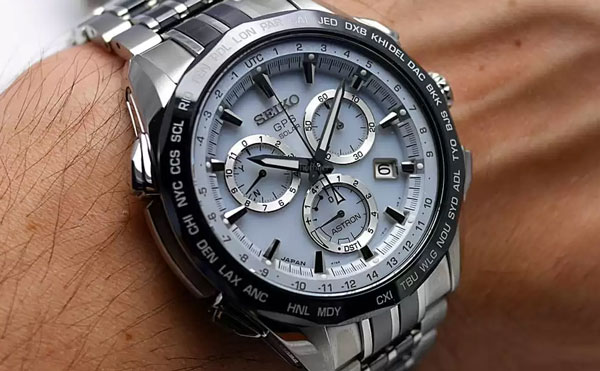
A quartz watch uses three small components that are quite intelligent to perform the functions of the watch. In this section, we will discuss the parts of a quartz watch movement:
At first glance, a quartz watch may look simple, but its inner workings are quite intelligent. Now we will discuss the step-by-step working of the Quartz movement:

Step 1) The Battery Sends Power: A small battery is located in each quartz watch. In the early process, the battery needs to send a small charge to start the process.
Step 2) The Quartz Crystals Vibrate: At this stage, the quartz crystal receives an electric signal. The quartz crystal will begin to vibrate with a frequency of 32,768 cycles per second. This will result in a steady and constant oscillation of the quartz crystal.
Step 3) The Circuit Counts the Vibrations: Once the crystal vibrates, a tiny electronic component in the watch tracks these movements. Once the appropriate quantity is achieved, the component switches inform that one second has elapsed.
Step 4) The Watch Hands Move: Afterward, a small motor in the watch receives signals from the chip. Thus, the watch hands advance one second per step.
The Result) Accurate Timekeeping: Ultimately, all these steps aid in ensuring the watch displays the accurate time. With minimal maintenance, quartz watches remain reliable and effortless.
Here at Soflypart, we provide high-quality watch movements that are built with great precision and utmost attention to detail; ideal for any type of repairs, replacements, or custom designs.
Here we will examine what is good and not-so-good about the quartz movement:
Pros | Cons |
Keeps time really well, very accurate | Doesn’t have the detailed work like old-style (mechanical) ones |
Runs on a small battery, no need to wind it | The battery needs to be changed after some time |
Simple and easy to take care of | Not as special to some watch fans |
Costs less to make and buy | Doesn’t last as long as some other movements |
Doesn’t get damaged easily, good for daily use | Not very eco-friendly if you throw away the batteries |
Helps the watch stay slim and light | The ticking sound may not feel smooth to some people |
Works well with both digital and analog displays | Many movements look the same, not very unique |
Quartz and mechanical watches operate differently. Here we will examine the difference for easier understanding of each type:

Feature | Quartz Movement | Mechanical Movement |
Power Source | Battery-powered | Needs winding (manual or automatic) |
Accuracy | Very precise | Less precise than quartz |
Maintenance | Low maintenance; battery changes needed | Needs regular servicing and care |
Cost | More affordable | Usually more expensive |
Aesthetic & Emotion | Simple design; less emotional value | Seen as more idealistic and artistic by enthusiasts |
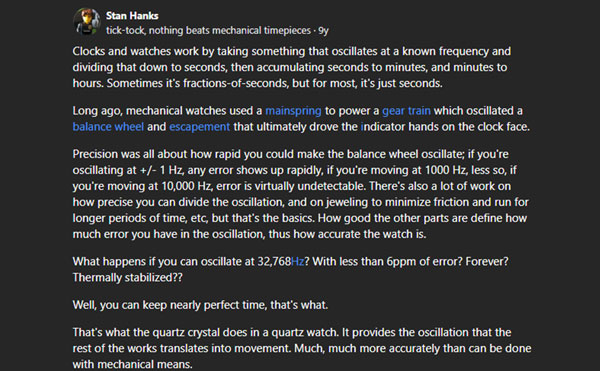
According to Stan Hanks in his Quora review, clocks and watches work by using something that oscillates at a known frequency. This movement is divided into seconds, minutes, and hours. In old mechanical watches, a mainspring powered gears and a balance wheel to move the hands.
The faster the balance wheel oscillated, the more accurate the watch became. Stan explains that accuracy depends on how well the parts divide the oscillations and reduce friction. But with a quartz crystal, things changed.
Quartz can oscillate at 32,768 times per second, with extremely low error, and stay thermally stable. As he puts it, this allows the watch to keep nearly perfect time, far better than mechanical parts ever could. That’s the power of quartz technology.
In the end, a quartz watch can be an excellent option for you. It is straightforward in its operation, requires minimal attention, and is very precise. While it may not appear as elegant as a mechanical watch, it is quite functional.
Therefore, if you’re looking for a watch that is clear, durable, and relatively inexpensive, a quartz watch is a smart choice. If you need watch parts, Soflypart has watch movement parts for sale, as well as offering a great selection of watch repair tools.