
The best watch bands depend on how and where you wear your watch. Leather fits dress and office use. Rubber suits swimming, workouts, and humid weather. Nylon feels light during travel and summer. Canvas and sailcloth add a rugged look to field and sport watches.
Material is only the first decision. The best watch straps also need the correct lug width, strap length, attachment type, and buckle size. This guide covers traditional mechanical and quartz watches. It does not cover proprietary connectors used by smartwatches or connected watches.
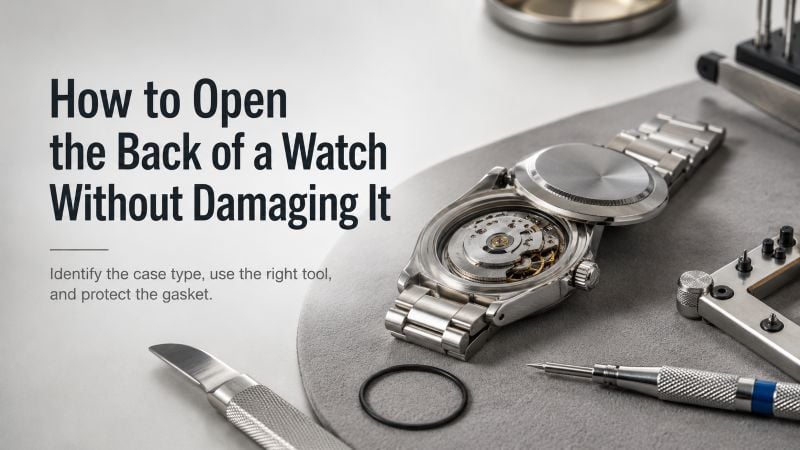
The best watch bands are leather for formal wear, rubber for water and exercise, nylon for hot weather, and canvas or sailcloth for rugged casual use.
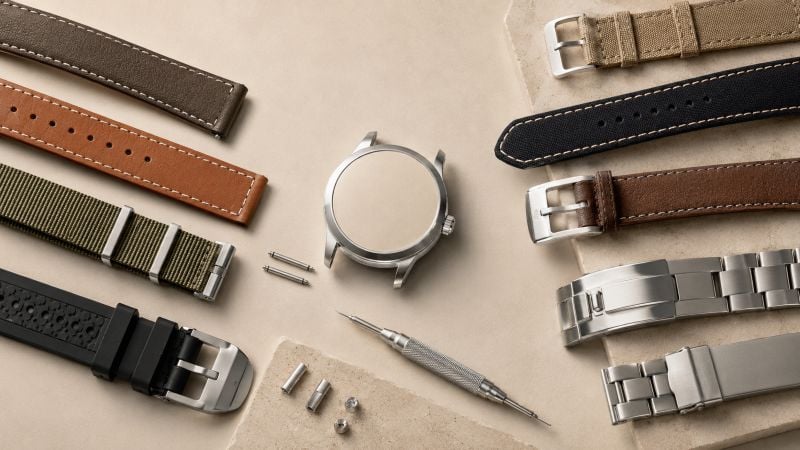
Start with your most common activity. A beautiful strap soon becomes annoying when it traps sweat, feels too stiff, or cannot handle your normal routine. The same watch may need two straps if you wear it at work and near water.
Wearing Situation | Best Starting Material | Good Alternative | Why It Fits the Job |
Daily Wear | Leather or soft rubber | Nylon | Both can feel comfortable for long hours when the length and buckle position fit your wrist. |
Office and Formal Events | Smooth leather | Fine metal bracelet | These choices suit clean dials, polished cases, and tailored clothing. |
Swimming and Water Sports | Rubber | Metal bracelet | These materials do not absorb water like ordinary leather or untreated canvas. |
Gym and Running | Vented rubber | Washable nylon | Both handle sweat better than most leather straps and are easier to clean. |
Hot Weather | Nylon | Thin rubber or sailcloth-style strap | Lower weight and better airflow can reduce the sticky feeling under the wrist. |
Field and Outdoor Wear | Canvas or nylon | Sailcloth-style strap | Their texture matches tool watches and hides minor surface wear well. |
Frequent Travel | Nylon or rubber | Leather | Light weight, simple cleaning, and easy color matching make packing easier. |
Water use needs one extra check. A water-friendly strap does not make the watch head water-resistant. ISO 22810:2010 sets the requirements and test methods for water-resistant watches. Check the rating and condition of your watch before it goes near a pool.
Think about maintenance too. Rubber often needs a rinse after sweat or salt water. Nylon can hold moisture until it dries. Leather needs gentler cleaning and time away from heat. A band that suits your routine will usually serve you better than one chosen from a studio photo.
The best watch band material depends on water exposure, climate, dress level, watch weight, and the amount of care you want to provide.
Each material has a different feel on the wrist. Thickness, lining, weave, buckle position, and case weight can change that feel as much as the material name. Use the following sections as a starting point, then check the exact product specifications.
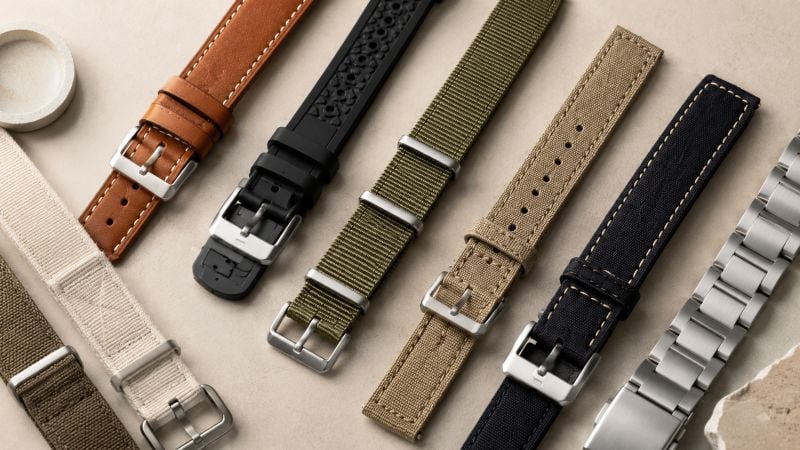
The best leather watch bands combine the correct fit with a comfortable lining, neat stitching, finished edges, and leather suited to your wearing habits.
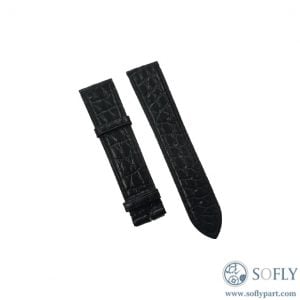
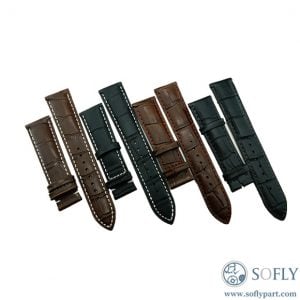
Smooth calfskin is a flexible choice for office wear and dress watches. Alligator or crocodile textures create a more formal look. Suede brings a casual character to vintage pieces. Padding, lining, thickness, and edge finishing shape how each strap feels.
Leather dislikes repeated soaking. Sweat, perfume, sunscreen, and high heat may also affect its surface and lining. The official Longines Leather Watch Straps Care Guide gives a service life of six months to one year for a properly handled strap. Actual life depends on the wearer, activity, climate, and contact with other substances.
Look closely at the area around the spring-bar holes and buckle holes. These points flex during every wear. Stitching should sit evenly, and the lining should not lift away from the upper layer. A short break-in period is normal for many leather straps, but sharp edges and a badly placed buckle rarely improve with time.
The best rubber watch straps suit active wear, warm weather, swimming, and sport watches because they resist water and clean up easily.
Rubber, silicone, and FKM are related shopping categories, but they are not identical materials. Product pages should state the actual material. Do not assume a molded black strap is FKM unless the seller confirms it.
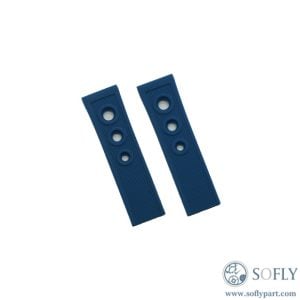
Comfort depends on the underside. Channels, raised ribs, and ventilation holes can reduce the amount of material sitting against wet skin. A gentle taper may also stop a thick dive strap from feeling bulky near the buckle.
Check the end shape before ordering. Straight ends fit between open lugs and leave a visible gap near the case. Curved or fitted ends follow the case profile, but they need more exact positioning. Matching the listed model and lug width is safer than judging the curve from a photo.
Soflypart offers model-specific examples as well as standard replacement options. If a listing shows several lug widths, measure the actual watch before ordering instead of guessing from case diameter.
The best nylon watch straps feel light, dry without special conditioning, and provide enough length for the intended wearing style.
NATO, single-pass, and two-piece nylon straps sit differently. A traditional NATO-style layout passes beneath the watch head and includes extra hardware. A single-pass strap removes some of that bulk. A two-piece nylon strap attaches like a leather or rubber band, so the watch sits closer to the wrist.
Inspect the weave and edges. Rough sealing can scratch the skin, while loose fibers near the holes may spread with repeated use. Hardware should sit flat and should not have sharp corners. Owners of smaller wrists should also check how much material remains after fastening. A long tail can look untidy on a compact dress or field watch.
The best canvas watch straps pair well with field watches, pilot watches, military-inspired designs, and casual chronographs.
Canvas has a visible woven texture and can feel stiff when it uses thick backing. Check its moisture guidance because coatings, linings, and construction vary.
The best sailcloth watch strap should have a clearly described outer material, lining, edge treatment, and water-care instructions. The term “sailcloth” often describes a textured or layered construction inspired by marine fabric. It does not always mean the band uses material cut from a working sail.
Both styles sit between smooth leather and sporty rubber. Confirm individual listings instead of assuming every canvas or sailcloth-style option is stocked in every size.
Metal bracelets belong to the wider watch band category, although watch collectors usually call non-metal options straps.
Steel adds weight and a structured appearance. Mesh feels more flexible, while link bracelets can balance a heavy case. Fitted end pieces close the case gap when their geometry matches.
Check link construction, clasp action, end-link shape, and adjustment range. A bracelet that looks strong may still fit poorly if the end links move inside the lugs or the clasp sits off-center under your wrist.
Choose the right watch band size by matching the lug width, strap length, buckle-end width, and your wrist circumference.
The most common mistake is ordering from the case diameter. A 40mm watch does not automatically use a 20mm strap. Two watches with the same case diameter can have different lug openings.
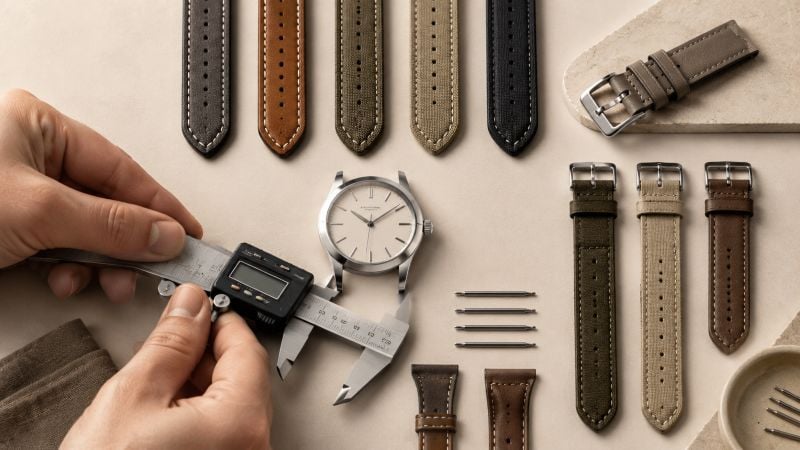
Lug width is the inside distance between the two lugs that hold one end of the strap. Measure this gap in millimeters with a digital caliper or a clear millimeter ruler. Do not measure the outside edges of the lugs.
Common widths include 18mm, 20mm, and 22mm. Odd sizes including 19mm and 21mm also appear on model-specific watches. Check the exact product listing before ordering because model-specific straps may use less common widths.
The spring bar should match the lug opening and the strap. Replace it when it is bent, rusty, weak, or the wrong length. Soflypart carries watch band spring bars in multiple sizes for strap and bracelet work.
Strap length controls where the buckle rests and how much tail remains after fastening. Measure your wrist where you normally wear the watch. Then consider the distance between the lugs because the watch head forms part of the total circumference.
A correct fit should keep the watch centered without forcing the strap into its first or last hole. The buckle should sit near the middle of the underside of your wrist. Very thick cases may need a different length from slim dress watches, even on the same wrist.
Product listings may use short, standard, or long labels. Those labels are not universal measurements. Always compare the listed length in millimeters when it is available.
Taper describes the reduction in width from the lug end to the buckle end. A 20/18mm strap measures 20mm at the watch and 18mm where it meets the buckle.
Measure the buckle end if you plan to reuse an original pin buckle or deployant clasp. Buying a 20mm buckle for a strap that tapers to 18mm will not solve the problem. Also check strap thickness. Some folding clasps cannot close around a heavily padded leather or rubber end.
A watch band is worth buying when its material, construction, hardware, fit, and product information support regular wear.
Price can reflect material, finishing, branding, or model-specific engineering. It cannot replace a compatibility check. Inspect the stress points before judging surface grain.
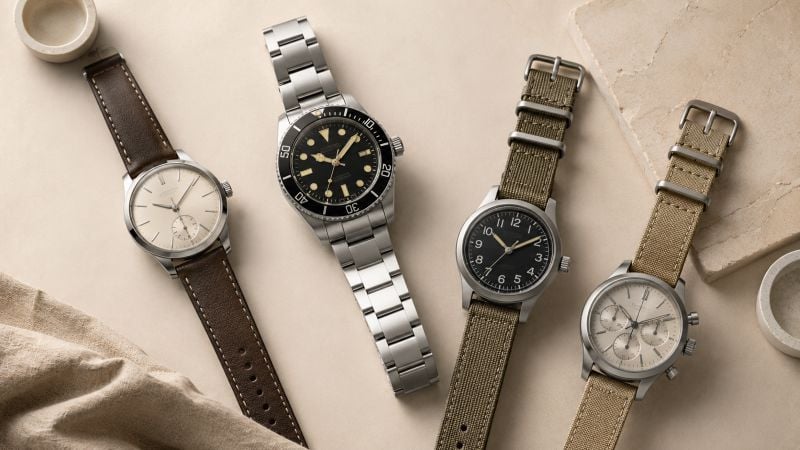
Read the material line before trusting the product title. “Leather look,” genuine leather, calfskin, alligator leather, silicone, rubber, FKM, nylon, and coated fabric describe different products.
Use these material checks before buying the best watch bands for your collection:
Stitching should follow a consistent line without cutting too close to the edge. Pay extra attention near the lugs, buckle, keepers, and adjustment holes. These areas bend and carry load every day.
Painted leather edges should look even and fully covered. Raw or folded edges can also be durable, but the construction should be intentional. A lifting lining, exposed adhesive, or cracked edge on a new band is a reason to stop and inspect further.
Molded straps often show wear around holes, quick-release levers, and thin sections. Check these areas for splits or loose hardware before fitting the band.
Confirm what the package includes. Many straps are sold without spring bars or a buckle. Others include model-specific hardware that cannot be replaced with a standard part.
A pin buckle should close without side play. A quick-release lever should return fully. Detailed clasp selection belongs in a clasp guide. Here, width, thickness, and attachment style must agree.
Comfort comes from more than softness. A very soft strap may allow a heavy watch to roll. A thick, stiff band may hold the case well but press against a small wrist.
Check these four comfort factors:
Match a watch band to the case shape, dial, thickness, finish, and original design instead of choosing by color alone.
The goal is visual balance. A strap can fit between the lugs and still look out of scale.
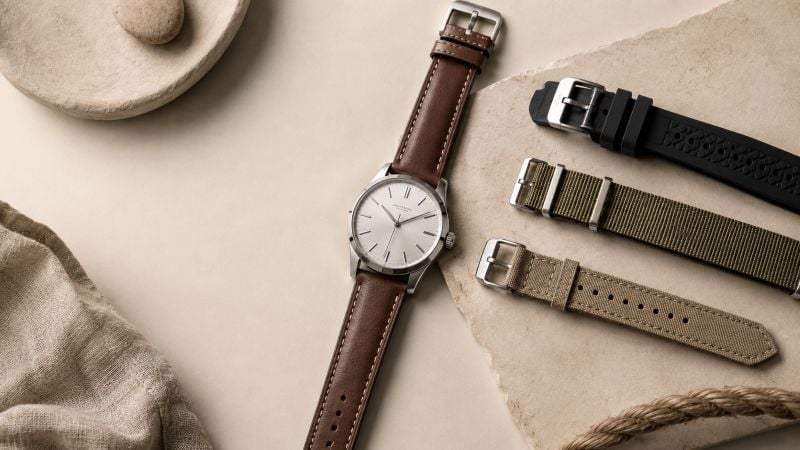
Thin leather with a moderate taper suits many dress watches. Black works naturally with formal clothing and silver-tone cases. Dark brown adds warmth and can feel less severe for office use. Minimal stitching keeps attention on a clean dial.
Rectangular watches and unusual lugs may need model-specific ends. Keep the original buckle when it forms an important part of the design.
Rubber, nylon, sailcloth-style bands, and metal bracelets balance larger sport cases. A thicker strap can support the weight, but it should still bend around your wrist without pushing the case upward.
Match the hardware finish to the case. Color can echo a bezel or dial accent, but a full color match is not required.
Confirm the watch’s water rating before swimming. ISO 22810 applies to the tested watch, not to a replacement strap. The crown, gaskets, case, and recent service condition still affect water use.
Canvas and nylon reinforce the functional look of field watches. Brown leather can add a vintage mood, while black leather makes the same watch feel cleaner. Pilot watches often suit thicker leather, visible stitching, or sturdy hardware because their dials and cases have a larger visual presence.
A thick strap may overpower a 36mm field watch. A thin dress strap can look weak beside a large pilot case.
Chronographs accept a wide range of styles. Rally leather supports a vintage racing look. Rubber fits modern sport chronographs. A flat-link or mesh bracelet can bring a mid-century feel when the end shape and case finish agree.
For an everyday watch, choose a band you will maintain. Leather can handle work and dinner, while rubber or nylon covers exercise and wet weather.
Confirm compatibility by checking the lug width, strap length, buckle width, attachment system, end shape, and exact watch model.
Do this before comparing colors. A wrong shade can still be wearable. A wrong attachment cannot be installed safely.
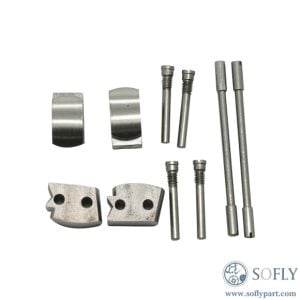
Most traditional straps use spring bars, quick-release spring bars, or screwed bars. Integrated bracelets and model-specific rubber straps may use shaped inserts, screws, tubes, or fitted end pieces.
Read the full listing. A matching width does not guarantee matching hole positions or case curves. Compare the reference number when the product names a specific watch family.
Straight ends fit a broad range of open lugs. Curved ends close the visual gap beside the case, but their radius and hole placement need to match. Model-specific ends may include internal inserts or metal pieces that standard straps do not use.
Generic and aftermarket describe product origin. They do not mean genuine factory parts. Soflypart identifies compatible models and aftermarket status on individual listings. Keep that distinction clear when repairing a collectible or warranty-sensitive watch.
Use this six-point best watch bands checklist before placing an order:
A suitable watch band tool helps with standard spring-bar fittings, but unusual or valuable watches deserve professional handling. Once the measurements agree, browse Soflypart’s watch band replacement options and confirm the details on the individual product page.
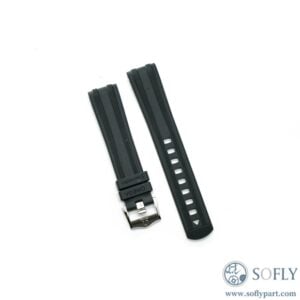
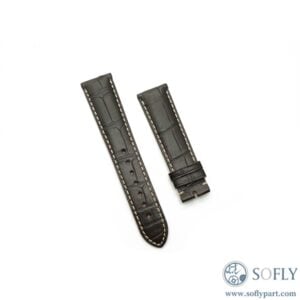
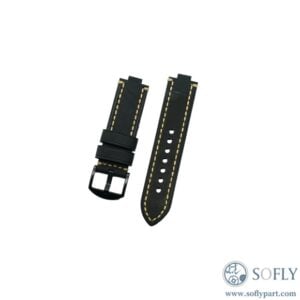
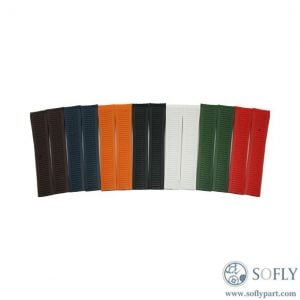
The best watch bands fit your watch, wrist, clothing, and normal routine. Leather is a strong starting point for dress and office wear. Rubber suits water, workouts, and humid weather. Nylon feels light during travel and summer. Canvas and sailcloth-style straps complement field and sport designs.
Measure the lug width before you shop. Then check length, taper, end shape, hardware, and model compatibility. Those steps will help you find the best watch straps without relying on a generic product ranking. When you are ready to choose, compare Soflypart’s current listings by material, size, and supported watch model.
A well-chosen band should feel natural after the first few wears and suit the jobs you expect it to handle.
No single maker produces the best strap for every watch and activity. Judge each option by material disclosure, sizing, construction, hardware, compatibility details, product photos, and return terms. A maker may excel at model-specific rubber while another focuses on leather or nylon. The correct fit should come before the brand name.
Buy from a watch parts supplier or strap specialist that lists lug width, length, material, attachment style, and compatible models. Clear aftermarket or genuine labeling is also important. Check shipping, returns, and included hardware before ordering. Repair shops should also consider repeat availability when stocking common sizes.
No material is healthiest for every wearer. Sweat, trapped moisture, cleaning habits, lining, dyes, coatings, and buckle metal can all affect the skin. Choose a band with clear material information and keep it clean and dry. Stop wearing it if redness, swelling, or persistent itching develops. Seek medical advice when irritation continues.
You can reuse spring bars only when their size is correct and they remain straight, clean, and springy. Replace bars that show rust, bends, worn tips, or weak return action. A damaged bar can release from the lug even when the strap itself fits. Read How to Replace and Adjust Watch Straps for the installation process and tool guidance.