
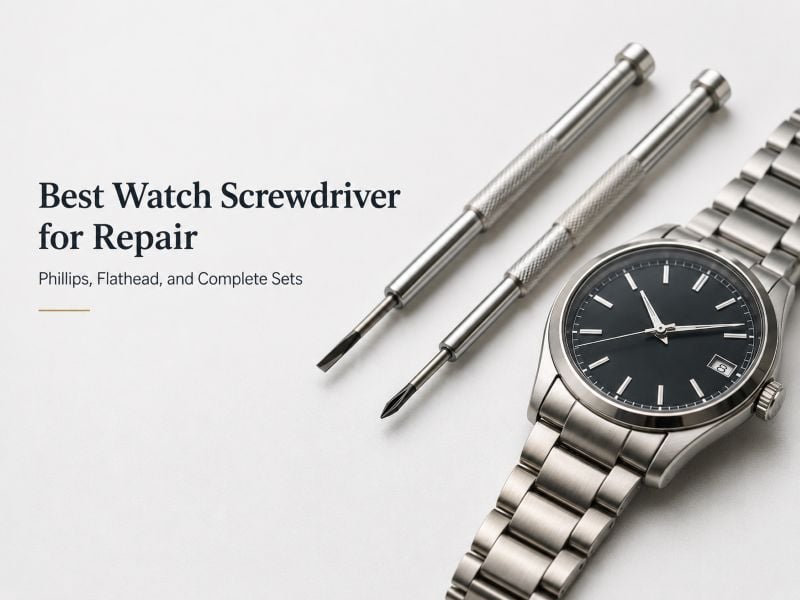
The best watch screwdriver fits the screw slot fully, turns smoothly under light pressure, and gives you control without slipping. For most watch repair jobs, start with precision flathead screwdrivers in several sizes. Add a Phillips head screwdriver for clasps, digital watches, and small case screws that use cross-shaped recesses.
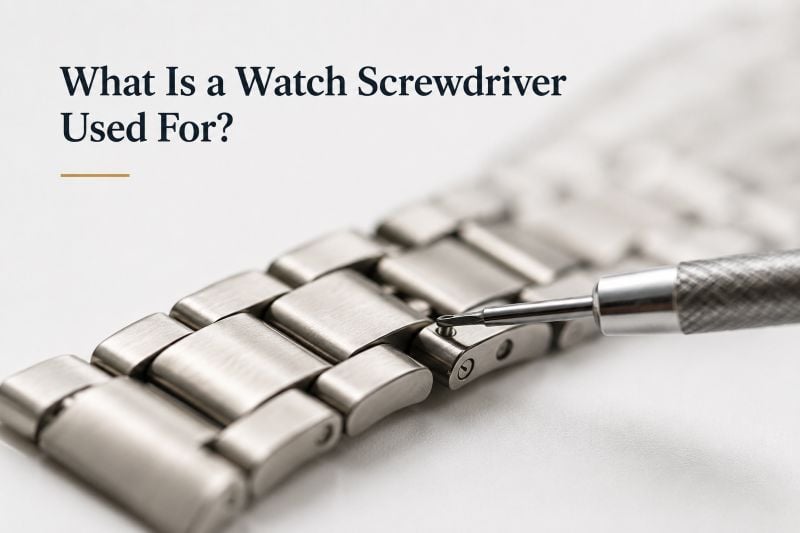
A watch screwdriver removes and installs tiny screws in bracelets, cases, movement clamps, bridges, clasps, and other wristwatch parts.
The job sounds simple: turn a screw. In real watch repair, that screw may sit next to a polished case, a dial, or a movement plate you do not want to scratch. A normal household screwdriver is too thick, too wide, and too hard to control for this work.
A proper watch screwdriver has a fine blade, a narrow shaft, and a rotating cap at the top. The cap lets you press down with one finger while turning the body with your other fingers. You get more control and less wobble, which is exactly what you need when the screw head is smaller than a grain of rice.
A watch screwdriver helps with these small repair and fitting tasks:
A wrist watch screwdriver is not just a smaller version of a workshop screwdriver. It is a precision tool. The closer the blade fits the screw slot, the safer the job feels.
The blade must fill the screw slot from side to side without riding up or rocking inside the groove.
A blade that is too narrow can twist inside the slot and chew the screw head. A blade that is too thick may not sit deep enough, so it slips the moment you apply pressure. That slip can leave a bright scratch across a bracelet link or, worse, across a movement bridge.
Here is the shop test: place the blade in the screw slot before turning. The blade should sit flat, centered, and stable. Change size if it wiggles. Forcing the wrong size is how a 20-second link adjustment becomes a long evening at the bench (we have all learned this lesson at least once).
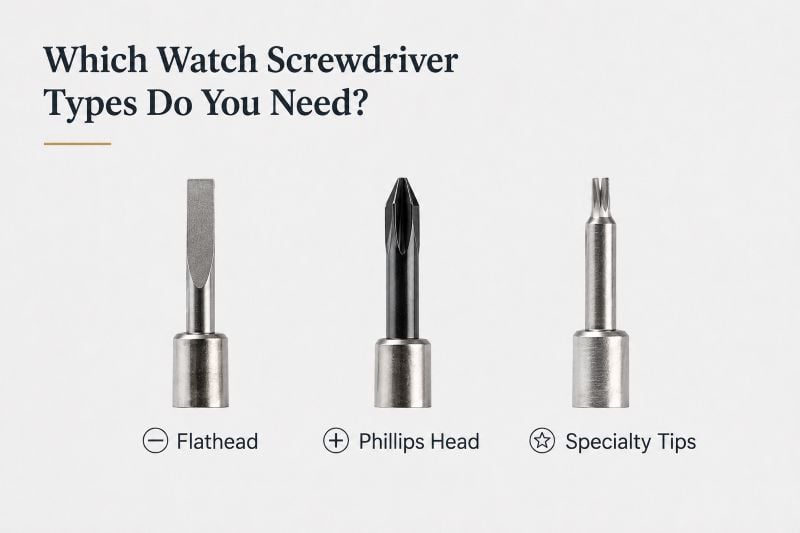
Most watch repair work starts with flathead precision screwdrivers. Phillips and specialty tips cover smaller groups of screws.
You do not need every screwdriver style on day one. You need the right types for the repairs you actually do. A bracelet sizing job, a battery change, and a movement service all require different levels of control.
Flathead watch screwdrivers handle the largest share of traditional watch repair work.
Many bracelet screws, case screws, movement clamp screws, and mechanical movement screws use slotted heads. That is why most watchmaker screwdriver sets include several flathead sizes. These are not the big flathead drivers you keep in a kitchen drawer. They are fine blades measured in millimeters.
A good flathead blade should have a clean, square edge. It should not look rounded, chipped, or twisted. A worn blade starts acting like a tiny ramp. It climbs out of the slot instead of staying seated.
For a watch screwdriver set, look for flathead sizes that cover bracelet work and movement work. Wider blades may fit bracelet screws, while smaller 1.0 mm to 1.6 mm sizes often suit finer work.
A Phillips head screwdriver is useful for some watch tasks, but it should not be the main focus of a watch repair kit.
You may see Phillips screws on digital watches, small electronic modules, certain clasps, and some case assemblies. For watch repair, the important point is size and fit. A normal Phillips head screwdriver from a home tool kit is usually too large for a wristwatch.
Use a precision Phillips head screwdriver when the screw has a cross-shaped recess. The tip should seat fully without wobbling. Do not use a Phillips tip on a slotted screw, even if you are tempted. It will not grip properly, and it can scar the screw head fast.
A Phillips head screwdriver belongs in a complete watch repair screwdriver setup. It should support your flathead sizes, not replace them.
Specialty screwdriver tips help when a watch uses screws that do not match common flathead or Phillips shapes.
Some watch repairs may call for tube screwdrivers, brand-specific screwdrivers, or larger tools for bezels and case components. These tools are more situational. Buy them when your repair work starts repeating that need.
For example, a repair shop that sees the same bracelet screw style every week may keep a dedicated driver ready. A DIY user sizing one bracelet may not need that level of specialization. Match the tool to the job in front of you.
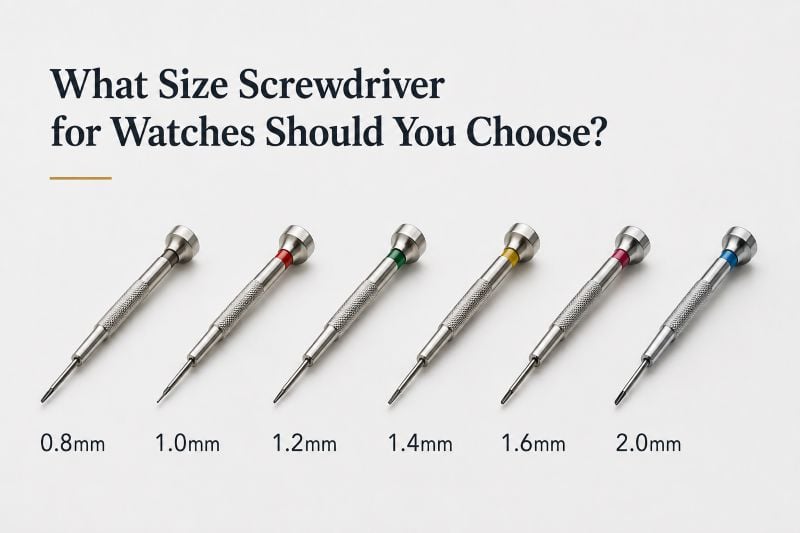
Choose a watch screwdriver size by matching the blade width to the screw slot, not by guessing from the watch brand or case size.
This is the question most people care about, and for good reason. Watch screws are small, but they are not all the same. Bracelet screws, clasp screws, case screws, and movement screws can use different slot widths on the same watch.
A small screwdriver for watches is usually needed for movement work, clamp screws, and fine bracelet screws.
Common precision sizes often include 1.0 mm, 1.2 mm, 1.4 mm, and 1.6 mm. These sizes are useful because they cover many small slotted screws found in wristwatch repair. As of July 2026, Soflypart’s Bergeon screwdriver category includes 1.4 mm and 1.6 mm Bergeon watch screwdriver options, which shows how common these mid-small sizes are in watch bench work.
For delicate movement screws, smaller is not always better. The blade still needs to fill the slot. A very narrow blade may feel safer, but it can damage the screw if it only contacts the center of the groove.
Bracelet and case work may need wider screwdriver blades than movement work.
Some bracelet screws need a blade closer to 1.6 mm, 2.0 mm, or larger. Soflypart’s screwdriver-related product listings also include sizes such as 2.3 mm, 2.5 mm, and 3.0 mm for certain watch repair and maintenance tools. These larger sizes make sense when the screw slot is wider and the job needs more surface contact.
That does not mean you should start with the largest driver. Start with the screw. The screw tells you what size it needs.
A simple way to think about it: bracelet screws often ask for stability, while movement screws ask for fine control. Your screwdriver set should cover both.
Use this watch screwdriver size method before you turn any screw:
This takes less than a minute. It can save a screw you may not easily replace.
A good wrist watch screwdriver has a clean blade, stable grip, rotating cap, replaceable tip, and size options that match real repair work.
This is where buying quality starts to pay off. You are not only paying for metal. You are paying for control. A poor screwdriver can feel fine in your hand until the blade slips across a polished link.
Blade quality is the first feature to check because the blade is the only part touching the screw.
A good blade should be centered, flat, and even. The edge should look crisp under a loupe. Many better watch screwdrivers also support replaceable blades, which is useful if you work often. Instead of replacing the whole tool, you can replace the worn blade.
Screwdriver sharpening also matters. Soflypart’s watch screwdriver category includes screwdriver sharpeners and related maintenance tools for keeping tips in usable shape. This is helpful for repair benches where screwdrivers see regular use.
Here is what to look for in a watch repair screwdriver blade:
A shiny handle looks nice. A clean blade saves screws.
A rotating cap lets you hold downward pressure while turning the screwdriver body.
This small feature changes the feel of the tool. You rest your index finger on the cap, press lightly, and rotate the handle with your thumb and middle finger. That gives you better control than pinching and twisting from the side.
Grip texture also helps. You do not need a huge handle for watch repair. You need a handle that lets your fingers make small, steady movements. Too much force is not your friend here. A watch screwdriver is more like a pencil than a wrench.
Magnetic tips can help with tiny screws, but use them with care near mechanical movements.
A magnetic screwdriver may make it easier to lift a bracelet screw or case screw from a tight spot. That can be handy when the screw wants to roll away the moment you breathe near it.
Near a mechanical movement, many watchmakers prefer careful non-magnetic handling or use tweezers after loosening the screw. Magnetism around small steel parts is a subject worth taking seriously. You do not need to panic, but you should know where the tip is going and what parts are nearby.
For most DIY bracelet work, a lightly magnetic tip can be useful. For movement work, controlled handling matters more than convenience.
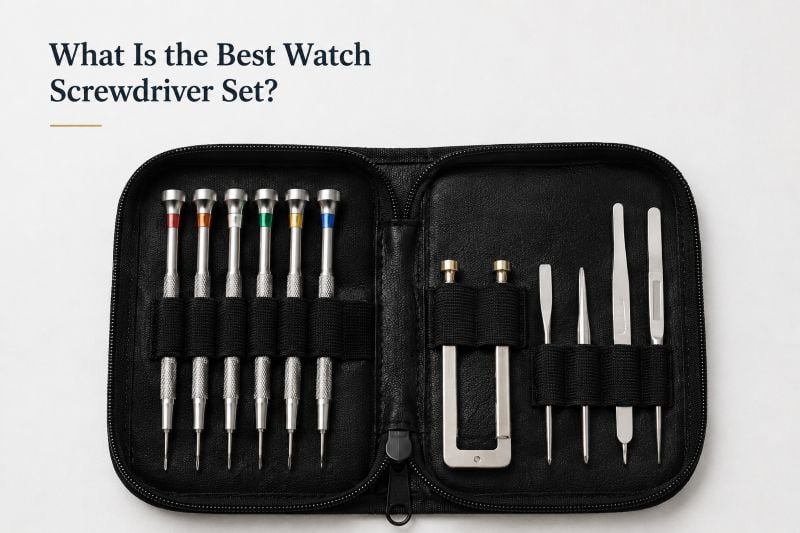
Buy one watch repair screwdriver if you only handle one known screw size, but choose a complete set if you repair bracelets, cases, and movements often.
This is where the buying decision gets practical. A single tool costs less and takes up less space. A set gives you options when the first size does not fit.
One screwdriver can be enough when you know the exact screw size and repeat the same task.
For example, you may own one bracelet that uses a specific slotted screw. Once you confirm the blade size, a single high-quality driver can handle that job for years. This also works for a repair technician who keeps a favorite size on the bench because it fits a common bracelet screw.
Single screwdrivers also make sense when you are upgrading a size you use all the time. Buying a better 1.4 mm tool is a good move if your 1.4 mm driver does most of the work.
A watch screwdriver set makes more sense when you work on different watches or do more than bracelet sizing.
A set gives you multiple blade widths in one place. That means you can test fit before turning, which lowers the chance of damaging a screw. DIY users, independent repair shops, microbrand builders, and regular modding users all benefit from having more than one size ready.
A complete set is especially useful for these jobs:
If you work on more than one watch, a set saves time and keeps you from improvising with the wrong tool.
Soflypart carries watch screwdrivers, screwdriver sharpeners, Bergeon screwdrivers, and other watch repair tools for repair benches and DIY work.
Start with the watch screwdriver category if you need screwdrivers, sharpeners, or blade maintenance tools in one place. The category includes brand-specific screwdrivers, screw tip sharpeners, sharpening stones, and maintenance accessories for keeping screwdriver blades flat and centered.
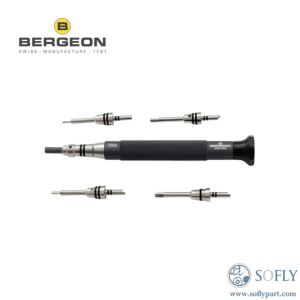
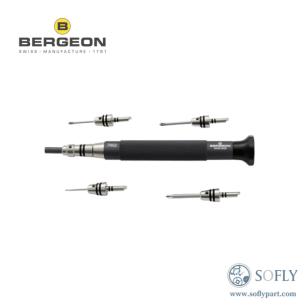
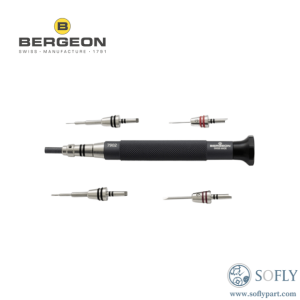
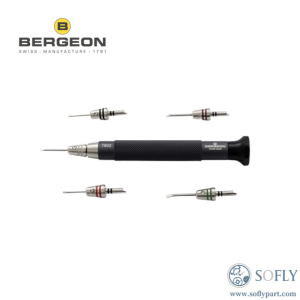
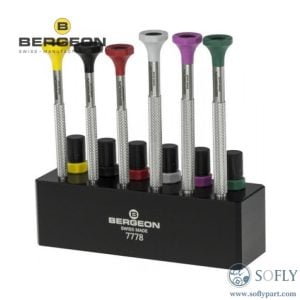
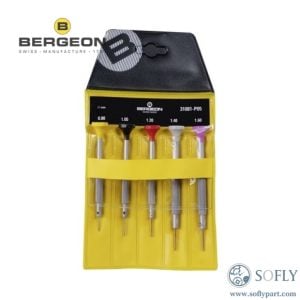
For Swiss-made tools, the bergeon screwdriver set category is a better fit. It includes single Bergeon screwdrivers and complete sets for movement screws, bridge screws, bracelet components, and regular bench work.
Comparing premium brands before buying? Read Soflypart’s Horotec vs Bergeon Screwdrivers guide next, then come back to match the screwdriver size to the screw in front of you.
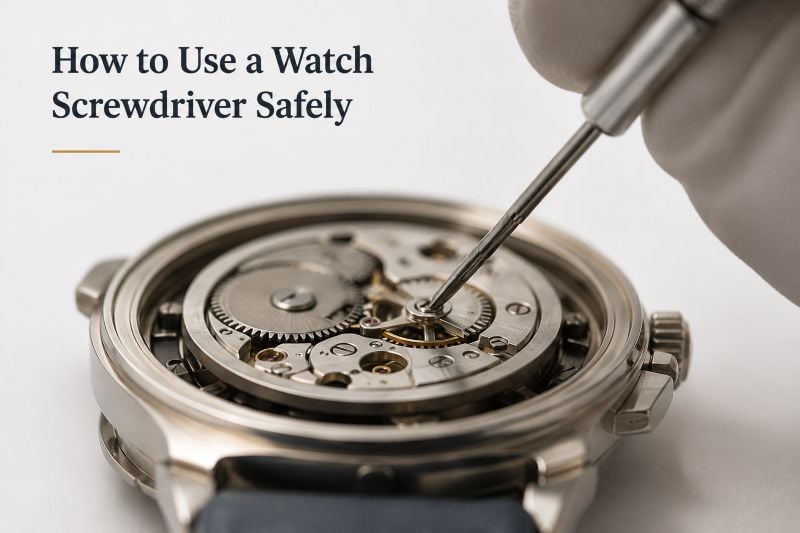
Use a screwdriver for watches by securing the watch, matching the blade to the screw slot, pressing down lightly, and turning slowly.
Good technique matters as much as tool quality. Even an expensive screwdriver can slip if the watch moves under your hand.
Secure the watch before you touch the screw.
Use a case holder, bracelet holder, movement holder, or bench mat depending on the job. A bracelet link sitting loose on a hard table can slide at the exact moment you apply pressure.
For bracelet sizing, support the bracelet so the screw head faces upward and the link sits flat. For movement work, use a proper movement holder. Your other hand should steady the work, not fight it.
Press down first, then turn with slow finger pressure.
This is the part beginners often miss. They start turning before the blade is fully seated. The tip rides up, slips, and leaves a mark.
Use this controlled motion before you apply torque:
Do not chase torque. These screws are tiny. Check for thread locker, corrosion, or the wrong blade size if the screw does not move.
Stop immediately when the screwdriver slips.
A slip is feedback. It means the blade size, blade condition, angle, or screw condition needs attention. Continuing usually makes the screw worse.
Check the blade under a loupe. Sharpen or replace the blade if the edge is rounded. Check the screw slot too. Dirt or old residue can stop the blade from seating fully. For stubborn bracelet screws, a little patience beats a damaged link every time.
This is also why a dedicated screwdriver sharpener can be worth owning. A sharp, square blade gives you more contact with the screw and less slipping under pressure.
The best watch screwdriver is not the biggest set or the flashiest handle. It is the tool that fits the screw, stays stable under light pressure, and lets you work without scratching the watch. For most repairs, start with precision flathead screwdrivers in several sizes. Add a Phillips head screwdriver for watches and clasps that use cross-shaped screws.
Choose one screwdriver if you only repair a known screw size. Choose a complete set if you size bracelets, open cases, install movements, or work on different watches. Once your repairs become regular, better blades, spare tips, and a screwdriver sharpener become worth the bench space.
Soflypart offers watch screwdrivers, Bergeon screwdriver options, sharpeners, and watchmaker tools for DIY repairs, independent repair shops, and custom builds. Match the blade to the screw slot first, then choose the tool that gives you the cleanest control.
You should not use a normal screwdriver on a watch unless the blade fits the screw slot exactly. Most household screwdrivers are too thick and wide for watch screws, which can damage the screw head or scratch the bracelet.
The best small screwdriver for watches is the size that fills the screw slot without wobbling. Many watch repair jobs use small precision sizes like 1.0 mm, 1.2 mm, 1.4 mm, or 1.6 mm, but the correct size depends on the screw.
Some watches use Phillips screws, especially digital watches, clasps, and certain case parts. Many traditional watch repair jobs still use flathead or slotted screws, so a Phillips head screwdriver should support your kit rather than replace flathead sizes.
Keep watch screwdriver tips sharp by checking the blade edge under a loupe, using a screwdriver sharpener when the edge rounds off, and replacing worn blades when sharpening no longer restores a clean flat tip.