
If your mechanical watch has suddenly started gaining time, you may be wondering whether it needs a repair. Magnetism is one possible cause, and demagnetizing may help restore its usual timekeeping.
To demagnetize a watch, check for retained magnetism, use a suitable watch demagnetizer according to its instructions, and compare the results afterward. Here’s how to work through those checks, use your equipment correctly, and decide whether your watch needs a watchmaker’s attention.
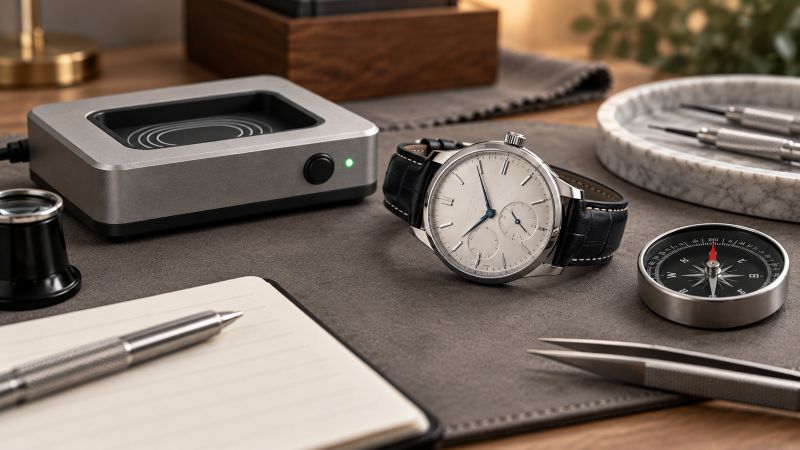
A mechanical watch may need demagnetizing when a suitable magnetic test detects retained magnetism. A sudden change in timekeeping, especially after magnetic exposure, is a reason to investigate. The timing change alone cannot identify the cause.
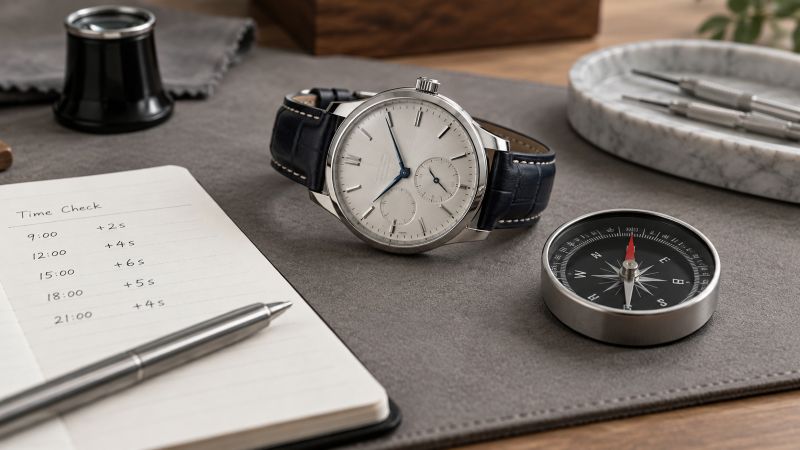
Magnetism can disturb the hairspring’s movement and affect the balance that controls timekeeping. Your watch may begin gaining time, losing time, or running less consistently than usual. Seiko explains these effects in its guidance on how magnetism affects a watch.
Think about when the change began. A watch that started gaining heavily after sitting beside a speaker deserves a magnetic check. A rate change following a drop calls for a broader inspection. The circumstances help you choose the next test.
A compass offers a rough screening check. Set it on a stable surface away from phones, speakers, magnetic clasps, and steel tools. Bring the watch head near it without touching the needle housing, and observe whether the response repeats from the same position.
A needle response shows that the watch is disturbing the local magnetic field. It cannot tell you which component is responsible or whether magnetism is affecting the movement’s rate. Keep the bracelet away from the compass as far as practical so it contributes less to the reading.
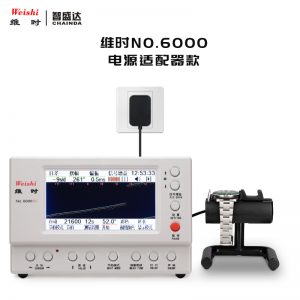
For a more controlled check, use a magnetic detector intended for watches and follow its positioning and interpretation instructions. A timegrapher serves a different purpose: it records rate, amplitude, and beat error. Those readings help compare timekeeping before and after treatment.
If the watch keeps its usual time and testing gives you no reason to suspect retained magnetism, leave it running and continue normal observation.
Use a watch demagnetizer by placing the mechanical watch as instructed, completing the device’s treatment sequence, and testing again afterward. The method depends on how the unit controls its magnetic field.
Some units require you to hold a button while gradually moving the watch away. Others run an automatic cycle with the watch resting in place. A push button or flat surface alone does not tell you which method applies.
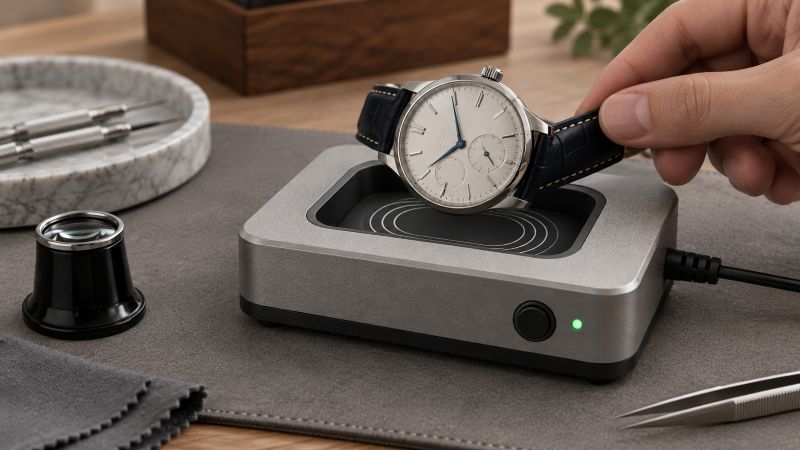
A stable table with space around the unit makes the watch easier to handle. Keep phones, magnetic accessories, and loose steel tools away from the testing area. Arrange the strap or bracelet so you can hold the watch head securely and follow the required movement path.
Use equipment intended for your mechanical watch, and check the watchmaker’s guidance before treating a valuable, vintage, or warranty-covered piece. External demagnetizing with suitable equipment can be performed through a closed case.
Before connecting the unit, check its condition, supply voltage, operating-time limit, and any required cooling interval. The instructions should also identify the active area, watch orientation, and whether the movement should be running or stopped. Resolve any unclear operating directions before starting.
The following sequence applies to a unit whose instructions require you to keep the control pressed while withdrawing the watch. Have your earlier magnetic and timing readings ready for comparison.
A smooth, planned movement makes the sequence easier to complete within the unit’s operating limit. Check the result before considering another treatment, and allow any cooling interval required by the manufacturer.
For a watch repair bench, Soflypart’s China Make 2321 Demagnetizer is an option to consider for demagnetizing watch movements, tools, and small steel parts. Its range of uses makes it relevant to both watch servicing and everyday bench work.
With a continuous-field demagnetizer, gradually moving the watch away exposes it to a progressively weaker alternating magnetic field. This helps reduce the magnetism retained in affected steel parts and is part of the demagnetizing process.
Automatic-cycle demagnetizers manage that reduction within their treatment cycle, so the process can finish with the watch remaining in position.
Repeat the magnetic test and compare timekeeping under similar conditions. A reduced magnetic reading supports successful treatment; an improved rate shows whether that treatment also helped the watch keep time.
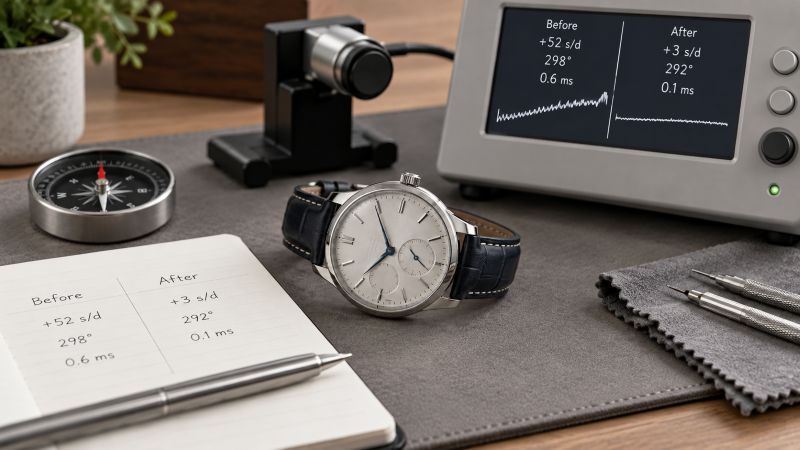
Use the same detector, watch position, and distance as before. Follow the detector’s instructions for interpreting the reading. A compass provides only a rough comparison: reduced needle movement does not establish that the movement is completely free of magnetism.
Next, compare the rate with a timegrapher or a watch tester designed to measure mechanical-watch timekeeping. Keep the watch’s position, winding condition, and instrument settings consistent.
Without a timing instrument, set the watch against a reliable reference and record its gain or loss over the next 24 hours. Continue observing it for several days under your usual wearing conditions. This helps you distinguish an initial improvement from stable timekeeping.
Compare the result with the watch’s previous behavior and its manufacturer’s accuracy guidance. A normal mechanical watch can still gain or lose time after successful demagnetizing.
Use the magnetic and timing results together to choose your next step.
Result After Demagnetizing | What It Suggests | Next Step |
The magnetic reading decreases and timekeeping improves | Magnetism may have contributed to the earlier error | Monitor the watch for several days and compare with its expected accuracy |
A suitable detector still indicates retained magnetism | Further treatment or a different setup may be needed | Recheck the device instructions and repeat only as directed; seek professional help if readings persist |
Only the compass still reacts | The response may involve the case, bracelet, or retained magnetism | Obtain a more specific magnetic check before repeating treatment |
The detector indicates little or no retained magnetism, but the rate remains abnormal | Further diagnosis is needed | Stop repeated demagnetizing and have the watch inspected |
Timekeeping improves briefly, then becomes unstable again | The improvement has not resolved the problem | Arrange an inspection and provide the before-and-after readings |
Stop home testing if the watch stops unexpectedly, makes a new noise, or shows moisture. Those symptoms need a watchmaker’s attention.
Keep your readings, test conditions, and the name of the demagnetizer. That record gives the watchmaker a clearer picture of what changed.
Arrange a watchmaker’s inspection if the rate remains abnormal after the recommended treatment and follow-up checks. Persistent error needs diagnosis before you decide whether another demagnetizing cycle would help.
Regulation, hairspring condition, and damage from an impact are among the possibilities a watchmaker may investigate. Timing measurements help guide that inspection, but a single reading does not identify the fault.
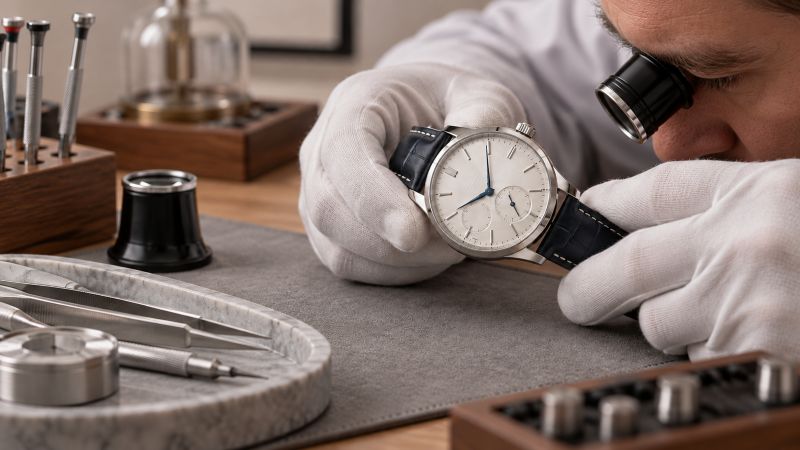
Professional attention is especially useful when:
Keep the case closed and bring your test record. Include when the timing changed, any recent magnetic exposure or impact, the equipment used, and the results before and after treatment.
For a broader explanation of the possible causes, see our guide to how to fix an automatic watch running fast.
Knowing how to demagnetize a watch starts with matching the treatment to your mechanical watch and the equipment you have. A careful magnetic check, the correct operating method, and a useful comparison afterward help you judge whether the treatment has made a difference.
Let the results guide your next step. If your watch settles back into its expected accuracy, enjoy wearing it and keep an eye on its timekeeping over the next few days. If the problem continues, take your readings to a watchmaker so you can get back to wearing a watch you trust.
Use a purpose-built demagnetizer or have a watchmaker perform the treatment. A phone app cannot demagnetize a watch, and a household magnet is unsuitable for this task.
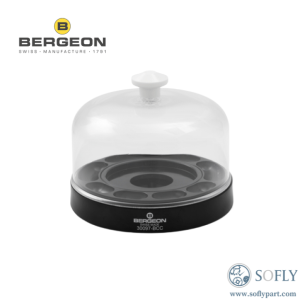
Use the manufacturer’s service guidance for a quartz watch or Apple Watch. The mechanical-watch procedure above should not be applied to them. For example, Bergeon’s MAGNET-O instructions explicitly exclude quartz watches.
Follow the instructions for the specific watch and demagnetizer. Whether the movement should run or stop is an equipment-specific requirement. Check that instruction before changing the crown position or starting treatment.
Store your watch away from speakers, magnetic clasps, tablet covers, and magnetic phone accessories. Seiko recommends keeping more than 5 cm from common magnetic products to reduce their influence. Follow any more specific guidance supplied with your watch.