
To open the back of a watch safely, identify the case back type first. A snap-off back needs a case knife. A screw-down back needs a case back opener. A back held by small screws needs a precision screwdriver.
Many beginners skip that first check. They see a closed back, grab the nearest blade, and hope for the best. Please do not do that. Most damage happens before the case is even open: scratched steel, bent backs, stripped screws, loose gaskets, and the occasional sliced finger.
Start by reading the back, choosing the right opening method, and knowing when to stop before a small battery job becomes a repair job.
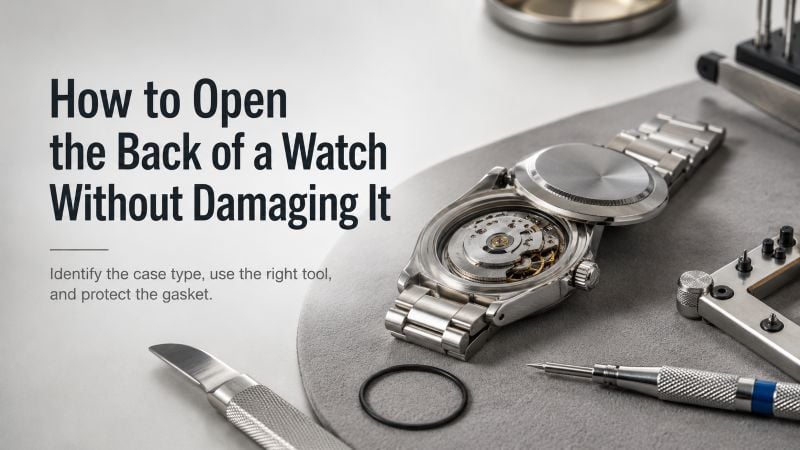
You should identify the watch back type before choosing any tool.
Most watch backs fall into 4 practical groups: snap-off backs, screw-down backs, backs with small screws, and smooth or sealed backs. The brand name can help you find a manual, but it does not tell you how the case opens. Fossil, Timex, Seiko, Casio, and many fashion brands can use more than one case design.
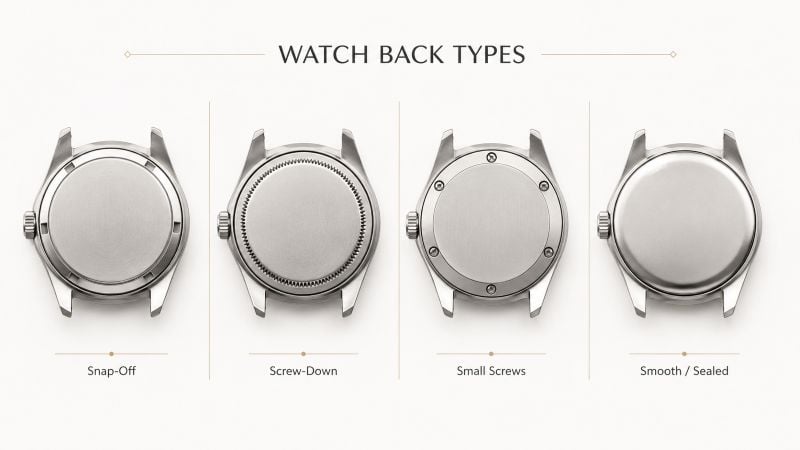
Watch Back Type | What You See | Best Tool | What Not to Do |
Snap-Off Back | A small lip, notch, or thin pry point near the edge | Case knife | Do not pry around the whole case |
Screw-Down Back | Slots, notches, or grooves around the back | Adjustable case back opener | Do not use pliers |
Small-Screw Back | 4 or more visible screws | Precision screwdriver | Do not use a loose screwdriver |
Smooth, Sealed, or Front-Loading Back | No clear notch, groove, screw, or opening point | Professional inspection | Do not force a blade under the back |
A smooth back with no groove deserves extra caution. Some are snap backs with a very small entry point. Some open from the front. Some need special tools. If your watch has no visible notch, screw, or slot, check Soflypart’s guide on opening watches without grooves before putting a blade near the case.
Open a snap-off watch back by finding the notch, placing a case knife at a low angle, and lifting slowly.
A snap-off back is common on many basic quartz watches. You are not unscrewing it. You are lifting the back out of a pressure fit. The case knife should enter at the designed lip, not at a random point on the case.
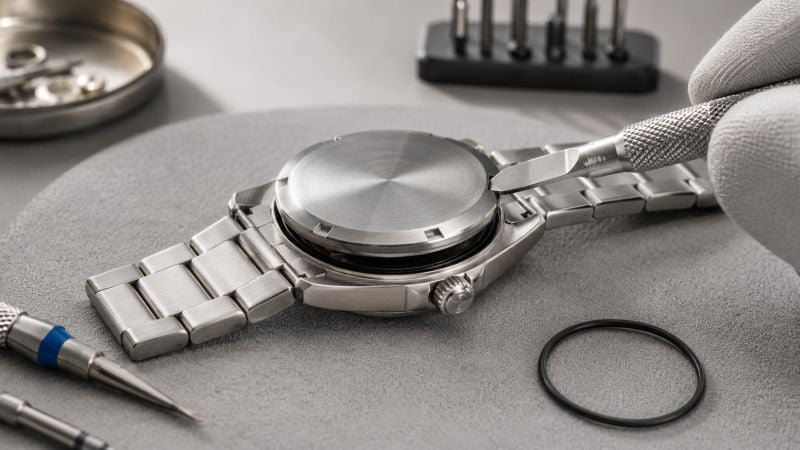
Look around the edge of the case back under strong light.
The notch may sit near a lug, crown, or case corner. It may be tiny. Turn the watch slowly and look for a small break in the seam. That is your entry point.
Before opening a snap-off watch back, check these details:
Place the blade into the notch and lift with controlled pressure.
Keep the blade shallow. You only need to catch the lip of the back. Do not push deep into the case because the gasket, movement spacer, battery contact, or coil may sit close to the opening.
If the back does not move, stop and inspect again. You may be at the wrong spot, or the watch may not be a snap-off design.
Look for the gasket as soon as the back comes off.
The gasket may stay in the case groove, stick to the back, or fall onto the mat. Do not lose it. Do not stretch it. A damaged gasket should be replaced before the watch is closed again.
Open a screw-down watch back by seating a case back opener in the notches, pressing down, and turning counterclockwise.
This back type is common on many water-resistant watches. The back threads into the case, so it must rotate. It should not be pried.
Adjust the opener so the tips sit fully in the case back notches.
A 3-point opener gives better grip on many round backs. A 2-point opener can work on simpler backs. Either way, the fit must be stable before you turn.
If the opener rocks, reset it. A loose fit will slip and scratch the back.
Apply downward pressure first, then turn.
That downward pressure keeps the opener tips seated. Use a case holder if the watch moves under your hand. Turn slowly. You want steady force, not a sudden twist.
Most screw-down backs open counterclockwise and close clockwise. If the back does not move after controlled pressure, do not keep adding force. The threads may be tight, dirty, corroded, or sealed from a past service.
Do not use pliers on a screw-down watch back.
Pliers crush edges, chew notches, and leave marks that are hard to hide. A proper case opener costs less than refinishing a damaged back.
Soflypart carries watch repair tools for case work, including case openers, holders, screwdrivers, tweezers, and bench accessories.
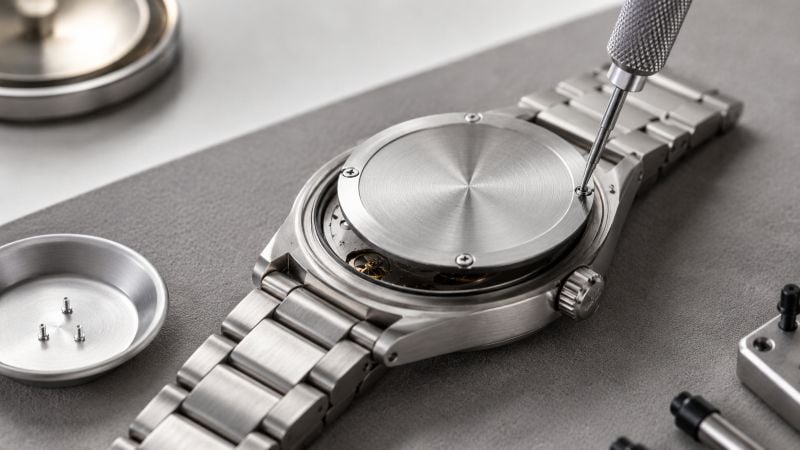
Open a watch back with small screws by using the right precision screwdriver, removing each screw carefully, and lifting the back without pulling internal parts.
This design is common on some digital watches, sports watches, and quartz watches. It looks simple, but the screws are small enough to strip or lose easily.
Use a screwdriver blade that fills the screw slot.
A loose blade twists inside the slot and damages the screw head. A blade that is too wide may scratch the back. Press down lightly while turning so the blade stays seated.
If the screwdriver slips once, change size before trying again.
Place the screws in a parts tray as you remove them.
Some watches use identical screws. Others do not. Place the screws in the same pattern as the case back if you are not sure. That small habit saves time when you reassemble the watch.
Lift the back slowly after the screws are out.
Some digital watches have a small spring, buzzer plate, gasket, or battery contact under the back. Do not pull the cover away fast. Lift just enough to see whether anything is attached or loose.
To open the back of a pocket watch, first check whether you are looking at an outer cover, dust cover, or true case back.
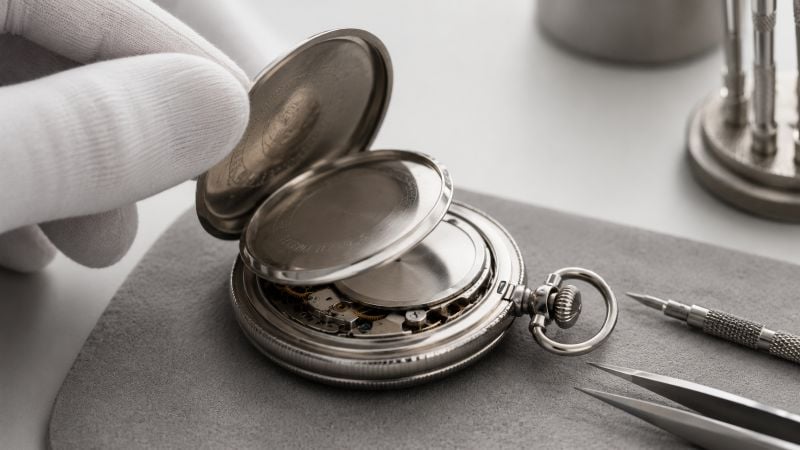
Pocket watches often use hinged covers, especially hunter-case designs. The front cover may open over the dial, while the back may have another hinged cover or inner dust cover. That layered design is why pocket watches deserve a slower hand.
Look for the hinge before using a blade. If the cover is hinged, support it as it opens and do not bend it past its natural range. If the pocket watch is antique, gold-filled, engraved, or sentimental, let a watchmaker handle it. A bent hinge or marked case is not worth the experiment.
After opening the watch back, avoid touching the movement, check the gasket, finish the battery or inspection task, and close the back evenly.
The inside of a watch is not a place for wandering fingers. Finger oil, dust, static, and tool slips can all create problems. If you opened the back for a battery change, record the battery number before removing it. If you opened it because something is broken, do not guess the part by eye.
Soflypart supplies watch parts for repairs and replacements, including crystals, crowns, gaskets, spring bars, movement parts, and related components. Always match parts by size, reference, and case design.
The gasket should sit cleanly in its groove before the back goes on.
A gasket helps seal the case against dust and moisture. If it is dry, cracked, stretched, flattened, sticky, or broken, replace it. Opening the watch does not automatically ruin water resistance, but disturbing an old seal can reduce it.
The Water Resistant mark reference explains that water-resistance marks relate to controlled pressure testing and sealing conditions. In real use, seal age, damage, temperature, and mechanical stress can all affect resistance.
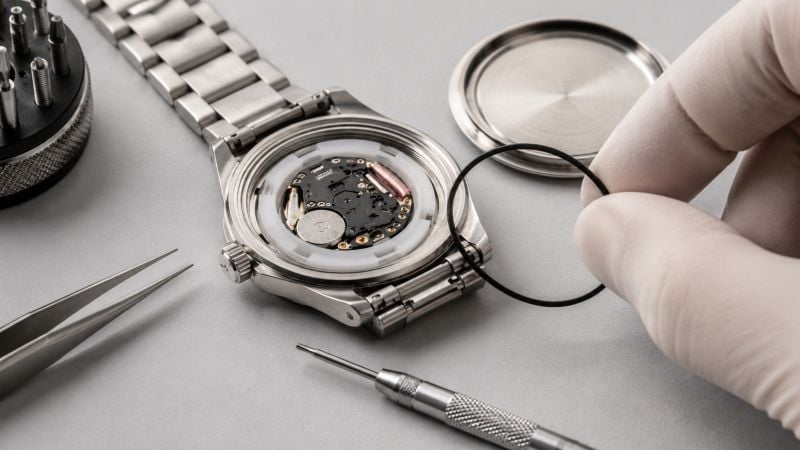
A snap-off back needs even pressure. A screw-down back needs clean thread alignment. A small-screw back needs balanced tightening.
Do not hammer a snap back. Do not cross-thread a screw-down back. Do not over-tighten tiny screws. If a snap-off back refuses to close, follow Soflypart’s guide on how to close a snap off watch case back before adding more pressure.
Stop DIY work if the watch is marked for swimming, diving, or strong water resistance.
A watch can look closed and still fail a water test. Dive watches and sports watches often need pressure testing after opening. You should also stop if the opener slips more than once, the back will not move, the gasket is damaged, or the movement shifts inside the case.
Opening the back of a watch is mostly about reading the case before touching the tool. A snap-off back lifts from a notch. A screw-down back rotates out of the case. A small-screw back comes off after the screws are removed. A smooth or sealed back needs a slower check because the opening point may not be obvious.
The best repair habit is patience. Clean the case, support the watch, use the right tool, and stop when the back fights you. Once the back is open, protect the movement and pay attention to the gasket. That thin seal does more work than people give it credit for.
If you are setting up a basic watch repair bench, Soflypart can help you source case openers, screwdrivers, gaskets, and replacement parts for everyday service work. Start with the right tool, and the job feels a lot less risky.
You should not open a watch back without the correct tool. A knife, coin, or household screwdriver can slip and damage the case.
Use a case knife for snap-off backs, a case back opener for screw-down backs, and a precision screwdriver for small-screw backs.
Most screw-down watch backs open counterclockwise and close clockwise.
Press the opener into the notches before turning. Stop if the opener slips or the back does not move with controlled pressure.
Opening the back of a Fossil or Timex watch depends on the case back type, not the brand alone.
Some models use snap-off backs. Some use screw-down backs. Others use small screws. Check the back design first, then use the matching method.
A watch back may not snap on because the gasket is out of place, the back is misaligned, or the case needs even pressure from a case press.
Do not force it with a hammer or hard tabletop. Check the gasket and alignment first.
Opening a watch back can affect water resistance if the gasket moves, dries out, breaks, or does not seal correctly after closing.
A water-resistant watch should be pressure tested after opening if you plan to swim, shower, dive, or expose it to water.