How to Remove the Watch Stem and Crown from Common Watch Movements

Introduction

Generally, it is not recommended to tamper with watch parts unless necessary. But when it comes to watch repairing, maintenance, or servicing. Then the watch parts and components need to be disassembled. During disassembly, one of the most crucial parts to deal with is the watch stem and watch crown, as they are connected to the entire watch movement. Correct removal ensures the proper operation of the watch after repair or replacement. Otherwise, there may be several difficulties to face.

Today’s guide is based on a detailed process for removing watch stems and watch crowns in various watch movements, including mechanical, automatic, and quartz. Moreover, we will also discuss the process of re-inserting the watch stem/crown and common mistakes to avoid. Let’s start!

Watch Stem and Crown

What is a Watch Stem & Watch Crown?

Watch Stem

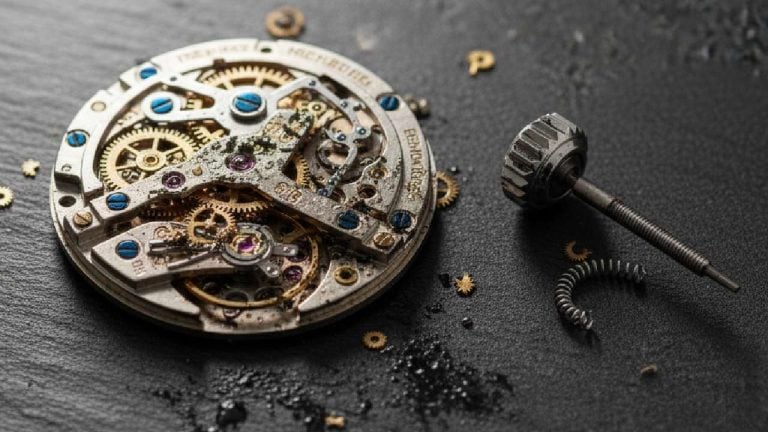
A watch stem can be defined as a small, rod-shaped metal component that connects the watch movement to the watch crown. It assists in providing a smooth motion for adjusting the time, date, and winding the mainspring. The length of the watch stem is linked to the type and model of the watch movement.

Watch Crown

A watch crown is an external component positioned on the side of a watch case. It acts as a knob and is linked to the watch stem for adjusting date, time, and winding. There are different types and styles of watch crowns based on different watches’ operational mechanisms, including push-pull, screw down, and locking.
Purpose of the Watch Stem and Crown

  • Watch Stem and Crown assist in changing and adjusting the date/time.
  • Both of these components help in winding the mainspring of mechanical watches.
  • Screw-down crowns are also used in water-resistant watches to ensure the watch remains safe from water.
  • The watch stem holds the watch movements, as it can’t be removed until the stem is removed.
  • The crown also serves as an aesthetic component, enhancing the watch’s appeal.
Watch Movement Types

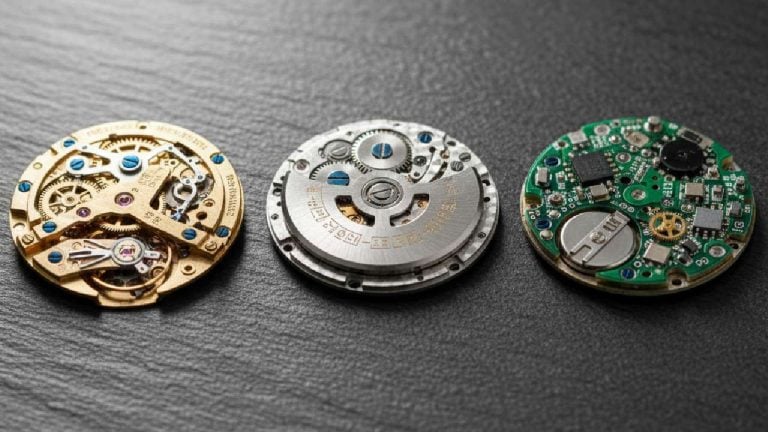
Common Types of Watch Movement

1: Mechanical Watch Movement

The mechanical watch movement is a type of watch movement that functions through manual winding. The mainspring in mechanical watches stores energy and passes it to other components, such as gears and the escapement, to display time and other functionalities on the watch’s screen. The mechanical watch movement also boasts a rich history and is recognized as a status symbol and a unique expression of personality.

2: Automatic Watch Movement

The function of an automatic watch movement is based on self-winding or automatic winding. Typically, when a motion is detected in the wrist, it initiates the self-winding process, utilizing the rotor connected to other components of the watch movement. The rotor swings parallel to the wrist’s motion and powers up the different components to display the time/date. When the watch remains inactive for a specified time period, it stops showing the time, date, and other features.

3: Quartz Watch Movement

The quartz watch movement relies on battery power and a crystal oscillator to enable the watch movement and its functionalities. When the energy passes through the crystal oscillator, it creates a vibrational impact on different frequencies, allowing other components to become active and function accordingly. Generally, these movements are more budget-friendly than the mechanical and automatic watch movements.

Watch Tools

Tools Required for Removal

To perform a successful removal, having the right tools is crucial. All of the following watch tools can be found at Soflypart:

  • Pegwood

Work Space Preparation

  • Choose a clean and dust-free area to work.
  • Arrange good lighting conditions over the work area.
  • Choose a soft cloth for the surface or for placing the components.
  • Use quality working tools to avoid any mistakes.
  • Select a quiet working area to minimize distractions.
Watch Stem Removal

How to Remove a Watch Stem and Crown

General Method for All Movements

  • Remove the case back or back cover using the case opener tool or a knife.
  • One can also remove watch hands and dial if required or if they conflict with the procedure.
  • Place the movement in the watch movement holder for safety and stability.
  • In the next phase, locate the stem release, which can be in the form of a lever, screw, or button.
  • Press as per the structure, and gently pull out the stem to separate the crown from it.

1: Removing Stems from Mechanical Movements

  • Open the watch case using the case opener tool.
  • Place the movement in the watch movement holder.
  • Search for a Stem release lever/screw, as a mechanical watch movement has a push-down or screw-down release system.
  • Use a pin or tweezers to press the lever-type mechanism, and loosen the screws for the screw-type mechanism.
  • Once done, carefully remove the stem and crown, being careful not to bend them.

2: Removing Stems from Automatic Movements

  • Use the case opener tool or knife to remove the back of the watch.
  • Similarly, hold the watch movement inside the movement holder.
  • The next step is to look for a Stem release lever or screw, as the automatic watch movement typically has an additional screw for this purpose.
  • Now, press the lever or loosen the screw, just like above, to release the stem.
  • Finally, gently and carefully pull out the stem and crown together.
Quartz Watch Stem and Crown

3: Removing Stems from Quartz Movements

  • First, remove the back of the watch with a knife or a case opener tool.
  • Check for the Stem release button, as most of the quartz watches have a small push-button near the stem.
  • The next step is to press that button with the help of a pin or a screwdriver.
  • At the end, pull out the stem, and the crown is also detached with it.
  • Be careful and avoid touching the stem with electronic parts.

Process of Reinserting Stem and Crown

  • Keep the crown in a neutral position with no engagement.
  • Align the stem over the holes or the position of movement.
  • Gently push the stem inward and hear a clicking noise.
  • Once done, check the functions like rotation, time, date, and others.
  • Reinstall the watch case, straps, and other parts, as everything is now complete.

Common Mistakes to Avoid

  • Don’t choose a dirty and dusty area for the procedure.
  • Don’t apply excessive pressure on any of the watch components.
  • Don’t forget to press the release button before the removal of the crown.
  • Don’t choose a wrong or low-quality tool to perform the procedure.
  • Avoid performing any action hastily, as it may damage the watch.
Damaged Watch Movement and Stem

Working Tips & Practices

  • Take a picture of each step to remember the procedure.
  • Create an identification spot for screws and other components to keep them organized.
  • Attempt the task only when you are in a fresh and stable mental state.
  • If any of the components, including the crown or stem, is damaged, replace both.
  • Don’t attempt the procedure if you are new to the watch community.

Concluding Remarks

It is obvious that, while repairing or replacing any component in the watch. Watch enthusiasts and experts will first examine the watch crown and watch stem. Removing both the stem and crown requires a deep understanding and a set of appropriate skills. If not, it may damage your expensive watch. Each watch movement has a different type of stem and crown attached to it. Understanding the type of watch movement is also essential for performing the removal procedure efficiently. Moreover, always attempt this task in a neat, clean, and well-lit area, using quality watch tools.