How to Use a Watch Bezel: The Ultimate Visual Guide for Beginners
Introduction
Got a watch with a rotating ring and no idea what it’s for? You’re not alone.
A watch bezel can turn your watch into a practical daily tool. You can use it to time coffee, parking meters, workouts, meetings, or cooking. Some bezels help you track a second time zone while traveling, while others work with a chronograph to measure speed.
The confusion usually starts because no one explains how to actually use the bezel in real life. Beginners worry about turning the wrong thing, misaligning the bezel, or damaging the watch.
This guide is a clear, visual, step-by-step walkthrough of the most useful bezel functions—timing, time zones, and a few specialty tools—so you can start using the bezel on your watch with confidence.
What is a watch bezel, and what parts should you recognize first?
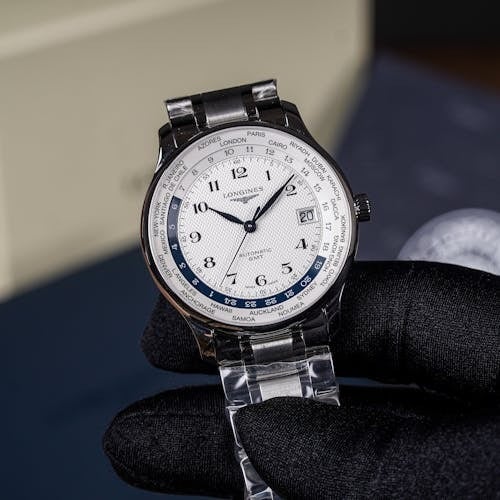
A watch bezel is the ring that surrounds the crystal. Depending on the watch, it may be fixed or rotating, and it often carries markings that let you measure time, distance, or direction.
Before using one, it helps to recognize the main parts you’ll see:
Zero marker / pip: A triangle or dot marking the start point
Grip edge: Often a coin-edge texture for traction
Inner rotating bezel (on some watches): Controlled by a crown rather than direct rotation
The bezel also interacts closely with surrounding components like watch crystals. Alignment, pressure, and fit around the crystal affect how smoothly the bezel turns and how well it stays aligned over time. That’s why bezel feel is partly a design issue, not just a usage issue.
How do you use a dive bezel as a simple 60-minute timer? (Start here)
This is the most common and easiest bezel to learn, even if you never dive.
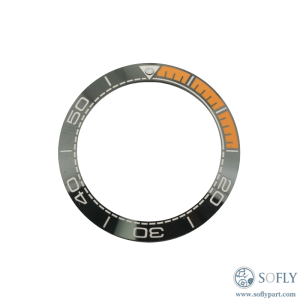
A dive bezel tracks elapsed minutes and usually rotates in one direction only (counterclockwise). That unidirectional design is a safety feature.
The core idea (one sentence)
You align the bezel’s zero marker with the minute hand, then read elapsed minutes directly from the bezel.
Step-by-step example
Timing a 15-minute task
Rotate the bezel so the zero marker lines up with the minute hand.
Start your activity.
Check the bezel later and read the number where the minute hand points.
If you start at 12:00 and check again at 12:15, the minute hand will point to 15 on the bezel.
Common beginner mistakes (and quick fixes)
Aligning to the hour hand: Always use the minute hand.
Trying to time more than 60 minutes: Treat it as elapsed minutes within the hour or time in segments.
Bezel feels stiff or gritty: Jump to the maintenance section below.
Everyday uses beyond diving
Parking meters
Cooking and baking
Meetings and presentations
Workout intervals
Laundry or household reminders
Once you get used to it, the bezel becomes faster than pulling out your phone.
How do you use a GMT bezel to track time zones while traveling?
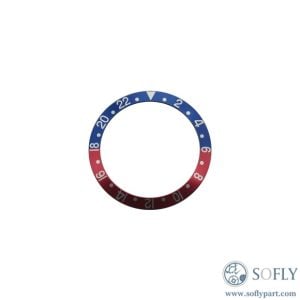
A GMT bezel lets you track another time zone—usually your home time—while traveling.
What the 24-hour bezel means
A GMT bezel shows 24 hours, which makes it easy to tell day from night. That’s why the numbers don’t repeat like a standard 12-hour dial.
Important prerequisite
This works best if your watch has a GMT hand (a 24-hour hand). If your watch doesn’t have one, skip ahead to the 12-hour bezel section.
Step-by-step setup
Set the GMT hand to your home time.
Set the main hands to local time.
Read home time directly from the GMT hand against the bezel.
Tracking a third time zone
Rotate the bezel to offset another time zone, then read it using the GMT hand.
Don’t overthink this. You don’t need to understand different GMT movement types to use the bezel correctly. If you can read two time zones at a glance, you’re doing it right.
How do you use a 12-hour bezel for quick time-zone math (without a GMT hand)?
A 12-hour bezel is a simple workaround when your watch doesn’t have a GMT hand.
How it works
Rotate the bezel by the hour difference between time zones. The hour hand will then point to the second time zone on the bezel.
Example
If your home time is 3 hours ahead, rotate the bezel 3 hours backward. The hour hand now shows home time.
Limitation to know
A 12-hour bezel doesn’t automatically show AM or PM, so it’s best for short trips or quick checks.
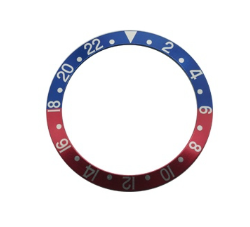
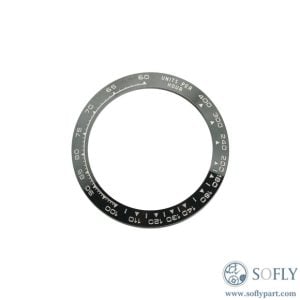
Generic Rolex Bezel Insert For GMT-Master 16710 37.6mm
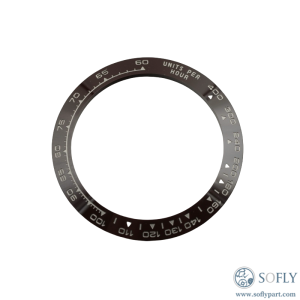
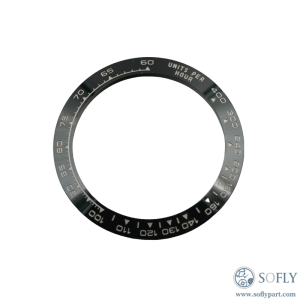
How do you use a tachymeter bezel to measure speed (and when is it useful)?
A tachymeter bezel works only if your watch has a chronograph.
One-sentence explanation
It converts time over a known distance into units per hour.
Simple example
Start the chronograph at a 1-mile or 1-kilometer marker.
Stop it at the next marker.
Read the speed directly from the bezel where the seconds hand stops.
Because tachymeters rely on precise chronograph timing, worn or poorly maintainedwatch movement parts inside the movement can affect accuracy. That’s why servicing matters more here than with basic timing bezels.
How do you use a compass bezel for basic direction finding?
A compass bezel offers rough orientation, not precise navigation.
Basic method (Northern Hemisphere)
Point the hour hand toward the sun.
Find the midpoint between the hour hand and 12 o’clock.
That midpoint points south.
Use the bezel markings to estimate the other directions.
This is a backup method for outdoor situations, not a replacement for navigation tools.
What other bezel scales might you see (and what do they do)?
You may occasionally encounter:
Pulsometer: Measures heart rate with a chronograph
Telemeter: Measures distance using light and sound
Yacht/regatta countdown: Counts down to a race start
Slide rule: Performs analog calculations
You don’t need to master these to enjoy using your watch.
What bezel materials and mechanics affect durability and “feel”?
Common bezel materials
Ceramic: Scratch resistant and colorfast; can chip on hard impact
Aluminum: Classic look; scratches and fades over time
Steel or titanium: Durable and cohesive; scratches but ages evenly
Why some bezels feel better than others
Click count (60 vs 120)
Clean alignment at 12 o’clock
Minimal back-play with consistent resistance
In practice, most beginner complaints about bezels are about feel, not function.
Why does a bezel get stiff or stuck, and what can you safely do?
Common causes
Sand or grit
Salt from seawater or sweat
Dried soap residue
Safe cleaning steps
Rinse with fresh water
Use a soft brush
Mild soap if needed
Dry thoroughly
What not to do
Don’t force the bezel
Don’t pry it open
Don’t randomly lubricate it
If a bezel problem goes beyond basic cleaning, sourcing proper replacement components matters. Many watch owners turn to established suppliers like Soflypartwhen looking for compatible service parts, especially when fit and originality are important.
Top-Selling Watch Bezels & Bezel Lifters from SoflyPart
$140.00 You Saved Select options
This product has multiple variants. The options may be chosen on the product page
FAQ
Can I rotate my bezel underwater?
Yes, especially on dive watches designed for it.
Why doesn’t my bezel line up perfectly at 12 o’clock?
Minor misalignment can be normal. Persistent issues may need service.
What’s the difference between a 60-click and a 120-click bezel?
More clicks allow finer adjustment and alignment.
Can I use a bezel without a chronograph or GMT hand?
Yes. Dive and 12-hour bezels work independently.
What should you remember before you start using your watch bezel?
Start simple. Pick one method—timing with a dive bezel—align the minute hand and try timing 10 minutes right now.
A watch bezel turns a watch from a simple time display into a practical tool. Use a dive or count-up bezel to track elapsed time, practice reading a second time zone with a GMT or 12-hour bezel, and treat specialty bezels like tachymeters or compass scales as situational tools rather than daily necessities. The goal isn’t to master every function—it’s to confidently use the ones that fit how you actually live.
If you’d like to go deeper and understand why different bezels exist and how they’re designed, our full guide to Watch Bezel Types breaks down the major styles, their functions, and how to choose the right bezel for your watch and lifestyle.
Pick one method, rotate the bezel, and try it today. The fastest way to learn a bezel is to use it—once it clicks, you’ll wonder how you ever wore a watch without one.