Product Description
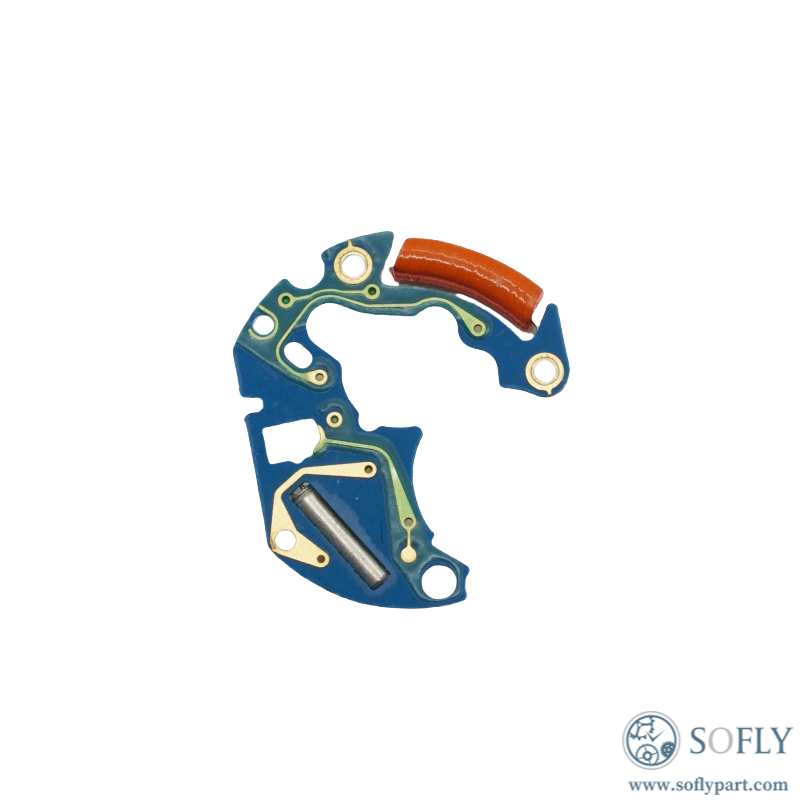
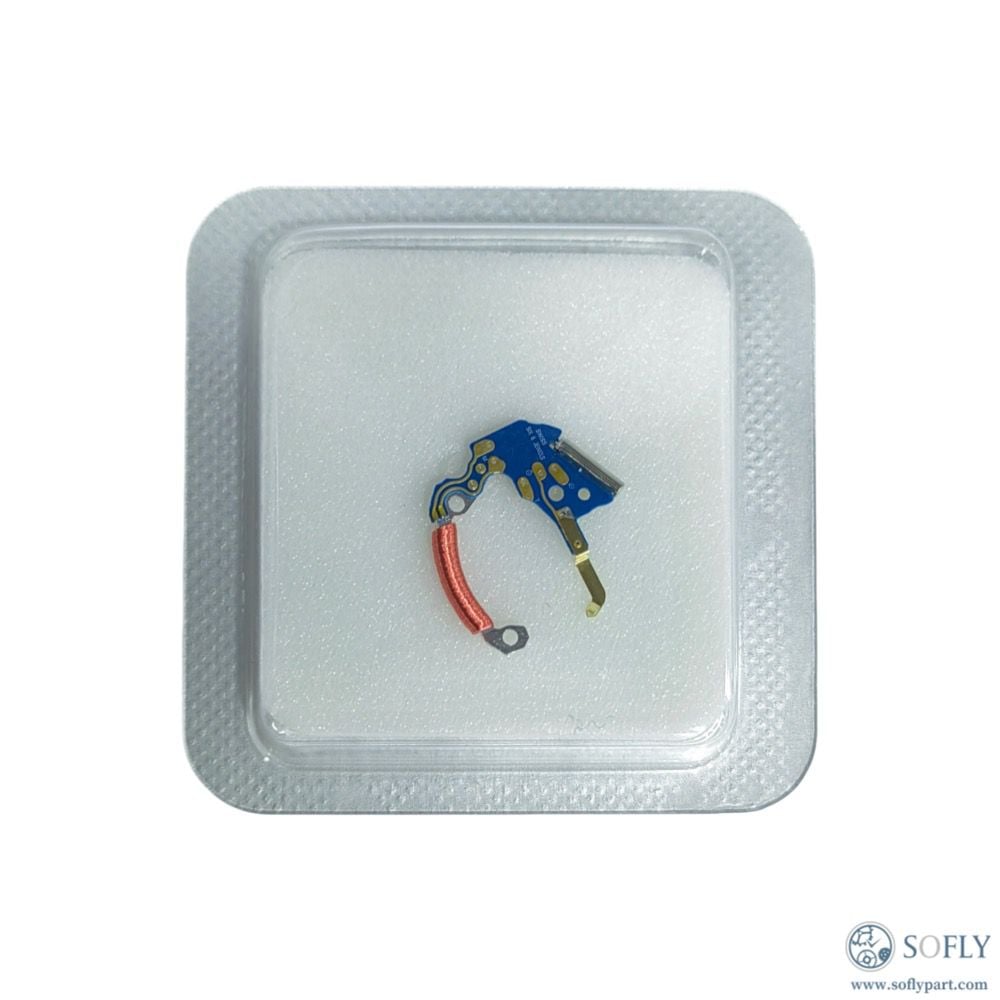
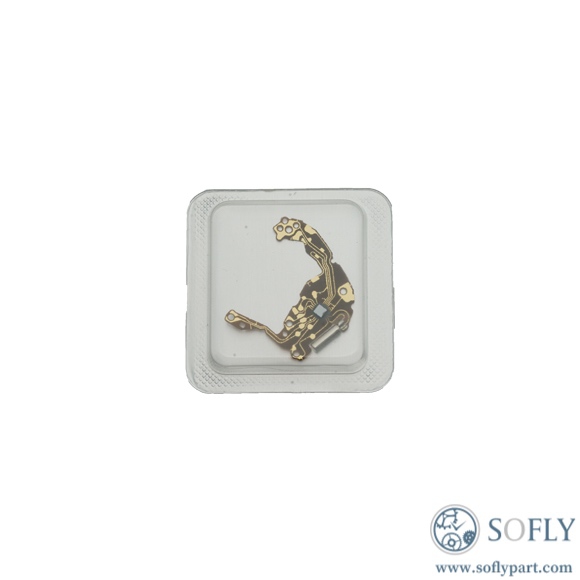
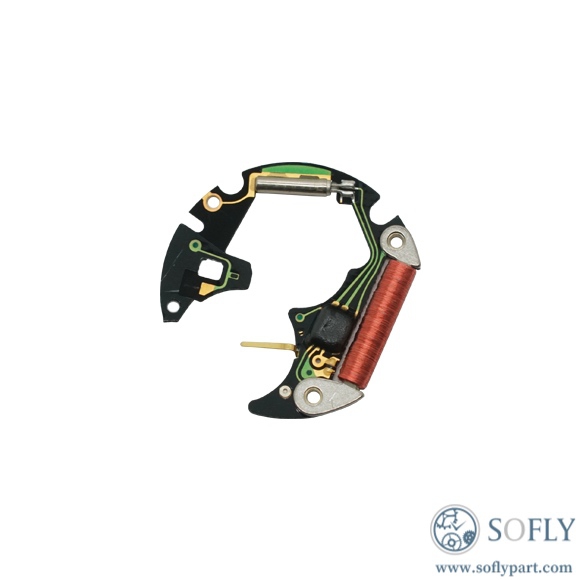
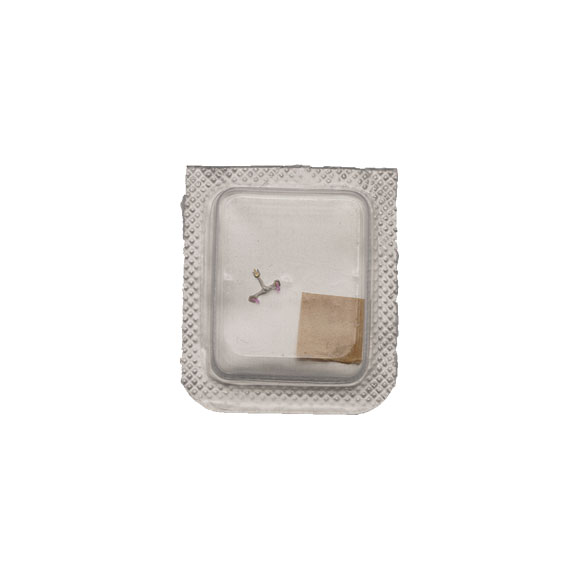
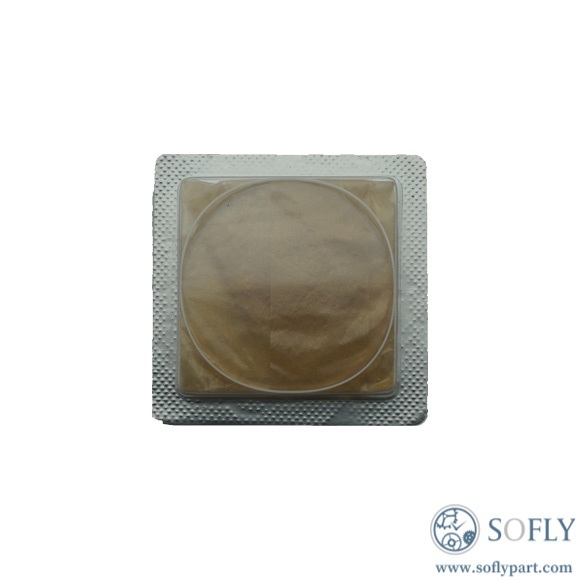
This is a genuine Swiss-made Cartier original circuit block (circuit board / coil block) for the Calibers 057 and 157 quartz movements – the electronic “brain” of the movement. This component integrates the quartz oscillator, CMOS integrated circuit, and drive coil interface, processing the high‑frequency signal from the quartz crystal and dividing it down to a precise one‑pulse‑per‑second signal to drive the stepper motor, which moves the hands. As an OEM part, this circuit block is the dedicated replacement for a damaged original circuit board – whether from water corrosion, an open coil, electronic component failure, or physical impact – offering the most reliable solution for professional watchmakers to restore timekeeping function to these Cartier quartz calibers.
Features & Function
-
When to Replace: A professional watchmaker should consider replacing the circuit block when a Cartier watch equipped with Caliber 057 or 157 exhibits any of the following symptoms:
-
Complete stoppage: The movement does not restart even after installing a fresh, factory‑recommended battery, and no hand movement is observed.
-
Intermittent running: The hands run for hours or days, then stop unexpectedly; or the second hand moves in jumps (e.g., 4‑second intervals – a low‑battery indication) that persist even after the battery has been replaced.
-
Grossly inaccurate timekeeping: The watch gains or loses several minutes (or even hours) per day, well beyond the ±20 seconds per month expected of a modern quartz movement, and a fresh battery does not solve the problem.
-
Water ingress followed by stoppage: The watch has been exposed to moisture or accidentally submerged, and after drying out, the movement still does not run – in the 057/157, water damage often destroys the circuit block and coil first.
-
Calendar malfunction (if the movement has a date feature): The movement runs, the hands advance, but the date does not jump at midnight or the quick‑set button has no effect – a faulty circuit block can also cause partial calendar function loss when the date‑drive circuit is integrated.
-
Diagnosis (Before Movement Removal) : Before taking the movement out of the case, the following basic checks can help confirm a circuit block failure:
-
Measure the battery voltage with a multimeter. A fresh battery should read about 1.55 V open‑circuit. If it reads below 1.45 V, replace the battery first.
-
If the battery is good but the movement is still stopped, remove the battery and measure the coil resistance with the multimeter set to Ohms. A healthy coil typically reads somewhere in the hundreds to low thousands of Ohms. An open‑circuit reading (infinite resistance) indicates a broken coil, which means the entire circuit block must be replaced.
-
Inspect the battery contacts and circuit board traces under magnification. Greenish corrosion or obvious oxidation points are signs of irreversible electrolyte damage that cannot be completely cleaned.
-
Even if the preliminary tests show no obvious failure, the IC inside the circuit block can still fail. The final diagnosis of such an intermittent failure usually requires substitution with a known‑good circuit block or testing with a dedicated quartz movement tester.
-
Exchange Policy (Return Broken Part): This is a genuine Cartier OEM part. Cartier’s strict parts control policy requires that the customer return the original (failed) circuit block – which must be the original circuit board from that movement – to an authorized Cartier channel or supplier before a new one is released. This prevents genuine parts from entering the unauthorised aftermarket and protects against counterfeit parts; it is standard practice for Cartier‘s core electronic components.
-
Preventive Replacement Advice: When a battery leak has already produced visible corrosion on the circuit board surface, even if careful cleaning temporarily restores battery contact, it is risky to rely on that board long‑term – corrosion products can penetrate the inner layers of the PCB or travel along the contact surface to the coil interface. The safer, more professional repair strategy is to replace the circuit block in such cases, rather than cleaning and reusing the damaged board.
FAQ
Q1: What is the correct coil resistance range for Caliber 057/157?
A: Different production batches and OEM sources may yield slight variations. Typically, a healthy coil measures between 250 Ω and 800 Ω. If the multimeter reads open circuit (OL or infinite resistance), the coil is broken. If the reading is far outside the normal range, such as below 20 Ω, there is an internal short. Both conditions are permanent failures that require replacing the entire circuit block. Always remove the battery before measuring.
Q2: I have a movement that has sat without a battery for 5 years. After I install a new battery, it runs. Does the circuit block need to be replaced?
A: If the movement was stored in a dry, clean environment, the quartz crystal and IC can remain fully functional for decades. As long as the circuit block is driving the stepper motor reliably and the timekeeping accuracy is within an acceptable range, no replacement is necessary. However, if the battery contacts show visible green corrosion, the contact resistance is already compromised and corrosive damage may be spreading along the PCB traces. For long‑term reliability, it is safer to replace the circuit block in such cases.
Q3: The movement runs accurately, but the date does not advance. Is the circuit block at fault?
A: If the date is advanced by a separate mechanical train linked to the stepper motor, the problem is most likely in the calendar mechanism (worn wheels, a misaligned jumper). However, if the date drive circuit is integrated into the circuit block’s PCB, and all mechanical components appear intact, then a faulty drive phase or insufficient drive current from the IC could be the cause. The fastest diagnosis is to substitute a known‑good circuit block from the same caliber. If the calendar then works, the original circuit block’s date‑drive section has failed.
Q4: What basic ESD precautions should be followed when handling a circuit block?
A: 1) Wear a grounding wrist strap connected to true earth ground (not just to a metal table). 2) Use ESD‑safe tweezers and work on an anti‑static mat. 3) Use a soldering station with built‑in ESD protection. 4) Before installing the circuit block, briefly short the battery‘s positive and negative terminals to dissipate any stored static charge (the battery acts as a static “buffer”). Following these steps will greatly reduce the risk of electrostatic damage.
Why Choose SOFLY Watch Parts?
-
Fast worldwide shipping within 3 business days.
-
Competitive pricing on Seiko/Hattori calibers.
-
3,000+ watch movements and parts in stock.
-
Trusted by watchmakers worldwide.
-
Personalized sourcing support via [email protected] or WhatsApp +86 18620212114.