Product Description
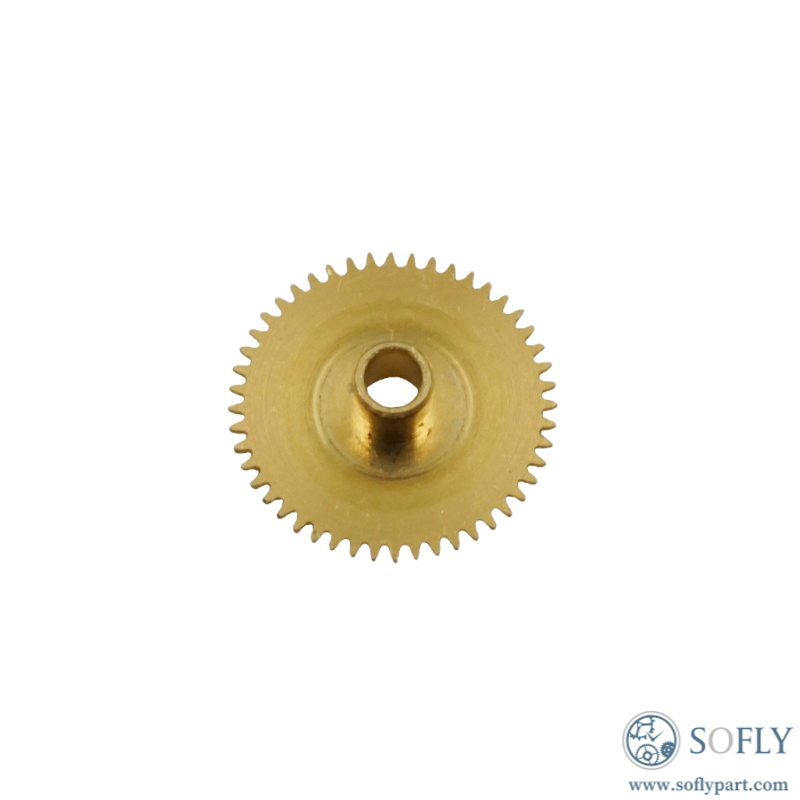
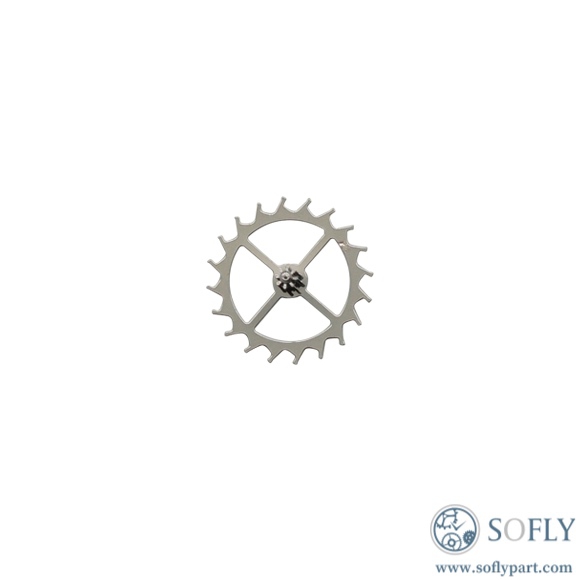
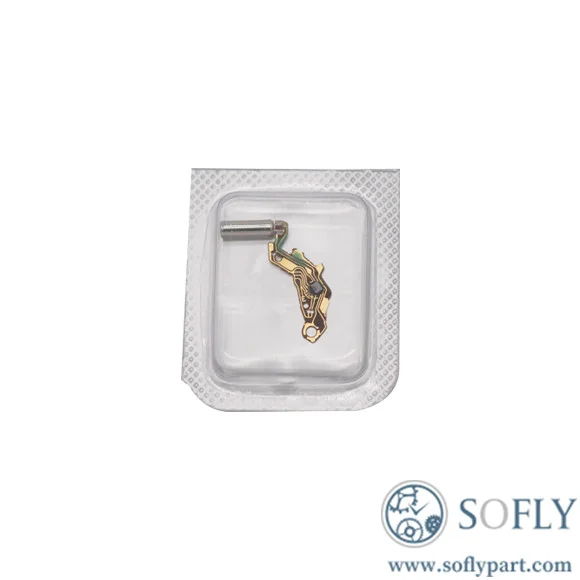
This is a genuine Cartier original factory hour wheel for the Caliber 430 MC manual-winding ultra-thin movement, a critical component in the motion work that transfers power from the minute wheel to the hour hand hour wheel, enabling the hour hand to rotate at the correct 12:1 speed reduction relative to the minute hand. The Caliber 430 MC is Cartier‘s branded version of the legendary Piaget 430P ultra-thin movement, measuring just 20.5mm in diameter and 2.1mm in thickness, beating at 21,600 vph (3Hz), and delivering approximately 40-43 hours of power reserve, while driving only the hour and minute hands (hours and minutes) with 18 jewels [7†L11-L12].
As an OEM part, this hour wheel is the most reliable replacement solution for watchmakers when addressing tooth wear, arbor bending, wheel deformation, or missing components during servicing, restoring smooth motion work and ensuring the continued precise timekeeping of this ultra-thin hand-wound caliber.
Features & Function
-
Genuine Quality: Factory-produced by Cartier Switzerland and supplied through official authorized channels. Brand new, fully compliant with original material and precision standards.
-
Compatible Movement: Cartier Caliber 430 MC (the full official designation, caliber 430MC), whose base movement is the legendary Piaget 430P ultra-thin hand-wound mechanical caliber (20.5mm diameter, just 2.1mm thick, 21,600 A/h) [0†L5-L8][5†L10-L11][5†L16-L19].
-
Derivation Relationship Between Movements: The 430 MC is Cartier’s branded version of the Piaget 430P ultra-thin hand-wound mechanical movement [7†L7]. The two calibers are fully compatible in gear train layout, gear ratios, and all key component dimensions: 20.5mm diameter, 2.1mm thickness, 18 jewels, and a frequency of 21,600 vph (3Hz). The Cartier 430 MC typically adds the brand‘s signature double-C ornamental engraving on the bridges and may replace the ratchet wheel or bridge screws with Cartier-branded versions—but the core wheel train components (including the hour wheel) are fully interchangeable. Therefore, this hour wheel can also be used for service and repair of watches powered by the Piaget 430P movement (such as Piaget Altiplano) [14†L22-L23].
-
Shape and Dimensions: Typically sits between the intermediate wheel and the hour hand tube, consisting of a steel gear with a relatively short shoulder and a hollow “tube” that fits over minute hand tube. Determines the coaxial independence of the hour and minute hands.
-
Position in the Motion Work (Critical): The hour wheel plays a core role in the 12:1 reduction transmission within the motion work. In the basic 430 MC/430P structure, the power flow path is: barrel → center wheel (drives minute wheel tube) → minute wheel → intermediate wheel → hour wheel (THIS PART). This wheel receives power from the minute wheel, reduces its speed (by approx. 1/12) according to the gear tooth ratio, and transmits the reduced rotation to the hour hand tube (hour wheel tube) that is slidably fitted over the center wheel, thereby driving the hour hand smoothly. The steel gear is combined with a hollow shaft that fits over the wheel hub of the center wheel.
-
Repair Value: Replacement is required if the movement exhibits: ① Jumpy, gritty, or irregular motion during hand-setting (especially during slow adjustment) → most often caused by worn pinions/teeth on the hour wheel; ② Rust or contamination between the hour wheel shaft and the minute wheel tube → causing minute and hour hands to move out of sync; ③ Bending or excessive axial play (end-shake >0.05mm) of the hour wheel → causing position displacement of the hands; ④ Proactive replacement during full service to eliminate the risk of breakage of an aged gear.
-
Ultra-Thin Movement Protection: The thinnest part of the 430P/430 MC bridge measures only 0.12mm, the thickness of two hairs [12†L22-L23]. This means that during an external shock, the hour wheel and other components in the gear train can easily sustain micro-cracks from stress transmission. When replacing the hour wheel, always inspect the mating minute wheel and intermediate wheel.
FAQ
Q1: When I adjust the hour hand on my Cartier, the minute hand moves slightly. What’s the cause?
A: This is likely due to excessive backlash in the hour wheel caused by worn teeth or a loose fit of the hour wheel tube on the minute wheel tube. Because the 430 MC is an ultra-thin caliber, the meshing depth is minimal – even 0.02mm of tooth height loss can cause judder during time-setting. The cleanest fix is to install a new hour wheel and a new minute wheel together to restore the original fit.
Q2: Manual winding feels smooth, but the watch runs slow after a few hours on the wrist – why?
A: There could be friction between the minute wheel tube and the inside of the hour wheel tube. If the lubricant in that area is dry, friction increases, sapping energy from the mainspring. Under a microscope, the interior surface of the hour wheel tube will show mirror‑polished wear marks. The repair is to replace the hour wheel and the minute wheel together as a set.
Q3: Is it acceptable to replace only the minute wheel and intermediate wheel, but not the hour wheel?
A: Not recommended. The hour wheel meshes with the intermediate wheel. If the intermediate wheel‘s teeth have already developed polished wear flats, the softened surface will quickly damage a new hour wheel. To ensure proper engagement and long-term reliability, it is best practice to replace the minute wheel, intermediate wheel, and hour wheel together as a matched set.
Q4: Under 30x magnification, the tips of the hour wheel teeth are shiny but not yet missing. Should I replace it?
A: Yes, replace it. The “shiny band” indicates that the tooth flank has been over‑stressed and the micro‑structure has begun to flow plastically (micro‑annealing). If you continue to use the wheel, the tips will soon curl or break off, potentially damaging the movement. Professional practice is to scrap the wheel and install a new one.
Q5: The upper pivots of the hour wheel and other wheels are extremely fragile. Is there a trick to installing the train bridge without breaking them?
A: Yes. First, loosen the bridge screws by several turns. Second, use tweezers to guide the wheel pivots into their jewel holes before the bridge touches the mainplate. If the bridge tilts even slightly, the pivots will break. A drop of Fixodrop (epilame) in the jewel hole helps the pivot slide in – but never use excessive force.
Why Choose SOFLY Watch Parts?
-
Fast worldwide shipping within 3 business days.
-
Competitive pricing on Seiko/Hattori calibers.
-
3,000+ watch movements and parts in stock.
-
Trusted by watchmakers worldwide.
-
Personalized sourcing support via [email protected] or WhatsApp +86 18620212114.