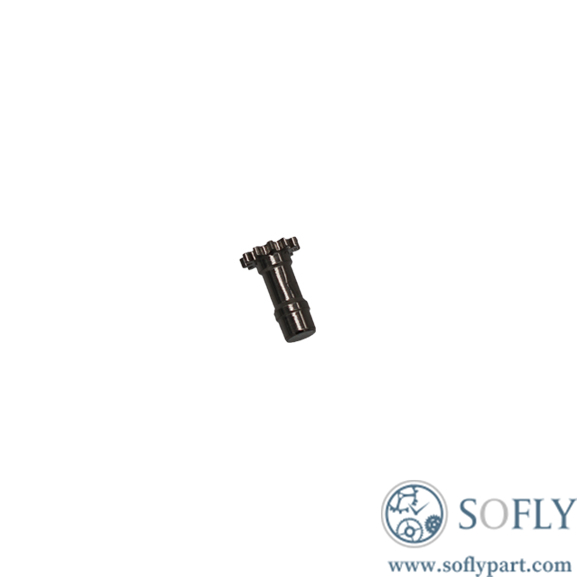
Product Description
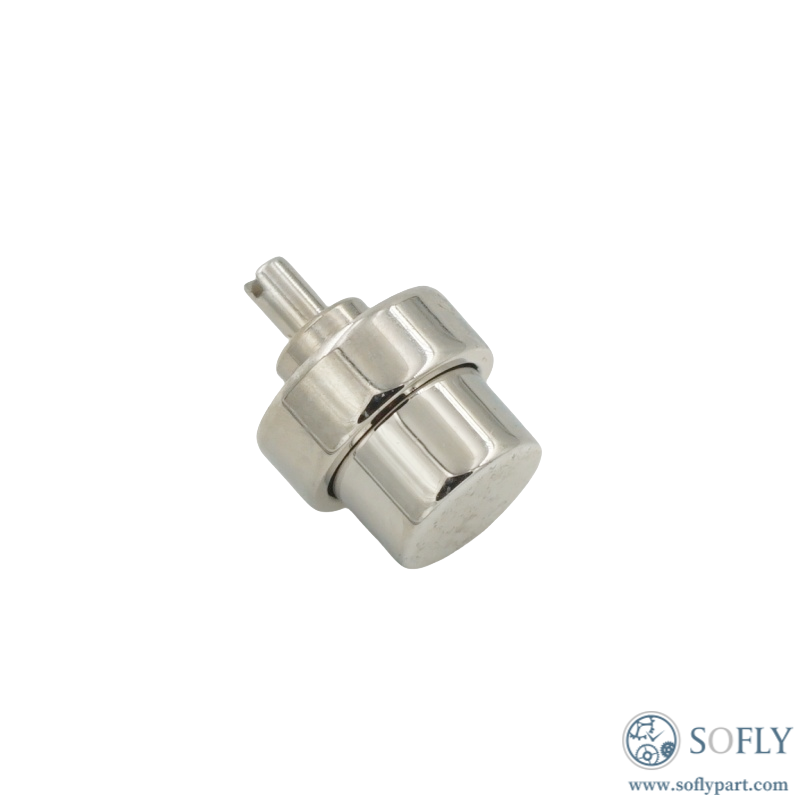
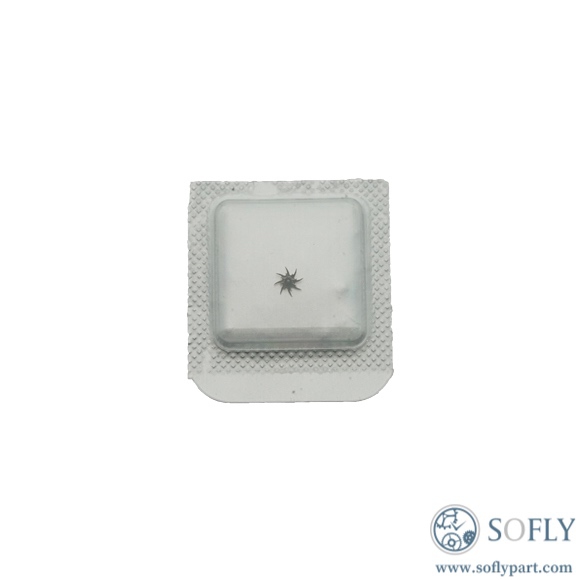
This is a genuine click designed for ETA 2824-2, 2834-2, 2836-2, and related automatic movements, ensuring secure power retention in the mainspring. As a core component of the bidirectional automatic winding system, the click works with the ratchet wheel to lock the mainspring energy during non-winding phases, preventing reverse rotation and maintaining stable power delivery. As an original factory part, it is the ideal choice for replacing worn or damaged clicks.
Key Features
Swiss Authenticity – Genuine ETA 425 Click, article number 17, made in Switzerland.
Precise Compatibility – Designed for ETA 2824-2, 2834, and 2836 automatic movements.
Critical Function – Locks the ratchet wheel to keep the mainspring fully wound and stable.
Professional Grade – Trusted by watchmakers for reliable movement servicing and repair.
Condition – Brand new part, ready for installation.
Specifications
| Parameter | Details |
|---|
| Part Name | ETA Click |
| Reference Number | 425 |
| Article Number | 17 |
| Compatible Calibers | ETA 2824-2, ETA 2834, ETA 2836 |
| Origin | Switzerland |
| Condition | Brand new |
Applications
Replacement part for ETA 2824-2, 2834, 2836 movements
Ensures reliable winding and energy retention
Ideal for professional watchmakers and repair projects
Technical Background:
The ETA 2824 is a direct successor of the Eterna 1429U/1439U base plate, introduced in 1972
Features bidirectional winding and a ball‑bearing rotor – proven reliability and serviceability
The double‑click wheel system plays a critical “decoupling” role in the bidirectional automatic winding system, managing the different torques from manual and auto winding
Role in Automatic Winding:
When the rotor oscillates, the tiny clicks on the pawl wheel hold the tension; the click engages and releases the ratchet wheel as needed. Together with the reverser wheels, they complete the power‑locking and power‑transmitting cycle of automatic winding.
Installation Instructions
1. Remove Automatic Module Open the case back, remove the movement, take off the rotor and the automatic bridge to expose the click and the ratchet wheel.
2. Inspect Spring & Click Remove the old click. Check the spring for deformation or breakage, and examine the click tooth for visible wear.
3. Clean Mounting Area Thoroughly clean any old oil and debris around the ratchet wheel and the click slot.
4. Install New Click Fit the new click into its slot on the main plate, ensuring the spring end engages its locating hole.
5. Check Engagement The click tooth should mesh naturally with the ratchet wheel, with the spring providing proper tension.
6. Test Functions Perform manual and automatic winding, verifying smooth click operation and absence of noise.
7. Water Test After reassembly, carry out a professional water resistance test.
Important Note:ETA officially warns against cleaning the reverser wheels because oil residue may block them. Replace them whenever they show signs of dirt or rust, or apply Lubeta 105 if they are still in good condition. Meanwhile, the 28xx series uses an eccentric base plate pivot for the winding crown wheel; before closing the bridge, verify that this pivot has returned to its correct position, otherwise manual and automatic winding torques may interfere with each other.
Important Notes
| Note | Details |
|---|
| Part Number | 2824/2834/2836-425 identifies the designated click for this movement family. It is not interchangeable with other calibers. |
| Click Wear Indicators | ① The click fails to lock while manually winding, causing energy to back‑flow into the automatic train, i.e. the rotor spins;
② Noticeably reduced automatic winding efficiency;
③ The click spring breaks completely, making energy storage impossible. |
| Reverser Treatment Options | ETA’s official recommendation: If the reversers are in good condition → treat them with Lubeta 105; if they show significant rust or dirt → replace them with genuine parts. |
| Pre‑Installation Check | Ensure the click spring slot and the ratchet wheel area are free of old oil and debris, otherwise the new click will not lock properly. |
| Professional Advice | Gear train disassembly requires expertise – professional installation by a watchmaker is recommended. |
Maintenance & Service Guide
| Aspect | Guidance |
|---|
| Inspection Period | Inspect the click spring for deformation and the click tooth for wear during each movement service (every 3-5 years). |
| Cleaning Method | Clean the area around the ratchet wheel with specialized cleaning solution. However, do not routinely clean the reverser wheels – replace them or follow the official treatment instead. |
| Lubrication Requirement | Apply a microscopic amount of specialized watch oil to the click‑spring contact points. For reversers (if they are kept in place), treat them with Lubeta 105. |
| Click Replacement Criteria | ① The rotor spins while manually winding; ② The click makes an abnormal scraping noise during automatic winding; ③ The click spring is completely broken. Replace the click if any of these conditions occurs. |
FAQ
Q1: What is the purpose of the click (2824/2834/2836-425) in the winding system?
A: After the mainspring is wound, the click together with the pawl wheel locks the barrel ratchet wheel, preventing the spring from unwinding back through the automatic train. Without a properly functioning click, the mainspring cannot retain its wound state.
Q2: When does the click need to be replaced?
A: The click must be replaced if:
– Manual winding makes the rotor spin (the click can no longer decouple energy);
– The automatic winding efficiency drops significantly;
– The click spring is broken or the click tooth is chipped;
– The watch does not hold power reserve even after full winding.
Q3: Can I replace the click alone without replacing the reversers?
A: Yes, if the reversers are in good condition. However, you must still treat them with Lubeta 105 (not regular oil) to ensure proper function. If the reversers are dirty or rusty, the official ETA recommendation is to replace them together with the click.
Q4: Why does the rotor spin when I manually wind my ETA 2824?
A: This is a classic sign of a failed or badly lubricated click. The click cannot lock the mainspring during manual winding, so the torque back‑drives the automatic train and spins the rotor. It is often caused by a worn click or reversers that are over‑oiled.
Why Choose SOFLY Watch Parts?
Reliable Shipping – Orders processed within 3 business days, shipped worldwide.
Competitive Pricing – Affordable rates with bulk discounts and exclusive offers.
Extensive Inventory – Over 3,000 types of replacement watch parts in stock.
Trusted Quality – Components selected and used by professional watchmakers globally.
Sourcing Assistance – Need a specific ETA part? Contact us at [email protected] or via WhatsApp +86 18620212114.