
A Ronda watch movement is commonly used in quartz watch repair, replacement, and custom assembly. To choose the right Ronda quartz watch movement, start with the caliber number, then confirm the movement size, stem position, hand sizes, date layout, and battery type before ordering.
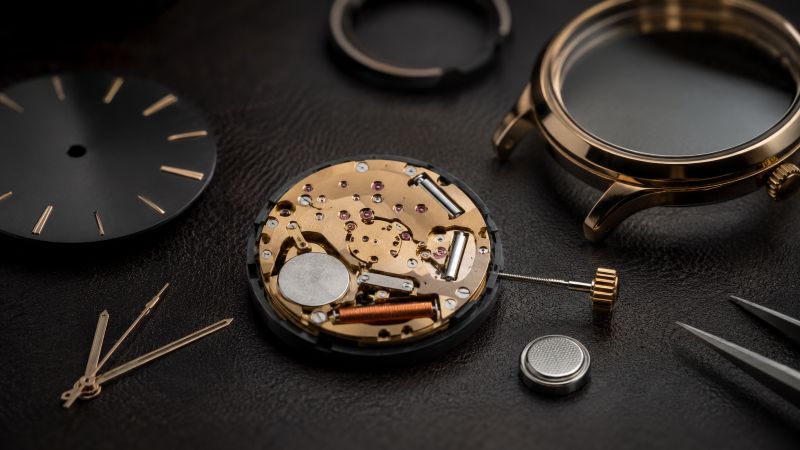
A Ronda watch movement is the internal mechanism that drives the hands, date display, and other functions of a watch. In most repair and replacement searches, this phrase refers to a Ronda quartz movement.
For repair work, the main question is not simply whether the movement is made by Ronda. The real question is whether the replacement movement matches the original caliber, case, dial, hands, stem position, and battery type.
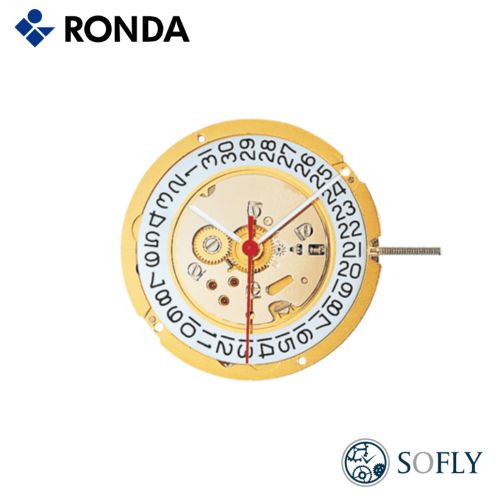
A quartz movement uses a battery, an electronic circuit, a quartz crystal, and a step motor to move the hands. The quartz crystal regulates timekeeping when powered by the battery.
Quartz movements are practical for many everyday watches because they do not need winding and usually require less routine service than mechanical movements. For replacement work, the caliber number is the starting point. Without it, matching the movement becomes guesswork.
Ronda quartz movements are commonly used for repair, replacement, and watch assembly.
For repair shops, a replacement Ronda movement can be useful when the original movement has failed and component-level repair is not practical. For custom builders and microbrands, Ronda movements may be selected for projects that need a specific hand layout, calendar function, or case size.
For individual watch owners, the main use case is usually replacement. If the watch already has a Ronda movement inside, identify the original caliber and match the replacement as closely as possible.
A Ronda quartz watch movement works differently from a mechanical movement. A quartz movement uses battery power and an electronic regulating system. A mechanical movement uses a mainspring, gear train, escapement, and balance wheel.
That difference changes the repair decision. Quartz movement replacement focuses on caliber matching, battery contact, coil condition, stem position, and hand fitting. Mechanical repair usually involves cleaning, oiling, timing adjustment, and worn mechanical parts.
This guide focuses on Ronda quartz movement replacement and selection. If you are replacing a mechanical movement, the matching process is different.
You may need a Ronda quartz watch movement replacement when the watch still fails after basic checks, the setting system is damaged, or full movement replacement is more practical than repairing individual parts.
Do not assume the movement is dead just because the watch has stopped. A weak battery, dirty contact, loose crown, pulled stem, or damaged hands can also stop a quartz watch from running correctly.
If the watch does not run after a correct battery replacement, inspect the movement and battery contact area before ordering a replacement.
Confirm that the battery is fresh, installed in the correct direction, and touching the battery spring or contact plate. Look for corrosion, dust, or battery leakage. Also check whether the stem is fully pushed in, since some quartz watches stop when the crown is pulled out.
If those checks do not solve the issue, the coil, circuit, step motor, or gear train may be damaged. In that case, replacing the Ronda watch movement can be practical, especially for common quartz watches where a full movement swap is cleaner than board-level repair.
A watch may still run but fail during time setting or date adjustment. If the crown feels loose, the hands do not move when setting, or the date does not advance correctly, the problem may involve the stem, setting lever, clutch, calendar works, or keyless works.
Before buying a replacement, remove and inspect the old movement carefully. Write down the caliber number and compare the stem position, calendar layout, and movement shape. A similar-looking movement may not accept the same stem or align with the case tube.
For repair shops, keeping the original movement until the replacement arrives is a good habit. It gives you a reference for stem length, dial feet position, hand height, battery type, and movement holder fit.
For many quartz watches, replacing the full movement can be more practical than repairing one internal part. This is especially true when the movement is widely available and the watch has personal or daily-use value.
That does not mean every quartz watch should receive a movement replacement. The decision depends on the case condition, dial condition, hand condition, water resistance needs, customer budget, and availability of the correct movement.
If the correct Ronda quartz watch movement is available and matches the original specifications, replacement may bring the watch back into service without overcomplicating the repair.
Identify the correct Ronda watch movement by checking the caliber number first, then matching the movement shape, size, stem position, calendar layout, and hand-fitting dimensions.
The caliber number is the strongest clue, but it is not the only check. Quartz movement families can include variants with different date positions, hand heights, or calendar functions.
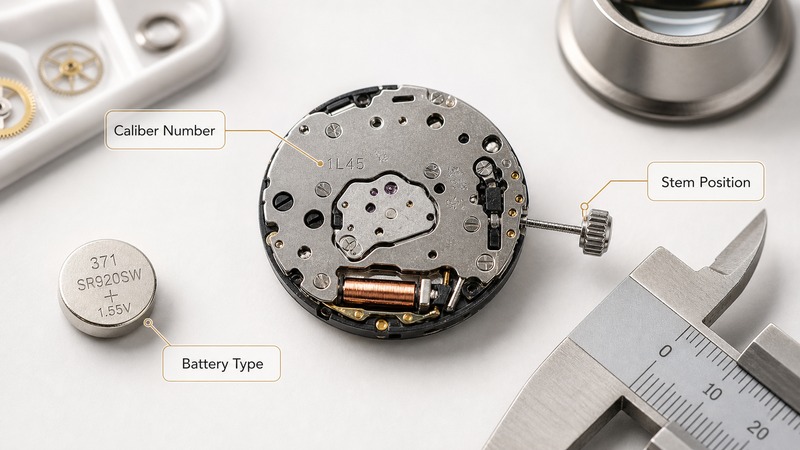
The caliber number is usually printed or stamped on the movement. You may find it near the battery, on the movement plate, or close to the edge of the movement.
Examples of Ronda caliber references include numbers such as 515, 705, 715, 763, 1062, and 5030.D. These examples are useful for recognition, but they are not interchangeable by name alone. Each caliber can have its own dimensions, functions, and fitting requirements.
When you find the caliber number, write it down exactly. Include dots, letters, and suffixes. A small suffix can signal a different calendar version, hand height, or technical layout. If the marking is hard to read, take a clear photo under good light and compare it with the product page.
The physical shape of the movement must fit the case and movement holder. A round movement cannot be treated as a replacement for a rectangular one just because the hands appear to line up.
Check the movement diameter or dimensions. Also look at the thickness, screw positions, spacer ring, and dial support. A movement that is too thick may prevent the case back from closing. A movement that is too small may not sit securely unless the correct holder is used.
For custom assembly, the movement size also affects case selection and dial design. For repair work, the replacement should follow the original movement as closely as possible.
Stem position controls where the crown exits the case. If the stem position does not line up with the case tube, the movement will not fit correctly.
This is one of the most common reasons a similar-looking quartz movement fails as a replacement. The dial side may appear correct, but the crown will not align with the case.
Check the old movement, case tube, and product page before ordering. If the product page lists stem position or movement technical drawings, use those details. If not, compare the old movement visually and avoid assuming compatibility from the caliber family name alone.
The hour, minute, and second hands must fit the movement posts. If the hole sizes do not match, the old hands may sit too loose, press on too tightly, or become damaged during installation.
Hand fitting is especially important when you want to keep the original dial and hands. Even if the movement fits the case, mismatched hand sizes can stop the repair.
Always confirm hand-fitting dimensions on the product page when available. If those values are not listed, compare the exact caliber and variant with the old movement. For professional repairs, measuring the hand holes or using known technical sheets can reduce the risk of a wrong order.
Choose the Ronda quartz movement series based on the watch display, case design, and original caliber. A basic three-hand watch, a date watch, a slim dress watch, and a chronograph-style watch need different movement layouts.
This section gives a selection framework, not a complete Ronda caliber list. The product page should always be the final reference for exact specifications.
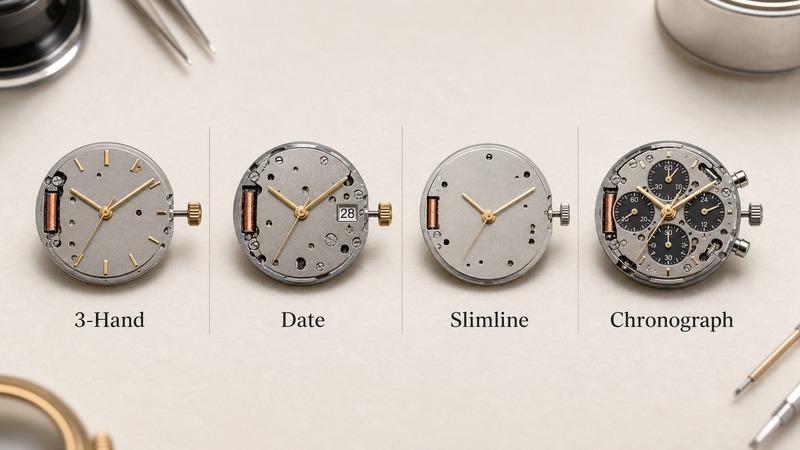
Standard three-hand movements drive hour, minute, and second hands. They are often used in simple quartz watches without extra complications.
For replacement work, check whether the original watch has a date window. If it does, a no-date three-hand movement will not be a direct visual match.
A standard Ronda watch movement may fit simple watch repairs, but it still needs the correct size, stem position, hand sizes, and battery type.
Date and day-date movements support calendar displays. They are used when the dial has a date window, day window, or both.
The window position is a major matching point. A movement with a date disc designed for one window position may not align with a dial cut for another position. A watch with a 3 o’clock date window should not be matched only by the phrase “date movement.”
For repair work, inspect the dial before ordering. Confirm whether the watch has date only, day-date, or another calendar layout. Then match the movement variant to that display.
Slimline movements are used in thin watches where case height is limited. They are often found in dress watches and compact quartz designs.
A thin movement can help keep the watch profile low, but it must still match the case, dial, hands, and crown position. Do not select a slimline Ronda quartz watch movement only because it is thinner. Select it because the original movement or build plan calls for that type.
Multi-function and chronograph-style Ronda movements support more complex dial layouts. These may include sub-dials, date windows, small seconds, or timing displays, depending on the caliber.
For these movements, the dial layout must match the movement. Sub-dial positions, hand post locations, calendar windows, and case pusher positions all need to align.
A multi-function movement is not an upgrade for a standard three-hand watch unless the case, dial, hands, and pushers are designed for it. For replacement repairs, match the original movement first.
Before buying a Ronda watch movement, check the dimensions, battery type, date layout, stem position, and hand clearance. These details decide whether the movement will fit the watch in real repair work.
Use this section as a buying checklist after you identify the caliber. A product title can help you find the right family, but the final decision should come from the specifications.
Movement dimensions include diameter, width, length, and thickness, depending on the movement shape. These measurements affect how the movement sits inside the case.
If the movement is too wide, it will not fit the case opening. If it is too thick, the hands may sit too high or the case back may not close. If it is too small, it may shift unless the original spacer or holder fits.
For replacement work, measure the old movement and compare it with the product page. For custom builds, match the movement to the case and dial before buying hands.
The battery type must match the movement. A wrong battery can cause poor contact, incorrect fit, or no power.
Check the old battery and the product page. If the old battery is missing, use the movement caliber as your guide. Do not guess from watch size. Small watches and larger watches can use different batteries depending on movement design.
Also inspect the battery contact area. Corrosion or a bent contact can make a good battery appear dead. If the contact is dirty or damaged, clean or repair the contact before judging the movement.
Date window position must match the dial. This is one of the easiest details to overlook.
A dial may have a date window at 3 o’clock, 4:30, 6 o’clock, or another location. The movement’s date disc printing and calendar alignment need to match that window. If the date sits too high, too low, or off-center, the repair will look wrong even if the movement runs.
When replacing a Ronda quartz movement, compare the old movement and dial before ordering. If you are building a new watch, choose the dial and movement as a matched pair.
Hand height affects the space between the dial, hour hand, minute hand, second hand, and crystal. If the hands sit at the wrong height, they may rub each other or touch the underside of the crystal.
This can stop the watch, drain the battery faster, or make the second hand jump unevenly. It can also damage the dial or hands during installation.
Check hand-fitting dimensions and hand height information when the product page provides them. If you are reusing old hands, confirm that the replacement movement matches the original hand sizes. If you are assembling a new watch, buy hands that match the movement posts.
Compare Ronda movements with other quartz movement options by fit, function, and availability, not by brand name alone. In replacement work, compatibility comes first.
A movement from another brand may have the same general function but different dimensions, hand sizes, date position, stem height, or holder requirements.
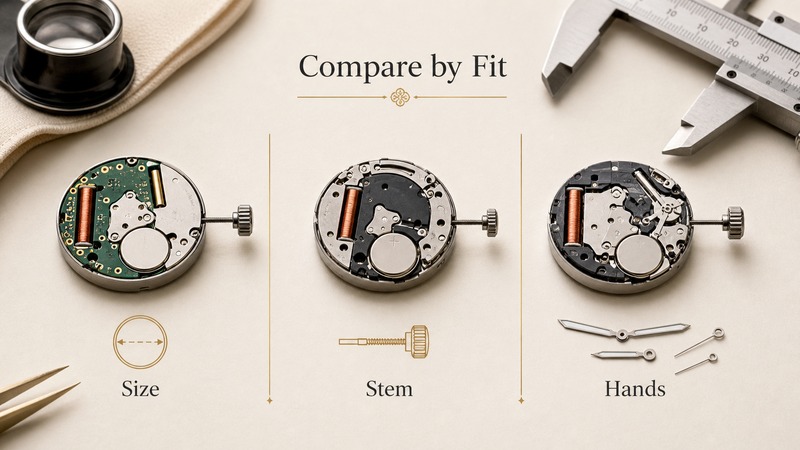
Ronda and Miyota both produce quartz movements used in watch repair and assembly. The right choice depends on the original watch design and the parts you plan to use.
If the watch originally uses a Ronda movement, replacing it with the same Ronda caliber or a confirmed compatible variant is usually the cleaner path. If a watch is designed around a Miyota movement, a Ronda replacement should not be assumed to fit.
For custom builds, compare the case, dial feet, hand sizes, calendar position, and movement holder before selecting either brand. The brand matters less than the full parts match.
Ronda and ETA quartz movements may appear in similar types of watches, but they are not automatically interchangeable.
Even when two movements share a simple three-hand date layout, they may differ in thickness, stem height, date window alignment, and hand-fitting sizes. A watch case made for one movement may need a different movement holder or stem setup for another.
For repair, start with the original caliber. For assembly, start with the case and dial requirements. That keeps the choice grounded in fit rather than assumptions.
You can buy Ronda watch movements by choosing a supplier that lists clear product pages for the caliber you need. For Soflypart users, the Ronda movement category is the main place to start.
The buying step should come after identification. If you have not confirmed the old movement caliber, dimensions, and layout, pause before ordering.
Soflypart offers a category page for Ronda watch movements. This page is the natural starting point if you are looking for a Ronda quartz watch movement for repair, replacement, or assembly.
Use the category page to find the relevant caliber, then open the product page and compare the details with your old movement. Do not rely on the category name alone. A Ronda movement family can include variants with different functions and layouts.
If you are still comparing movement brands or broader movement types, you can also browse Soflypart’s watch movements for sale category.
Before ordering a Ronda watch movement, check these details on the product page:

For DIY replacement, you may also need proper watch repair tools. Movement replacement involves removing the case back, hands, dial, stem, and movement holder in many watches. If you are not comfortable with those steps, a watch repair technician can reduce the risk of damage.
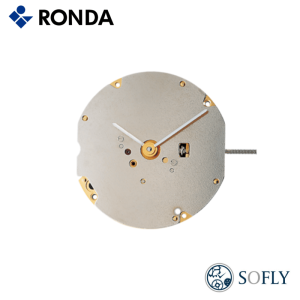
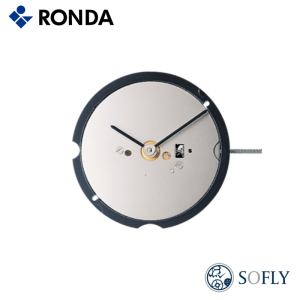
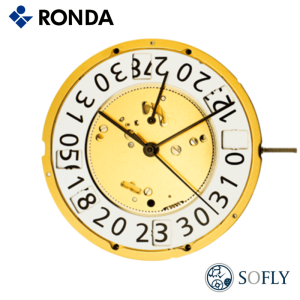
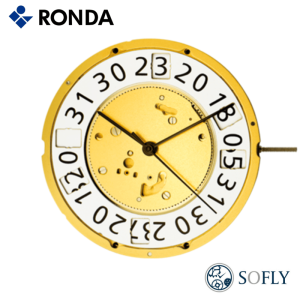
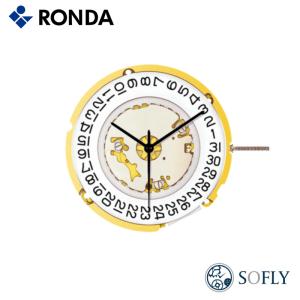
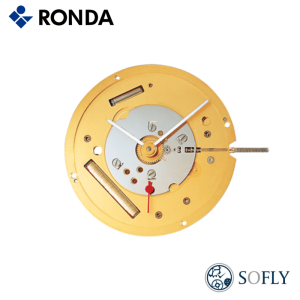
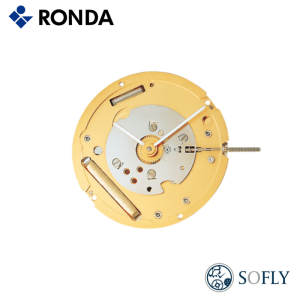
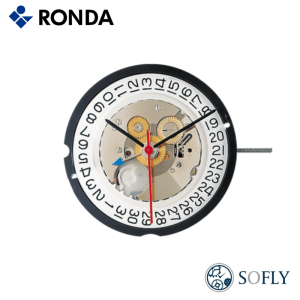
A Ronda watch movement is a common choice for quartz watch repair, replacement, and custom assembly. The correct movement is not chosen by brand alone. It is chosen by fit.
Before buying a Ronda quartz watch movement, confirm the caliber number, movement size, stem position, hand sizes, calendar layout, and battery type. These checks help you avoid ordering a movement that runs correctly but does not fit the case, dial, or hands.
For replacement shopping, start with Soflypart’s Ronda watch movements category, then compare each product page with your original movement before ordering.
Ronda is a known movement manufacturer, and its quartz movements are used in many watches. Whether a Ronda movement is right for your repair depends on the exact caliber, case, dial, hands, and movement holder.
No. Ronda quartz watch movements are not all interchangeable. You need to match the caliber number, movement size, stem position, hand-fitting sizes, and date or day-date layout.
Open the case back and look for the caliber number printed on the movement. It may be near the battery or on the movement plate. If the marking is hard to read, take a clear photo and compare it with the product page.
You can replace a Ronda movement yourself if you have the right tools and experience handling hands, dials, stems, and movement holders. If you are new to watch repair, a technician can help avoid damage to the dial or hands.
In search terms, people often use both phrases for the same thing. More precisely, “Ronda watch movement” is broader, while “Ronda quartz watch movement” specifically refers to battery-powered Ronda movements. This guide focuses on quartz movement replacement.