
Since its launch in 2003, the Sellita SW200-1 has become one of the world’s best-selling Swiss automatic movements, with annual production of around 800,000 units. But this guide goes beyond the spec sheet. You’ll learn what the numbers actually mean in practice, how the SW200-1 genuinely differs from the ETA 2824-2, and how to choose the right grade for your repair or build. Whether you’re a watchmaker sourcing a replacement, a microbrand founder evaluating movement options, or a collector who wants to understand what’s inside your watch, this is the reference you need.
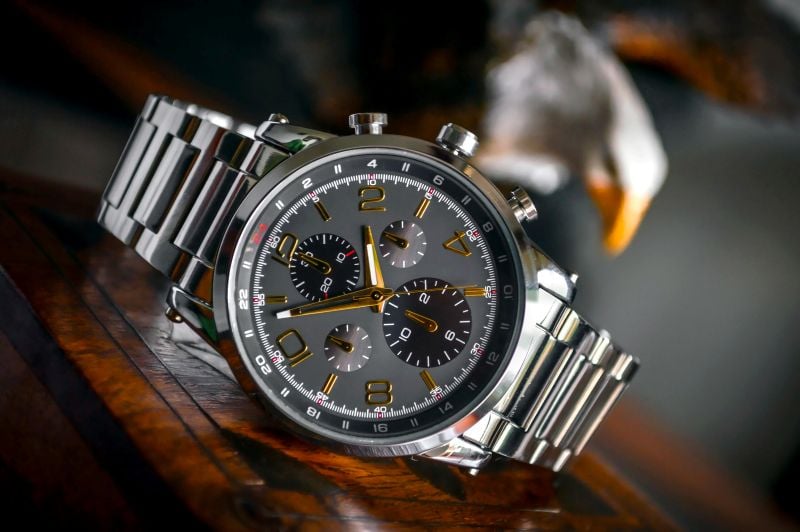
The Sellita SW200-1 is a Swiss-made, 28,800 bph automatic movement that emerged directly from the ETA supply crisis, and it’s now the most accessible Swiss automatic caliber on the market.
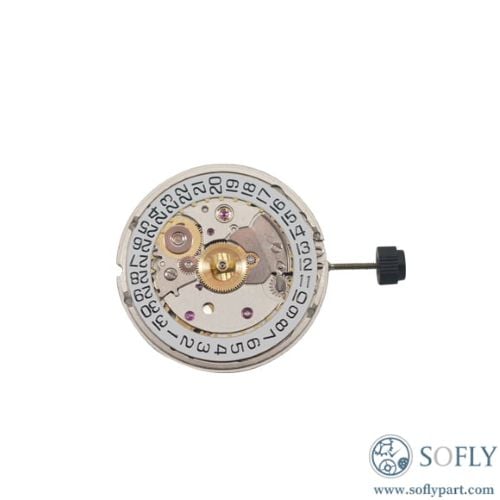
Sellita started in La Chaux-de-Fonds, Switzerland, and spent many years assembling ETA-based movements as a contract manufacturer. That background matters because the SW200-1 did not appear out of nowhere. It was developed by a company that already understood the ETA 2824-2 platform very well.
When ETA supply became harder for third-party brands to access, Sellita moved into a stronger position. The SW200-1 gave independent watchmakers and microbrands a Swiss automatic movement that could fit many ETA 2824-2-based designs while remaining easier to source.
For buyers, the main point is simple: the SW200-1 is not just an ETA-style alternative on paper. It is a practical sourcing option with a mature parts and service ecosystem.
If you are sourcing parts or servicing an older watch, check whether the movement is the original SW200 or the later SW200-1.
In 2008, Sellita updated the original SW200 to the SW200-1. The key changes were made in the winding train:
These parts are not interchangeable between the SW200 and SW200-1. That is the detail that matters most during service. Before ordering parts, confirm the exact movement version so you do not end up with a ratchet or winding component that does not fit.
At 25.6mm wide and 4.6mm thick, the SW200-1 matches the ETA 2824-2 dimension for dimension, making it a direct drop-in for any case designed around that caliber.
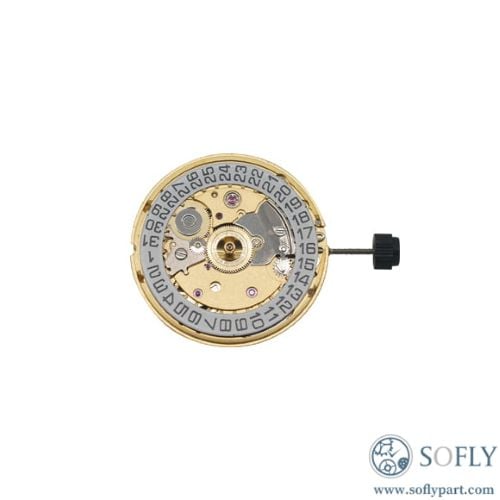
Specification | Details | What It Means for You |
Diameter | 25.6 mm | Identical to ETA 2824-2 — drop-in compatible with existing Swiss watch cases |
Thickness | 4.6 mm | Same profile as ETA 2824-2; fits all cases designed for the 2824 |
Jewels | 26 | One more than ETA 2824-2’s 25; extra jewel supports the automatic winding unit |
Beat Rate | 28,800 bph (4 Hz) | Smooth seconds sweep; better positional stability than 21,600 bph movements |
Power Reserve | 38–42 hours | Survives a weekend off the wrist without stopping |
Accuracy (Standard) | ±12–30 sec/day | Regulatable to ±5 s/day by a skilled watchmaker |
Accuracy (Chronometer) | +6/−4 sec/day | COSC-certified; suitable for precision-demanding applications |
Mainspring | Nivaflex | Consistent torque output throughout power reserve |
Winding | Bi-directional automatic + manual | Efficient winding in any wrist movement direction |
Hacking | Yes | Seconds stop for precise time-setting — essential for professional repair |
Date Function | Quick-set (3/6/9/12 positions) | Flexible date window placement; saves time during post-service calibration |
Country of Origin | La Chaux-de-Fonds, Switzerland | Qualifies for “Swiss Made” labeling |
The Sellita SW200-1 specs are useful only when you connect them to real buying and service decisions.
The Sellita SW200-1 comes in four main grades: Standard, Special, Premier, and Chronometer.
The grade affects accuracy, adjustment positions, shock protection, service parts, and cost. For repairs, match the original grade whenever possible. For new builds, choose the grade based on your price point and accuracy promise.
Grade | Adjustment Positions | Accuracy | Shock System | Best For |
Standard | 2 positions | ±12–30 sec/day | Incabloc | Cost-sensitive repairs; entry-level watches |
Special (Elaboré) | 3 positions | ±7–20 sec/day | Incabloc | Mid-range brands; balance of cost and precision |
Premier (Top) | 5 positions | ±4–15 sec/day | Novodiac | Higher-end builds; precision-focused applications |
Chronometer | 5 positions + COSC | +6/−4 sec/day | Novodiac | Haute horlogerie; COSC-certified timepieces |
The SW200-1 grade affects more than accuracy. It also affects regulation, shock components, and replacement-part planning.
The right SW200-1 grade depends on whether you are repairing an existing watch or building a new one.
The Sellita SW200-1 is usually the best choice when you need a Swiss-made automatic movement with ETA 2824-2 dimensions, stable supply, and lower sourcing pressure.
It is not always the best movement for every build. ETA 2824-2 still makes sense for original-match repairs. Miyota 9015 works well for lower-cost, non-Swiss projects. ETA 2892-A2 is better for thinner, higher-end dress watches.
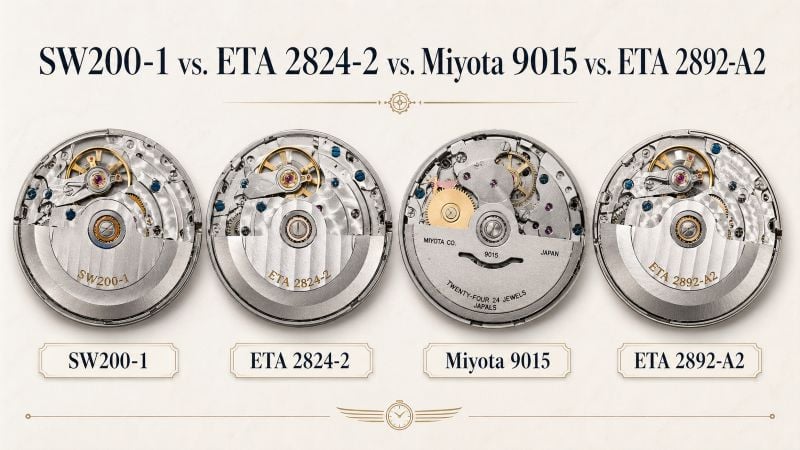
Feature | Sellita SW200-1 | |||
Origin | Switzerland | Switzerland | Japan | Switzerland |
Diameter | 25.6 mm | 25.6 mm | 26.0 mm | 25.6 mm |
Thickness | 4.6 mm | 4.6 mm | 3.9 mm | 3.6 mm |
Jewels | 26 | 25 | 24 | 21 |
Beat Rate | 28,800 bph | 28,800 bph | 28,800 bph | 28,800 bph |
Power Reserve | 38–42 h | 38–42 h | 42 h | 42 h |
Accuracy (Standard) | ±12–30 s/day | ±12–30 s/day | ±10 s/day | ±3–8 s/day |
Parts Interchangeability | ~70% with ETA 2824-2 | — | Not compatible | Not compatible |
Availability | Readily available | Restricted | Readily available | Restricted |
Swiss Made Eligible | Yes | Yes | No | Yes |
The SW200-1 and ETA 2824-2 are close in size and layout, but they are not fully interchangeable.
The SW200-1 usually costs about 20–30% less than an equivalent ETA 2824-2 grade. It also avoids the supply restrictions tied to ETA movements. That makes it a practical choice for new builds, repair stock, and cost-sensitive Swiss-made projects.
The main caution is parts compatibility. About 70% of the components are similar, but the ratchet system and parts of the automatic winding train are different. Do not mix parts between the two movements during service.
ETA still has one advantage: recognition. Some high-end brands and collectors still prefer the ETA name. For original-match repairs, keeping ETA stock can still make sense.
The choice between SW200-1 and Miyota 9015 usually comes down to Swiss Made positioning.
The Miyota 9015 is thinner at 3.9 mm, compared with 4.6 mm for the SW200-1. That 0.7 mm difference matters for slim case designs. It is also usually cheaper, which makes it attractive for value-focused watch projects.
The trade-off is origin. Miyota is Japanese-made, so it cannot support a Swiss Made label. If your watch needs Swiss provenance as part of its pricing or brand story, the SW200-1 is the better fit.
The ETA 2892-A2 sits in a higher category than the SW200-1.
It is thinner, more accurate out of the box, and more expensive. It works best for slim dress watches or higher-end builds where case profile and precision are major selling points.
For most practical Swiss-made builds, the SW200-1 gives you the better balance of size compatibility, availability, and cost.
Your Situation | Better Choice |
Repairing a watch originally fitted with ETA 2824-2 | ETA 2824-2 for original match, or SW200-1 for lower-cost size compatibility |
Building a Swiss-made microbrand watch on a budget | Sellita SW200-1 |
Designing an ultra-slim case | ETA 2892-A2 |
Prioritizing the lowest possible cost without Swiss Made labeling | Miyota 9015 |
For a deeper comparison of Japanese and Swiss automatic movements, you can also read our Miyota 9015 vs ETA 2824 watch movement comparison.
You should source SW200-1 movements from a supplier that clearly lists the movement grade, version, and available service parts.
The SW200-1 is easier to source than many Swiss automatic movements, but that does not mean every listing is safe to buy. Before placing an order, check three things.
These checks matter most for repair benches and microbrand production runs. A wrong grade or version can create avoidable service delays.
For watchmakers, repair shops, and microbrand teams, Soflypart can be used as a sourcing option for Sellita watch movements and related watch movement parts.
The useful point is not only that Soflypart sells complete calibers. It also supports service needs such as ratchet wheels and mainsprings, which are common parts to keep on hand for SW200-1 work.
Soflypart is a good fit when you need:
For regular service work, it makes sense to keep both complete movements and key SW200-1 parts within reach. That reduces downtime when a repair needs more than simple regulation.
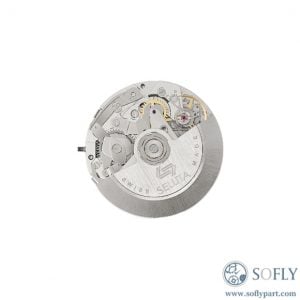

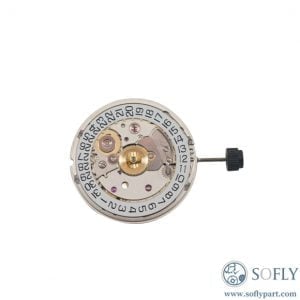
The SW200-1 uses the Etachron regulator system and should usually receive a full service every 3–5 years under normal wearing conditions.
For watchmakers familiar with ETA 2824-2 architecture, the SW200-1 feels straightforward to regulate and service. The system is familiar, parts are widely available, and common faults are easy to diagnose when you know where to look.
You need three basic tools:
The Etachron regulator adjusts the active length of the hairspring. Moving the regulator toward “+” speeds up the rate. Moving it toward “−” slows the rate down.
Start by checking the movement in at least three positions:
Record the rate and amplitude in each position before making adjustments. Then work in small steps. A Standard grade SW200-1 can often be regulated from around ±20 seconds per day to about ±5 seconds per day with careful adjustment and patience.
Plan for a full service every 3–5 years under normal use.
A full service should include cleaning, lubrication, and inspection of wear surfaces. With regular maintenance, the SW200-1 can run reliably for decades.
The most common SW200-1 issues usually involve winding performance, rate stability, or date function.
One practical advantage of the SW200-1 is service transparency. Sellita provides official technical documentation, and the movement’s parts ecosystem is well established. That helps keep diagnosis and repair more predictable than with many proprietary calibers.
The Sellita SW200-1 remains one of the most practical Swiss automatic movements for watchmakers, repair shops, and microbrand builds.
Its value comes from four things: ETA 2824-2 size compatibility, stable availability, clear grade options, and a strong parts ecosystem. For most projects, that combination matters more than chasing a more expensive or harder-to-source caliber.
Choose the grade based on the job. Standard works for cost-sensitive repairs. Special is the safest middle ground for many commercial builds. Premier and Chronometer make sense when accuracy and positioning are part of the product promise.
If you need to source SW200-1 movements or service parts, Soflypart carries Sellita watch movements and individual movement parts for single repairs and bulk orders. Browse the Sellita watch movement catalog to find the right grade, version, and parts for your next build or service job.
A: Yes. The dimensions are identical at 25.6mm × 4.6mm, so the SW200-1 drops straight into any case built for the ETA 2824-2 without modification to the case or dial. The important caveat is parts: approximately 30% of components differ between the two calibers, including the ratchet system. Never mix parts from one into the other during a service.
A: Yes, and supply is one of its genuine advantages over the ETA 2824-2. The SW200-1 is not subject to Swatch Group supply restrictions, so availability is consistent for both small and large orders. When ordering in bulk, always specify the grade tier and request batch documentation to confirm grade consistency across the entire order.
A: The “a” designation is the date version, which is the one covered throughout this guide, with a quick-set date function configurable at 3, 6, 9, or 12 o’clock. The “b” designation is the no-date version, which shares the same movement architecture but omits the calendar module entirely. If your dial design doesn’t include a date window, the SW200-1 b gives you a cleaner movement plate and marginally more space inside the case.
A: Decades, realistically. The movement is mechanically robust, parts are readily available, and the service process is well-documented. The ratchet wheel is the component most likely to show wear first, typically from heavy manual winding rather than normal use. Stick to a 3–5 year service schedule and let the rotor do the winding, and there’s no reason a SW200-1 can’t outlast the watch it’s built into.