
Choose a universal watch movement holder if you work on several calibers and want one adjustable tool. A caliber-specific holder makes more sense when the same movement appears on your bench regularly or when its layout calls for shaped support and unobstructed access. In either case, begin with the caliber dimensions. The holder should support firm areas of the movement, sit flat, and keep the parts you need to reach clear.
From there, compare the contact points, working clearance, base stability, and adjustment method. These factors will help you choose between the two designs, place the movement with minimal clamping pressure, and match your requirements to the Soflypart options covered later in the guide.
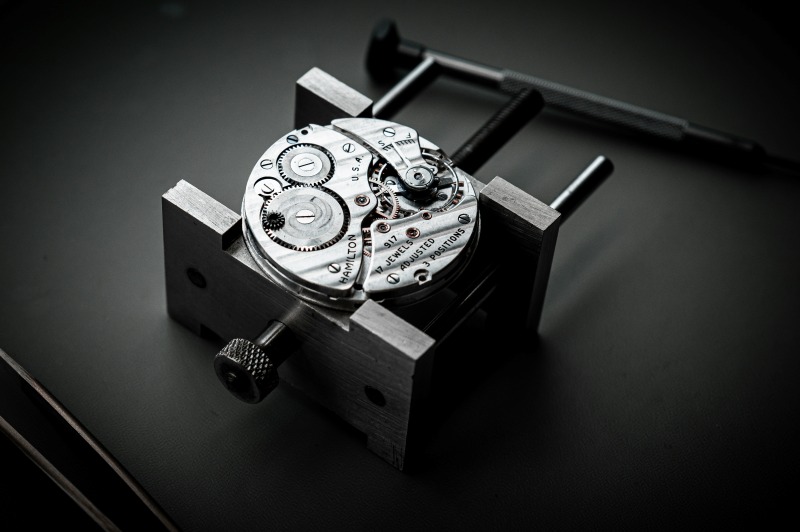
A watch movement holder supports an uncased mechanical or quartz movement during disassembly, assembly, lubrication, adjustment, and inspection. It keeps the caliber steady above the bench, leaving both hands free while preventing exposed components from resting directly on the work surface.
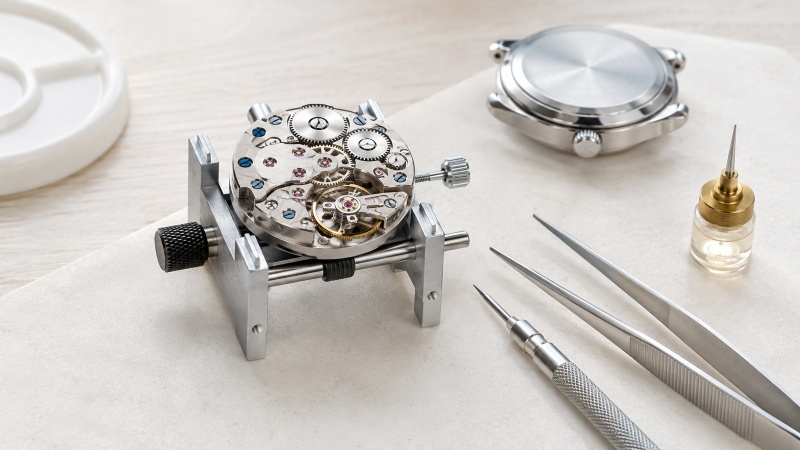
Use one once the movement has been removed from its case. An unsupported caliber can rock or rotate as you loosen a screw, work on the keyless works, or inspect components near the movement edge. Placing it directly on the bench can also put pressure on a pinion, the balance assembly, or another raised part.
Treat the holder as a work stand rather than a vise. It should provide enough support to stop the movement from shifting while you use screwdrivers, tweezers, or oilers, without relying on heavy clamping pressure. This makes it one of the basic watch repair tools for anyone who services uncased movements.
A watch case holder serves a different purpose. It supports the watch case or a cased watch during work such as opening or closing the case back. Even when a multipurpose tool can hold both objects, its contact points must match the item being supported. For movement work, choose a holder that supports the caliber at suitable points while keeping the working area accessible.
Choose a universal holder when your bench handles several calibers. Choose a caliber-specific holder when the same movement appears regularly or its layout requires more precisely positioned support. Your workload, movement dimensions, and access needs should decide which design fits your bench.
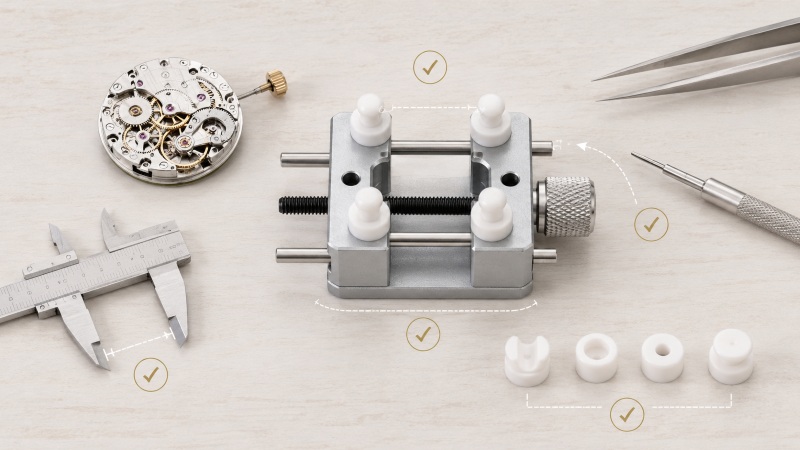
Universal movement holders use adjustable jaws, expanding sections, or reversible supports to accommodate movements within a stated size range. They are a practical starting point for a mixed workload because one holder can cover several calibers when their dimensions and contact points suit its design.
Adjustability also lets you change where the holder meets the movement. This is useful when a stem release, bridge, coil, or other edge component occupies the position where a support would normally sit.
That flexibility still requires careful setup. Bring the supports in evenly and stop as soon as the movement sits level without sliding or rotating. If the caliber tilts or a support approaches a vulnerable component, reposition it instead of adding more pressure.
If you are building your first bench, Soflypart’s guide to watch repair tools for beginners can help you decide where a universal holder fits among the other tools you need.
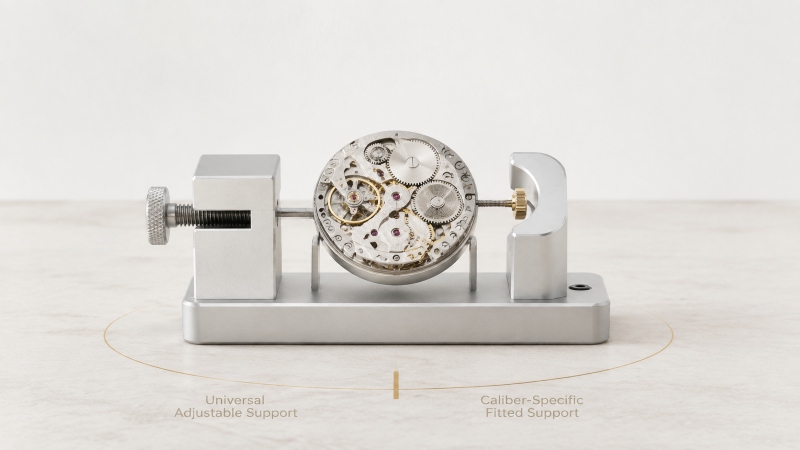
A caliber-specific holder uses a seat, opening, or support pattern designed for a named movement or movement family. It becomes useful when you service the same caliber regularly because the movement can return to a consistent position without resetting several adjustable contact points.
A shaped holder may also preserve access around stems, pushers, levers, or other components near the edge. This can be especially valuable on chronographs and other layouts where a general jaw position would obstruct part of the work.
Its value depends on frequency. A dedicated holder makes sense when the time saved and repeatable support justify keeping a tool for one caliber family. For occasional work across unrelated movements, a universal model will usually cover more of the bench workload.
Use these situations as a starting point:
Bench Situation | Better Starting Choice | Why It Fits |
Mixed calibers within the holder’s stated range | Universal holder | One adjustable tool can cover several compatible sizes |
A first bench with an uncertain future workload | Universal holder | It provides broader coverage while you learn which calibers appear most often |
Repeated service on one named caliber | Caliber-specific holder | The movement returns to a more consistent support position |
A layout requiring clearance around edge components | Caliber-specific holder | A shaped seat can preserve access to the relevant working area |
The table identifies the more likely holder type, not a confirmed fit. Before buying, match the exact caliber, dimensions, support pattern, and required access to the individual holder.
Check the movement size, support points, component clearance, base stability, and adjustment quality before buying a watch movement holder. These five factors tell you more than a broad label like “universal” or “professional.”
Start with the exact caliber. Its technical sheet or service document may give the diameter in millimeters or ligne, while the holder may use either unit. Match the movement to the stated range rather than estimating from the dial or case diameter. Those outside dimensions describe different parts.
The range only completes the first check. A watch movement holder may open wide enough yet place its jaws beside a vulnerable component. Shaped, very thin, and large pocket-watch movements need more attention than a typical round wristwatch caliber.
Good contact points support a firm area around the movement’s edge while keeping bridges, wheels, coils, battery contacts, and pinions free. The movement should sit level, and each jaw should meet the same supporting plane. One high contact point can make the caliber rock even when the holder feels tight.
Next, look at the work you plan to do. The holder needs open access to the stem release for stem work, screw heads for disassembly, and the movement center for fitting hands. Chronograph service may require access to pushers or levers at the edge. A stable holder becomes annoying very quickly when a jaw sits exactly where your screwdriver needs to go (tiny tools have a talent for finding the smallest obstruction).
Hand setting applies vertical pressure, so the holder must keep the movement level and support the correct area beneath the center. An outer grip alone does not support every component under the hand stack.
Synthetic contact surfaces can reduce marking on a metal plate, while metal bodies can provide a firm, durable structure. Judge the complete design rather than material alone. Smooth edges, even jaws, a flat base, and controlled adjustment all affect how the holder behaves.
Move an empty adjustable holder through its range on a flat bench. The jaws should move smoothly and hold position without side play. A wide opening has little value if the base rocks whenever you touch a screw.
Before you order, use this compact buying check:
These checks prevent a common mistake: buying a watch movement holder that accepts the diameter but never supports the caliber well.
Use a watch movement holder with clean contact surfaces, safe support points, and the least pressure needed to stop movement. Correct placement provides stability. Extra tightening only adds stress.
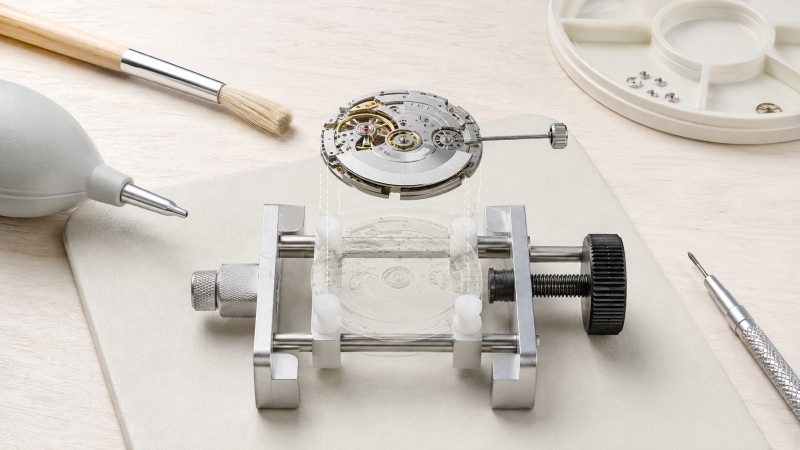
Dust, dried oil, and metal chips can mark a plate or move into the mechanism. Brush the holder clean before placing an open movement in it. Inspect each contact face for burrs, dents, or hardened residue, then make sure the adjustment moves without jumping.
Set the holder on a clean mat or flat surface where it cannot rock. Keep loose screws, blades, and movement parts away from its base.
Open an adjustable holder wider than the caliber and lower the movement into position without dragging its edge across the jaws. Bring the supports inward until they touch firm points around the main plate. The movement should sit level with the balance, train, coil, and pinions clear of the holder and bench.
Check the planned tool path before tightening. You should be able to reach the screws, stem release, and components involved in the job. Discovering a blocked screw after half the train is apart can test anyone’s vocabulary.
Flip the setup only after checking the opposite side. A safe plate-side contact arrangement may place pressure on the dial, hands, cannon pinion, rotor, or balance when reversed. Use a holder face or support designed for the side facing down.
Close the holder until the movement stops sliding under a light touch. Then test for rotation and rocking at the edge. The correct setting feels secure without visible plate flex or a deep jaw mark.
Seiko Service USA’s “Reassembling, Lubricating, and Circuit Resetting” instruction says to use the holder specified for each caliber. It also warns against excessive main-plate clamping with a universal holder, especially on easily deformed plastic main plates.
The instruction gives you a useful bench rule: change the fit before adding force. Reposition the watch movement holder when the caliber tilts, shifts at one jaw, or needs heavy pressure to stay still.
Touch the movement lightly at two or three points around its edge. It should remain level without rotating, lifting, or rocking. Check again after changing sides or moving a reversible jaw, since the contact height may have changed.
Use extra support for work that applies vertical force, including hand fitting. The watch movement holder controls the caliber’s position, while the correct lower support protects the center and nearby components.
Choose among Soflypart’s movement holders by starting with the exact caliber and the support your work requires. The Bergeon 4039-P covers a smaller adjustable range, the 4040 and 4040-P cover a wider range, and caliber-labeled holders provide dedicated support for repeated work on named movements.
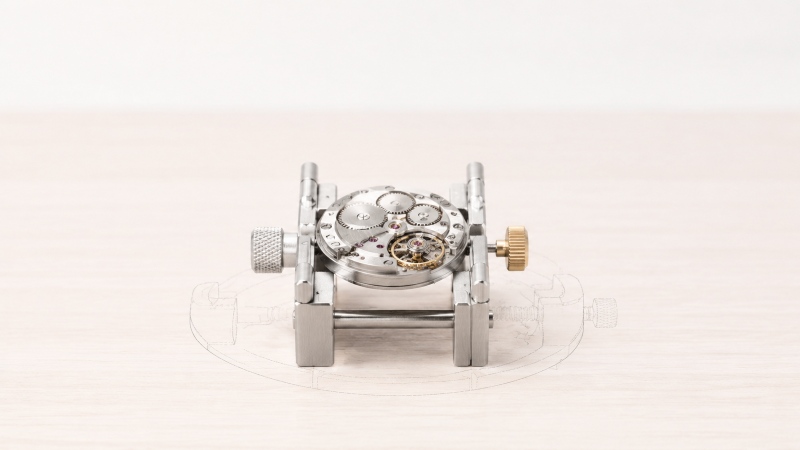
The Bergeon 4039-P is a genuine Bergeon extensible and reversible synthetic movement holder. Its stated range is 3 3/4 to 11 ligne, making it the smaller adjustable option among the models compared here.
Choose it when the movement falls within that range and its edge can sit evenly on the reversible supports. Its synthetic construction provides nonmetal contact surfaces, while the adjustable design allows the same holder to serve more than one compatible caliber.
The genuine Bergeon 4040 and Bergeon 4040-P are both extensible and reversible movement holders with a stated range of 8 3/4 to 19 ligne. The main distinction is their construction: the 4040 is the metal version, while the 4040-P is synthetic.
This wider range makes them suitable candidates for movements above the 4039-P range. Where the ranges overlap, compare the movement’s actual contact points, the required working clearance, and your preferred holder material before choosing between them.
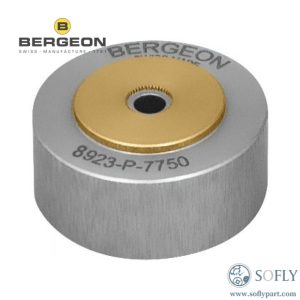
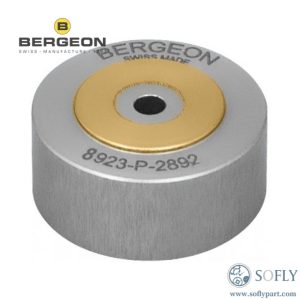
A caliber-specific holder can save setup time when you regularly service the same movement family. The genuine Bergeon 1999 supports the ETA 2892A2, while the China Tools holder is compatible with ETA 7750, 7751, 7753, and 7754 movements.
These holders come from different manufacturers and cover different caliber groups. Match the complete caliber reference first, then choose a holder that supports the movement while leaving the required components accessible.
You can compare adjustable and caliber-specific models in Soflypart’s watch movement holder collection. Filter the options by caliber or movement size, then select the support design that fits your repair task.
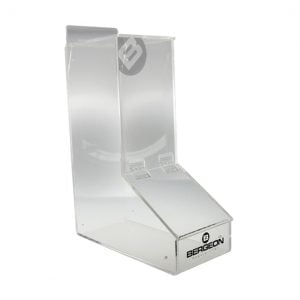
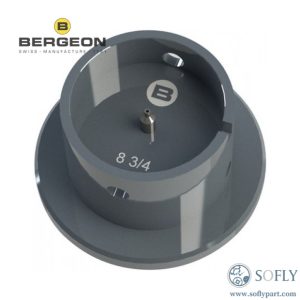
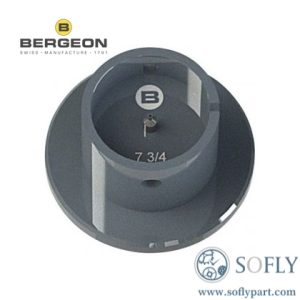
A good movement holder should almost disappear into the work.A universal watch movement holder is the better starting choice for mixed calibers and occasional repairs. A caliber-specific holder makes more sense when you service the same movement often or need a support pattern shaped around its controls and components.
Whichever design you choose, confirm the stated size range and contact layout before placing a movement in it. Clean supports, level seating, open tool access, and minimum clamping pressure will protect the caliber while you work.
Soflypart carries adjustable, synthetic, reversible, and caliber-labeled movement holders for different bench needs. Compare your movement specifications with the holder details, then choose the model that gives your work stable support without blocking the job.
Ligne is a traditional unit used to describe watch movement size. One ligne is approximately 2.256 millimeters, so a holder marked with a ligne range is indicating the movement sizes it is designed to accommodate. Use the exact movement dimensions and the holder’s stated range rather than converting from the case or dial size.
Yes, an adjustable holder may support either type when the movement dimensions and contact geometry fit its stated range. For a quartz movement, make sure the supports remain clear of the coil, circuit, battery contacts, and other exposed components. Movement type alone does not confirm compatibility.
No. Use a caliber-specific holder only for the calibers or variants named in its product information or applicable technical documentation. A similar caliber number, shared family name, or matching diameter does not by itself confirm that the support surfaces and access points are the same.
Replace or service the holder when its contact surfaces become burred, cracked, or uneven, or when the adjustment develops enough play that the supports no longer remain aligned. A holder that cannot keep a movement level under light contact should not be made stable by applying more pressure.