
A watch case is sitting in the press. The replacement crystal looks level, the die appears to fit, and the lever is ready to move. This is the moment when the quality of the setup becomes more important than the strength of the tool.
A watch press applies controlled, aligned pressure when fitting a crystal, closing a snap-on case back, or seating another compatible component. A watch crystal press and a watch case press can look almost identical, and some machines can perform both jobs. Their real capabilities depend on the dies, working clearance, alignment, and support available around the watch.
Product listings may also use terms including wrist watch press, glass press, bench press, or watch back press. These names are helpful starting points, but the component being fitted should determine which tool and dies you use.
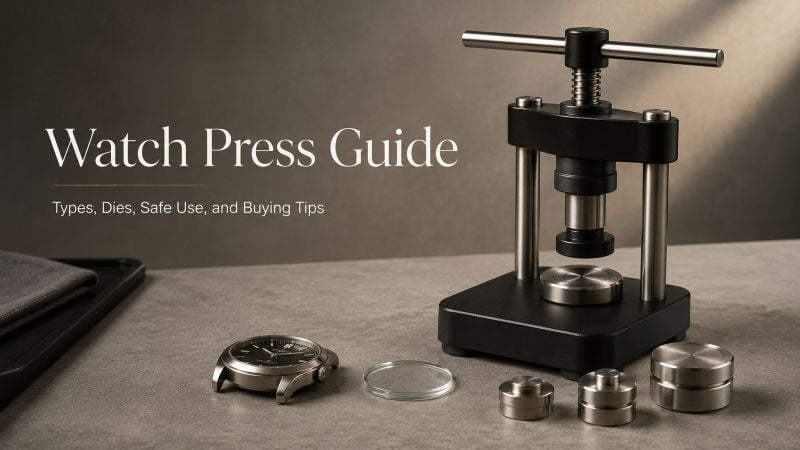
The repair determines which watch press is suitable. Compatible press-fit crystals use a watch crystal press, snap-on case backs use a watch case press or watch back press, and screw-down backs need a case-back tool that applies controlled rotation.
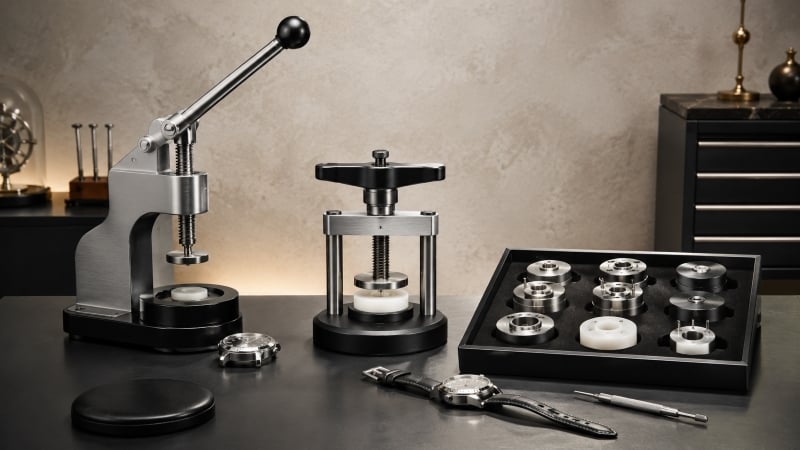
Repair Job | Suitable Tool | Main Contact Requirement |
Install a compatible press-fit crystal | Watch crystal press | Support the specified crystal, bezel, gasket, or retaining area without loading an unsupported edge |
Close a snap-on case back | Watch case press or watch back press | Support the front of the case while clearing the crystal, crown, and pushers |
Close a screw-down case back | Compatible case-back opener or closer | Engage the back and apply controlled rotation without cross-threading it |
Retail listings may use wrist watch press, glass press, or bench press as broad product labels. The repair function, working clearance, and compatible dies provide a more useful way to classify the tool.
A suitable setup keeps the watch and component centered throughout the stroke. Tilted crystals, displaced gaskets, damaged seating areas, and mismatched parts need correction before pressing begins.
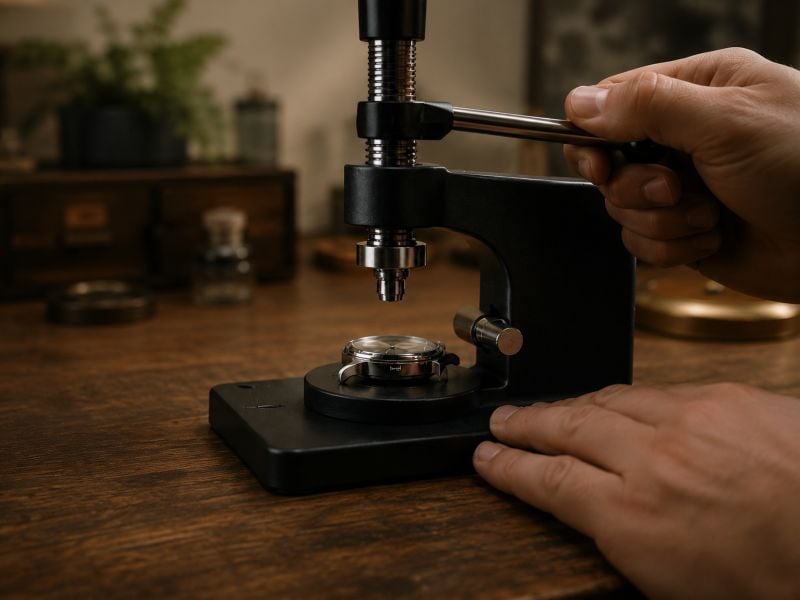
A watch crystal press installs compatible crystals with controlled vertical pressure. The required setup depends on the crystal profile and fitting system, which may include a gasket, tension ring, bezel, or another manufacturer-specified retaining method.
Crystal material indicates properties such as scratch resistance, while the fitting system determines the installation method. Acrylic, mineral, and sapphire crystals can use different retaining systems. Crystals with the same diameter may also differ in thickness, edge profile, dome height, and gasket requirements.
Domed crystals need enough hollow-die clearance to protect the raised center. Both diameter and internal depth affect the fit because a wide, shallow die may reach the dome before its rim meets the intended support area.
Shaped crystals need support around their geometry. A round die may contact only a few points on a rectangular, square, or tonneau crystal, allowing one side to enter before the others. Shaped supports and case-specific fixtures provide more even contact when a standard round die cannot hold the component level.
Successful fitting begins with compatible crystal dimensions, a clean seating area, a correctly positioned gasket, and dies that meet the intended contact surfaces. The watch press tool then supplies the aligned pressure needed to seat the component.
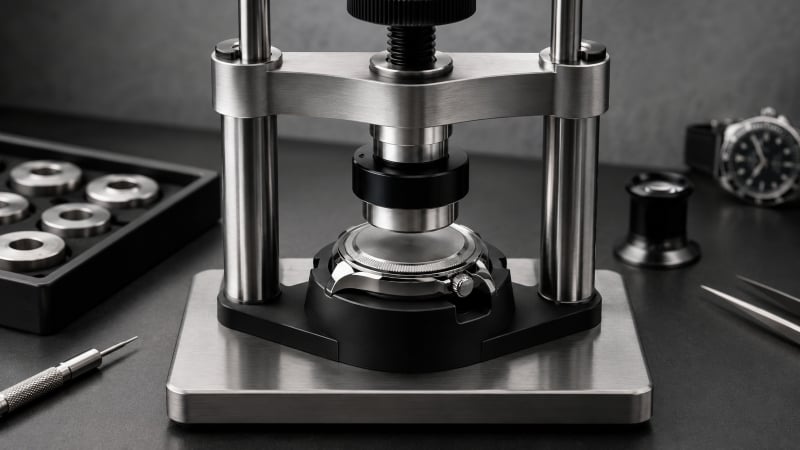
A watch case press closes compatible snap-on backs by seating the retaining edge into the case. Product listings often use watch back press for the same type of tool.
When the watch rests face down, the lower die supports a stable area of the case or bezel while clearing the crystal, crown, pushers, and other raised features. A hollow die often provides this clearance, but its rim still needs even contact with the support surface.
The upper die distributes pressure across a suitable part of the case back. Upper and lower dies may use different diameters and profiles because they contact different parts of the watch.
Screw-down backs close through threaded rotation. A compatible case-back opener or closer engages the back and controls that movement, while correct thread alignment protects the case and gasket.
One press can handle crystals and snap-on case backs when it provides enough vertical opening, suitable ram travel, accurate alignment, and dies for both jobs. Its mounting interface also needs to accept the supports used for your regular repairs.
Watch press dies control where pressure reaches the watch. The right die spreads the load across a stable contact area, while its shape and depth protect the crystal, crown, pushers, and unsupported parts of the case.
Each die needs to meet a surface designed to carry the pressing load. During a common snap-on case-back closure, the lower die supports a stable area around the front of the case while clearing the crystal and crown. The upper die distributes pressure across the case back.
Overall case diameter gives only a rough starting point. A 40 mm watch may have a much smaller usable support area once its lugs, controls, bezel, and crystal profile are considered. The die should match that usable area closely enough to keep the watch level.
Exhibition backs need the same contact-based approach. Their transparent window may leave only a narrow metal perimeter. A suitable die rests on the solid rim while clearing the window, with the final choice guided by the case construction and available support area.
Crystal installation follows the fitting system specified for the watch. A domed crystal may need a hollow die that clears its center, while a shaped crystal may need support that follows more of its outline. These contact points determine whether the crystal enters evenly.
Flat dies suit stable, level surfaces. Hollow dies provide clearance for domed crystals and raised case features. Concave, convex, stepped, and reversible profiles serve more specific contact patterns.
Diameter and depth work together. A hollow die can have enough width but too little internal depth, allowing its center to touch the crystal before the rim reaches the support surface. Shaped cases also need enough contact to remain stable throughout the stroke.
Die material changes the feel at the contact point. Nylon and POM provide a softer surface for ordinary case work. Aluminum offers firmer support in compatible systems, while steel provides greater wear resistance when the setup includes suitable surface protection. Geometry still carries most of the load, so a softer die performs best when its profile matches the watch.
The mounting interface determines whether a die will remain centered in the press. Common systems include push-fit posts, threaded fittings, removable adapters, and press-specific stakes. A smaller die set with useful profiles and an expandable mounting system often serves a repair bench better than a large set of shallow or poorly matched pieces.
The best watch press matches your regular repair work, available bench space, and die system. Pressure control, working clearance, alignment, and accessory compatibility provide more useful buying information than frame size or die count alone.
An occasional case-back repair may only need a compact press with stable guidance and a practical set of synthetic dies. A workshop that installs crystals regularly benefits more from repeatable alignment, replaceable stakes, and enough clearance for domed crystals, tall cases, and deep hollow dies.
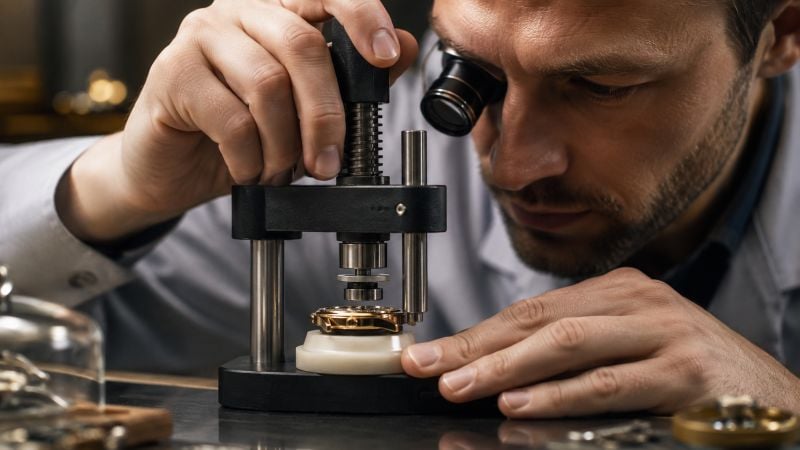
Lever, screw, and rack presses deliver pressure at different speeds. The mechanism affects how easily you can observe the component and respond to changes in resistance.
Press Type | Best Suited To | Control and Setup |
Lever press | Repeated case assembly and routine snap-on back closure | Moves quickly and needs stable ram guidance near first contact |
Screw press | Careful crystal fitting and less familiar repair setups | Advances gradually, giving you more time to watch alignment and resistance |
Rack press | Regular workshop use with interchangeable stakes and fixtures | Provides a guided vertical stroke, with versatility determined by its accessory system |
A return spring can make repeated work faster, but alignment and pressure feedback have a greater effect on the repair. The most useful mechanism is the one that gives you enough control for the jobs performed most often.
Vertical opening is the total space available for the watch, lower support, component, and upper die. Ram travel is the distance the press can move after contact, while throat depth determines how far a large case can sit beneath the ram.
These dimensions deserve extra attention for domed crystals, tall cases, oversized watches, and deep hollow dies. A press may accommodate the crystal’s diameter while lacking enough height for the assembled setup.
Alignment affects every repair even though product pages rarely express it as a single measurement. The ram should meet the lower holder squarely with little sideways movement. A stable base improves positioning and makes changes in resistance easier to feel. Frequent workshop use may also justify a press that can be secured to the bench.
A useful die assortment combines practical diameters with flat and hollow profiles, adequate recess depth, readable size markings, and an expandable mounting interface. Replacement dies and shaped supports extend the press into future repairs, which makes accessory availability more valuable than a large headline die count.
Once you know the mechanism, clearance, and die system you need, Soflypart’s watch crystal press category lets you compare presses, stakes, and dies for different workshop setups. The wider watch repair tools collection includes case holders, measuring tools, crystal-handling tools, and other equipment used around the press.
Safe pressure builds smoothly while the crystal or case back remains level, stable, and centered between the dies. First contact should be light enough to reveal rocking, tilt, or contact with the wrong part of the watch.
A component that starts level should continue seating evenly. One-sided movement usually points to a displaced gasket, mismatched part, damaged seating area, or off-center die. Releasing the load at this stage protects the fitting from the greater force that follows.
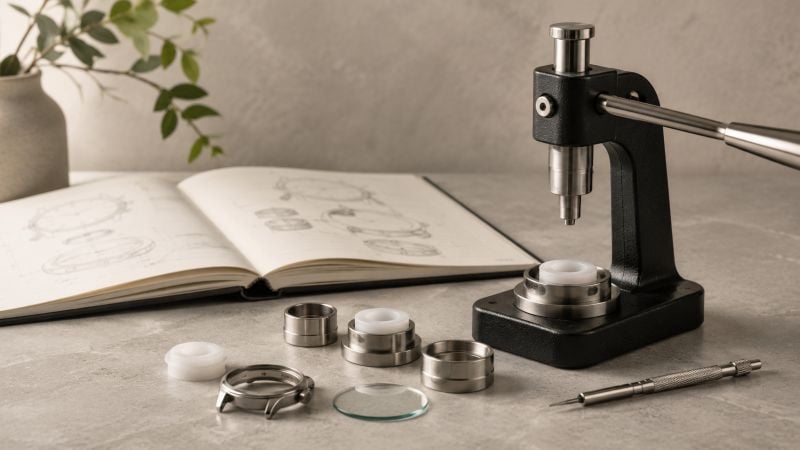
A clean seating area produces more consistent resistance. Old adhesive, gasket fragments, dirt, and damage around the case lip can make a correct part feel too tight or cause one side to rise.
The replacement component also needs to match the original fitting system. Crystal diameter is only one part of the fit; thickness, edge profile, dome height, gasket design, and any retaining ring can affect installation. A case-back gasket should sit evenly in its groove before the back reaches the case.
Light initial contact shows whether both dies are sitting flat on their intended surfaces. A view from the front and side often reveals a tilted crystal, sideways ram, rocking case, or lower die positioned too close to the crown.
Crystal removal may require a different support direction or a dedicated removal tool. The detailed How to Remove Crystal from a Watch guide covers that earlier stage of the repair.
Installing the replacement also depends on the crystal material and fitting system. How to Change a Watch Crystal explains the wider replacement process, including measurement, preparation, and reassembly.
Normal resistance increases gradually. A sudden hard point, movement on one side, a shifting watch, or a gasket appearing outside its groove indicates uneven contact. Removing the load allows the fitting and support to be corrected before the part is damaged.
Some snap-on backs make a click when the retaining edge engages. An even, flush perimeter is the more useful confirmation because some backs seat without a clear sound.
Grinding, cracking, or an abrupt change in handle movement suggests misalignment, debris, incorrect die contact, or a component that does not match the case. These conditions require a new setup or a rechecked part rather than greater force.
Once the component seats, the perimeter should appear even from every angle. The crown and pushers should operate normally, and the hands should remain free. A watch expected to resist water also needs an appropriate pressure test after assembly. Water resistance depends on the condition and fit of the crystal, gasket, crown, case back, and case structure.

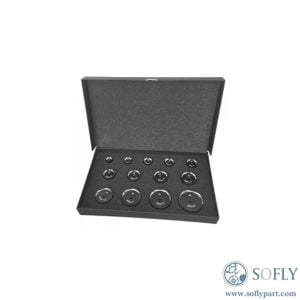
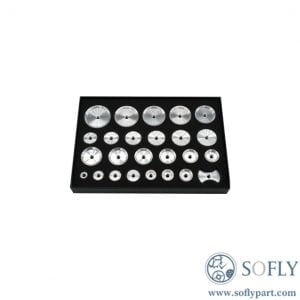
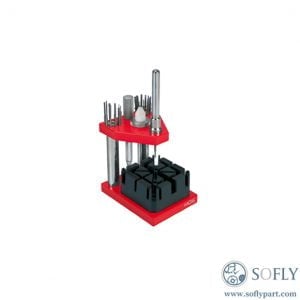
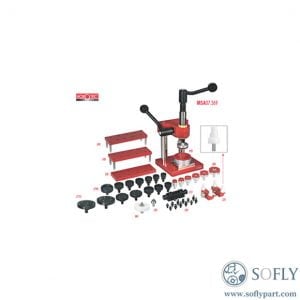
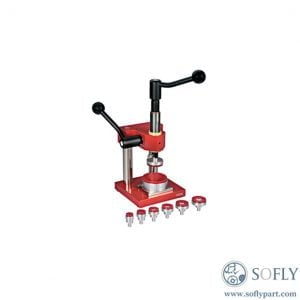
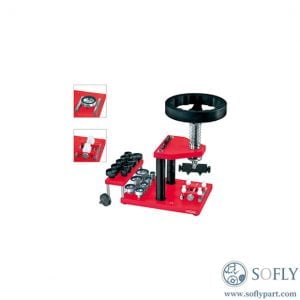
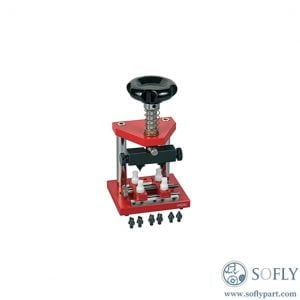
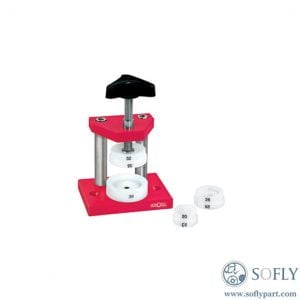
A watch press gives you controlled pressure, but the dies and support surfaces determine how safely that pressure reaches the watch. Crystal installation needs a profile that matches the fitting and protects the crystal, while snap-on case-back closure needs stable support around the front of the case.
The best press for your bench is the one that matches your regular repairs, available working space, and compatible die system. A level component, gradual resistance, and an even seated perimeter show that the setup is working as intended.
When you are ready to build or upgrade your bench, use these criteria to compare Soflypart’s available presses and dies. Matching the mechanism and accessories to the watches you service gives you better control and reduces avoidable fitting damage.
Movement removal depends on the case construction and the direction in which the crystal is installed or removed. Access from inside the case usually requires the movement, dial, and hands to be stored safely before pressing, while some top-installed systems follow a different service procedure.
Clean dies with a soft, lint-free cloth after each repair so dust, adhesive, and metal particles do not reach the next watch. Removable synthetic dies may be cleaned with mild soap and water when their manufacturer permits it, then dried fully before storage.
Use only the lubricant and application method specified for that gasket or crystal system. Some installations use a small amount of approved lubricant, while other fittings need clean, dry contact; general-purpose oil or grease can affect fit and sealing.
Bent bezels and distorted cases need case-correction methods suited to the material and construction. Pressing a new crystal or case back into a damaged seating area can create uneven loading, so the case geometry should be restored before installation.