
The Seiko 7S26 is a 21-jewel automatic movement with a day-date display, a 21,600-vph frequency, and approximately 41 hours of power reserve when fully wound. It does not support hand winding or stop the seconds hand during time setting. When your 7S26 needs attention, you can service the existing caliber, install a compatible 7S26, or evaluate a 4R36 or NH36 conversion.
A successful replacement depends on the complete movement revision and case number, along with the crown position, calendar layout, stem, spacer, dial, and hand clearance. This guide explains how to compare those details before choosing a Seiko 7S26 replacement movement.
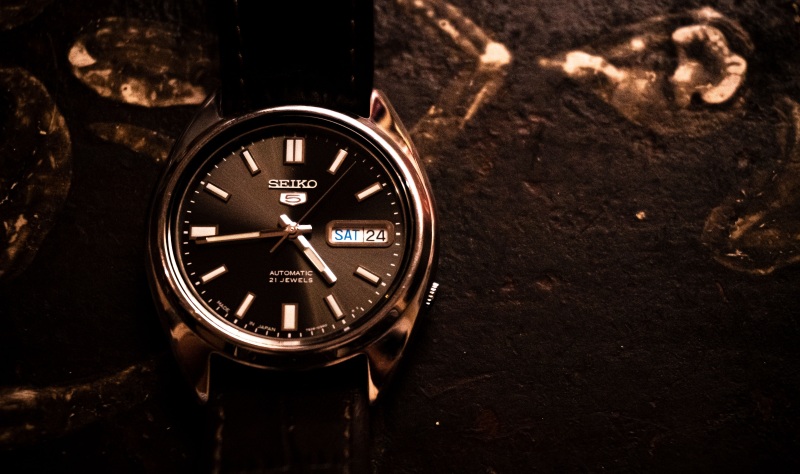
The Seiko 7S26 movement is a self-winding mechanical caliber with three hands and a day-date display. It uses automatic-only winding and does not include a stop-seconds function, so its operation differs from newer movements such as the 4R36.
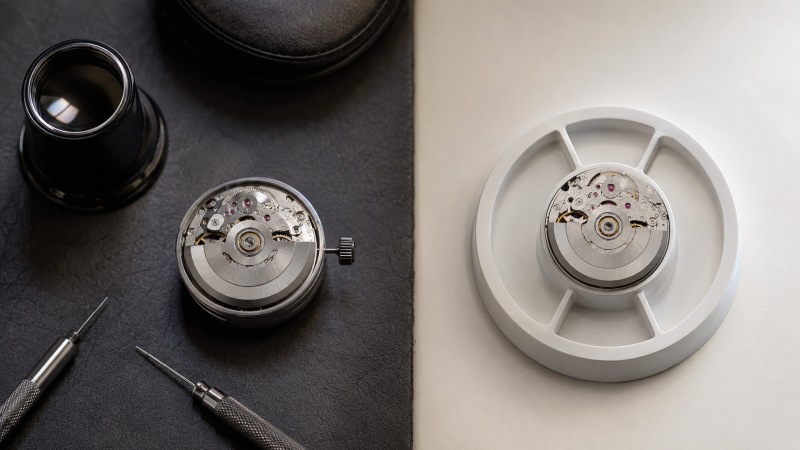
Seiko Watch Corporation’s 7S26 instruction manual lists the movement’s frequency, power reserve, winding system, and jewel count. Its technical guide provides the dimensions and lift angle.
Specification | Seiko 7S26 |
Movement Type | Automatic mechanical |
Display | Hours, minutes, seconds, day, and date |
Outside Diameter | 27.4 mm |
Casing Diameter | 27.0 mm |
Height | 4.9 mm |
Jewels | 21 |
Frequency | 21,600 vph (3 Hz) |
Power Reserve | Approximately 41 hours from fully wound to stoppage |
Lift Angle | 53 degrees |
Hand Winding | No |
Stop-Seconds Function | No |
Seiko recommends swinging a stopped 7S26 from side to side for about 30 seconds to start it. Normal wrist movement then winds the mainspring automatically. The crown sets the calendar and time but does not provide manual winding, and the seconds hand continues moving during time setting.
For a broader comparison with newer Seiko calibers, read our Seiko Watch Movements Guide: 4R, 6R, Spring Drive & Grand Seiko. The 4R36 adds hand winding and a stop-seconds function, although movement features alone do not establish compatibility with an older 7S26 case.
The letter after 7S26 identifies the movement revision, and that revision affects parts selection. Seiko’s technical guide confirms that a complete 7S26C can replace a 7S26B because the two movements have the same size.
That approval applies to the complete movement rather than every component inside it. Seiko lists numerous B- and C-series parts that are not interchangeable. The guide also states that date dials for the A and B revisions are incompatible with the C revision. Date dials, dial-holding spacers, and setting stems can also vary by casing model.
Record the complete caliber marking and the case code before ordering a movement or individual part. Those identifiers provide a stronger compatibility reference than the watch’s model name alone.
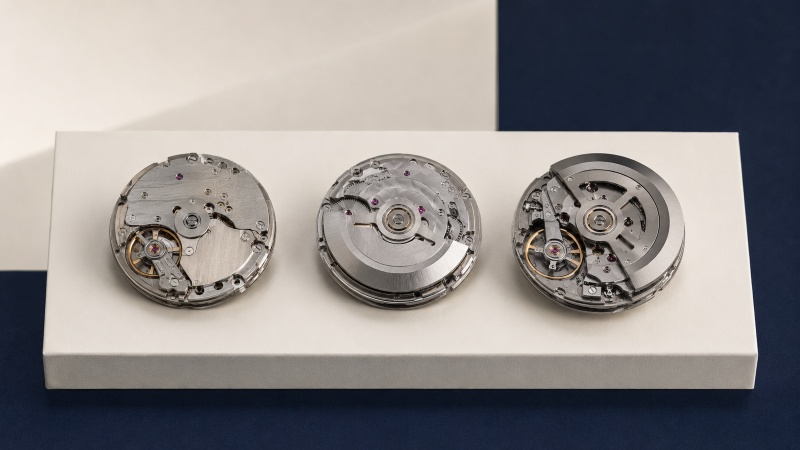
Service the existing 7S26 when a watchmaker can correct the fault without replacing the complete caliber. Consider a full replacement when inspection reveals extensive corrosion or wear, several assemblies require work, or the correct repair parts are unavailable. A 4R36 or NH36 conversion is another option when you want hand winding and a stop-seconds function, subject to a complete fit check.
A fast or slow rate does not identify a single fault. Seiko notes that insufficient winding can affect timekeeping and that strong magnetism can disturb the watch. A watchmaker can check its power level, magnetism, rate, amplitude, and mechanical condition before deciding whether it needs regulation or a full service.
Power-reserve testing also requires a properly wound movement. Seiko specifies approximately 41 hours from a fully wound 7S26 to stoppage. A shorter result after limited wrist movement may reflect an incomplete wind rather than a failed caliber. If a properly wound watch still stops early, the automatic winding system, mainspring, lubrication, and related components need inspection.
A day or date problem may be limited to the calendar mechanism. Seiko’s technical guide identifies separate date-driving, correction, and display components, many of which depend on the movement revision or casing model. Once the faulty component is identified, Soflypart’s watch movement parts category provides a place to check currently available parts by caliber.
Servicing the installed movement also preserves more of the watch’s existing mechanical configuration. This can be preferable when originality, known history, or a personal connection carries more value than newer operating features.
A complete replacement becomes more practical when corrosion or wear affects several assemblies, the total repair work is disproportionate to the watch’s purpose, or the required revision-specific parts cannot be sourced. It can also suit a daily-wear watch when easier starting and time setting are priorities.
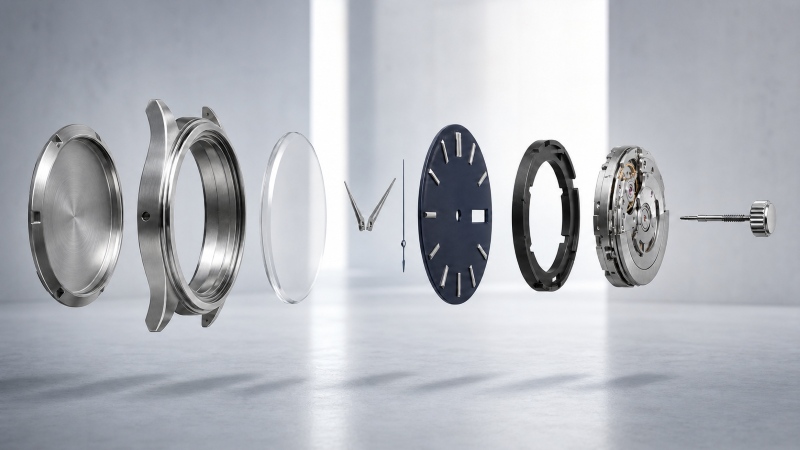
Use the following table to choose the appropriate starting point:
Watch Condition or Goal | Recommended Starting Point |
Fast or slow rate | Check winding level and magnetism, then assess regulation or service |
Short power reserve | Perform a controlled reserve test and inspect the winding system |
Isolated day or date fault | Inspect the calendar mechanism and identify revision-specific parts |
Extensive corrosion or wear | Assess complete movement replacement |
Preserve the original configuration | Service the installed movement or source a compatible 7S26 |
Add hand winding and stop-seconds | Assess a 4R36 or NH36 conversion |
This table narrows the decision, but the final recommendation should follow an inspection of the complete watch. Movement condition, case configuration, required parts, and installation work all affect whether service or replacement offers the better result.
Seiko documents the complete 7S26C as a replacement for the 7S26B. Another 7S26 may also be suitable after its revision and case-dependent parts are matched. The 4R36 and NH36 offer hand winding and a stop-seconds function, but they should be treated as conversion candidates rather than universal drop-in replacements.
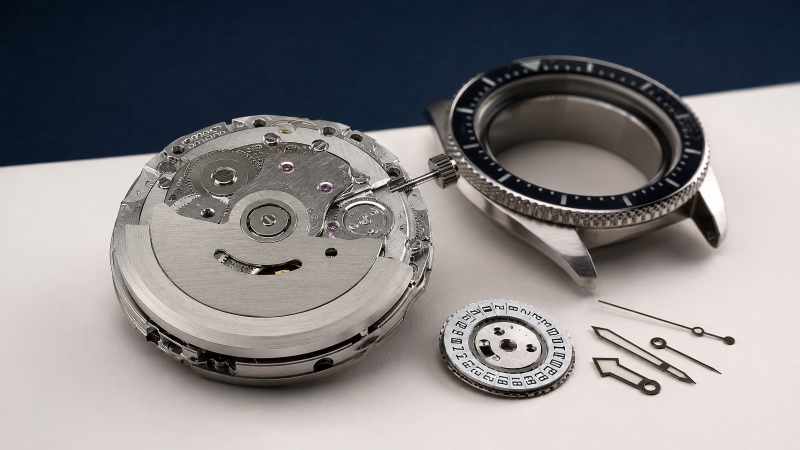
A compatible Seiko 7S26 keeps the watch’s familiar operating character, including automatic-only winding and a seconds hand that continues moving during time setting. This route works well when preserving the original configuration is the priority.
A complete 7S26C can replace a 7S26B because the two movements have the same dimensions. Their internal parts are not fully interchangeable, however, so complete-movement replacement and individual-parts replacement require different checks. For other 7S26 revisions, match the full caliber marking and case code before choosing a movement.
The date dial, dial-holding spacer, and setting stem can also vary by casing model. Confirm these components against the specific watch instead of selecting a replacement from the 7S26 family name alone.
The 4R36 and NH36 are automatic day-date movements with manual winding, a stop-seconds function, 24 jewels, and a frequency of 21,600 vph. Both measure 27.4 mm in outside diameter and 5.32 mm in height. The 7S26 shares the 27.4 mm outside diameter but has a lower 4.9 mm movement height.
The SEIKO (SII) NH36 Mechanical Movement provides a day-date display, manual winding, stop seconds, and an included winding stem. These features make it a practical option for a planned conversion when easier starting and time setting suit the way you wear the watch.
A 7S26 conversion still depends on the complete case setup. The crown position, calendar alignment, stem, spacer, dial attachment, hand stack, and crystal clearance must work together with the taller movement.
|
Feature |
7S26 |
4R36 |
NH36 |
|
Winding |
Automatic only |
Automatic and manual |
Automatic and manual |
|
Stop-Seconds Function |
No |
Yes |
Yes |
|
Calendar |
Day and date |
Day and date |
Day and date |
|
Jewels |
21 |
24 |
24 |
|
Frequency |
21,600 vph |
21,600 vph |
21,600 vph |
|
Outside Diameter |
27.4 mm |
27.4 mm |
27.4 mm |
|
Height |
4.9 mm |
5.32 mm |
5.32 mm |
|
Replacement Status |
Match the revision and case |
Conversion candidate |
Conversion candidate |
The shared diameter does not settle the fit. The 4R36 and NH36 are taller than the 7S26, and the installation must account for the case, crown position, calendar alignment, stem, spacer, dial feet, hand stack, and crystal clearance.
Choose a compatible 7S26 when preserving the existing configuration is the priority. Consider a 4R36 or NH36 when hand winding and easier time synchronization are more useful, provided a watchmaker confirms the complete conversion setup. For any used or new-old-stock movement, confirm its condition, service history, calendar arrangement, and included components before comparing the total installation cost.
Check the full caliber marking, case number, movement dimensions, crown position, calendar layout, stem, spacer, dial fit, and hand clearance before replacing a Seiko 7S26. Compatibility depends on how the complete movement fits and operates inside the specific watch.
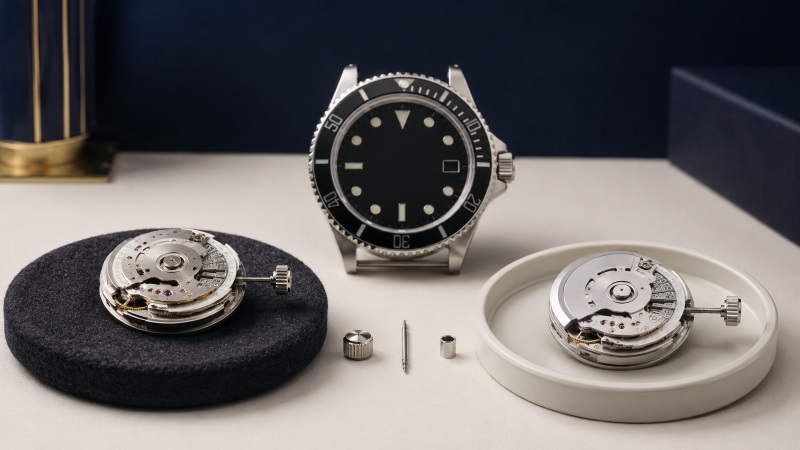
Start with the complete caliber and case code on the case back. The first portion identifies the movement family, while the remaining characters identify the case configuration. Watches from the same 7S26 family can use different date dials, dial-holding spacers, or setting stems.
The 7S26 has a 27.4 mm outside diameter and a height of 4.9 mm. The 4R36 and NH36 share the 27.4 mm outside diameter but are 5.32 mm high. Compare the full technical drawings rather than relying on diameter alone. Dial position, hand height, movement height, and crystal clearance must all work within the case.
The spacer must also correspond to the case configuration. Seiko’s 7S26 technical guide states that the dial-holding spacer varies by casing model. The correct spacer holds the movement and dial in the intended position relative to the stem, case back, and crystal.
The replacement movement’s stem must align with the case tube so the crown can wind, set, and operate correctly. At the same time, the day and date discs must line up with the dial windows throughout the calendar change.
The 7S26 setting stem varies by casing model. An NH36 includes a winding stem, but the stem still needs to be sized and fitted to the case and crown.
Calendar parts also differ across some 7S26 configurations. Date dials used with the 7S26A and 7S26B are different from the 7S26C date dial, so the movement revision and dial must remain correctly matched. For an NH36 conversion, confirm that the day and date displays align with the dial openings and crown position before assembly.
Record these seven details before buying a Seiko 7S26 replacement movement:
Take clear photographs before removing the movement, calendar components, or spacer. Include the case-back code, caliber marking, dial side, crown connection, and installed spacer. These details give a watchmaker or supplier the information needed to evaluate the complete fit.
Choose the replacement route according to the result you want from the watch. A compatible 7S26 preserves its original operation, while a 4R36 or NH36 conversion adds manual winding and a stop-seconds function. The compatibility checks in the previous section determine which option can work in the actual case.
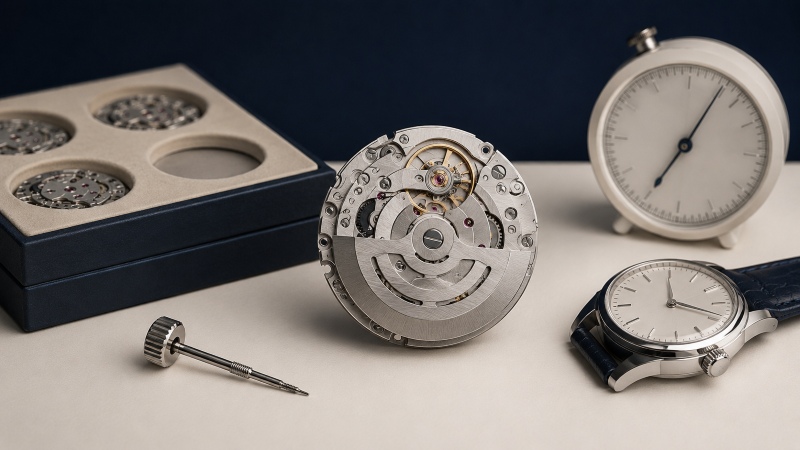
Use this three-step decision process:
This sequence keeps the decision focused on the watch’s condition and your intended result instead of repeating every measurement from the compatibility checklist.
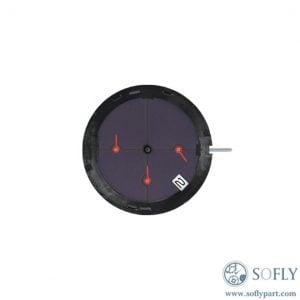
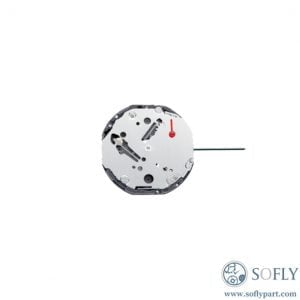
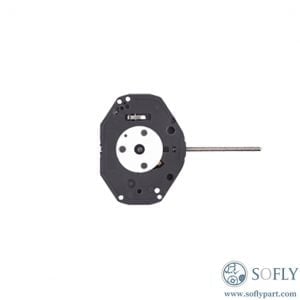
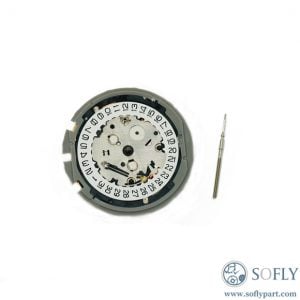
Soflypart’s Seiko watch movements category includes NH-series mechanical movements and Seiko or TMI quartz calibers for repair, replacement, and custom-build projects.
Use the full caliber marking, case code, crown position, and calendar layout to compare the available movements. Matching these details with each product’s specifications will help you narrow the options and choose a movement that suits the complete watch.

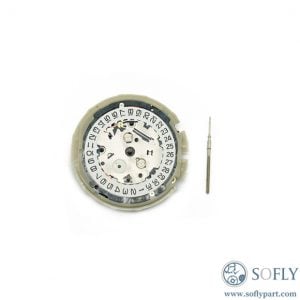
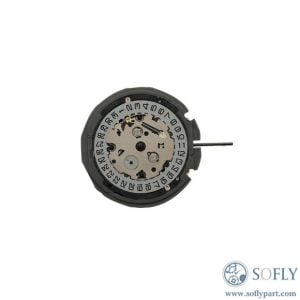
Your real goal is to get your Seiko back on your wrist, running reliably and feeling right in daily use. The watch’s condition and the experience you want from it should guide the decision between preserving the existing movement and choosing a suitable replacement.
Start with the option that respects the complete watch, including its case, calendar, crown, dial, and hands. A well-matched movement gives you a better result than choosing by caliber name or diameter alone.
Once you have the full caliber marking, case code, and clear photos of the movement and spacer, explore Soflypart’s Seiko and TMI movements to find an option that fits both your watch and the way you want to wear it.
Not in every watch. Although both movements are 27.4 mm wide, the NH36 is taller and still requires matching crown, calendar, stem, spacer, dial, hand, and crystal clearance.
No. Start a stopped Seiko 7S26 by swinging it gently from side to side for about 30 seconds, then let normal wrist movement continue winding it.
A fully wound Seiko 7S26 should run for approximately 41 hours. A much shorter reserve after sufficient wear may indicate that the movement needs inspection.